Agatha Christie and the Mysteries of Grief
2026-09-15 · 3 min read
My dearest incurable humanist, For years I have fantasized about calling Hercule Poirot to solve my father’s death. I first met Poirot when I was around eleven, reading Agatha Christie’s novels with my grandmother Tita (who I have already introduced you to in previous essays) . Tita and I would…
My dearest incurable humanist,
For years I have fantasized about calling Hercule Poirot to solve my father’s death. I first met Poirot when I was around eleven, reading Agatha Christie’s novels with my grandmother Tita (who I have already introduced you to in previous essays). Tita and I would spend hours reading aloud so I’d practice my English and she’d correct my pronunciation as we speculated whodunit. It was riveting that in Christie’s world every event as gruesome as it was, could be arranged into a solvable pattern.
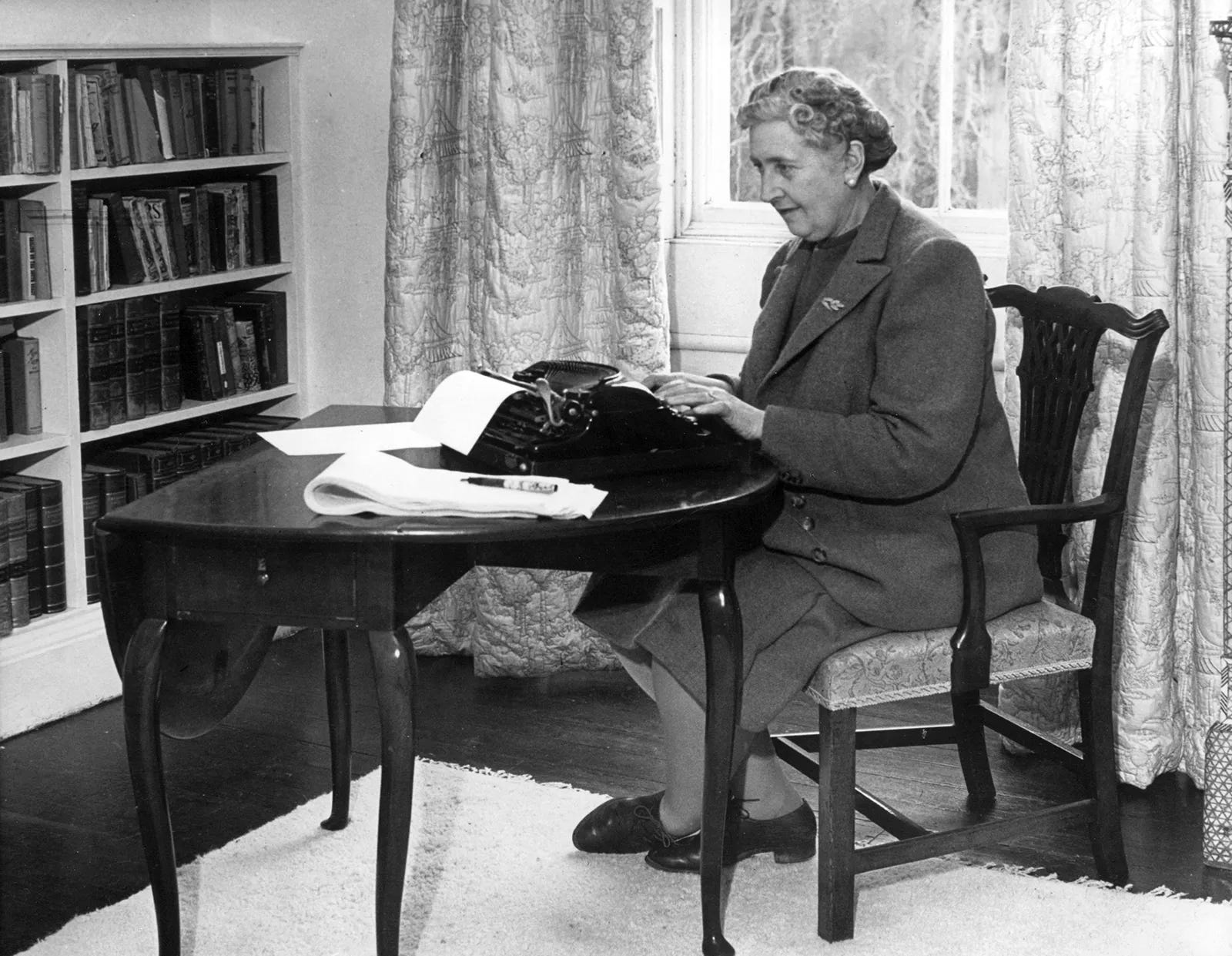
Later while I was in law school, I took a mandatory class in logic. Professor Corina Yoris used Christie specifically The Mousetrap to show us how facts, premises, conclusions, contradictions, etc. are always disorderly provided from different perspectives and how understanding logic allows us to sort through them, identify what is relevant, and arrive at a conclusion supported with evidence. Corina Yoris would later occupy a remarkable position in Venezuelan politics, and I dare to say in Venezuelan history. In 2024, after María Corina Machado was barred from registering as a presidential candidate, Yoris was selected as a substitute. Nevertheless, she was also prevented from registering. Professor Yoris taught us that logic makes a great lawyer as we have to recreate timelines, arrange facts and evidence into a coherent sequence. Poirot’s success lies therefore in his ability to do precisely that, seeing beyond the surface.
Ok I’ve made my point that Agatha Christie has been a great companion throughout the years, but even more after realizing that Poirot was an immigrant too. In The Mysterious Affair at Styles, published in 1920, Christie introduced Hercule Poirot, a former Belgian police officer displaced to England by the First World War. As an outsider Poirot is able to observe and perceive what others cannot.
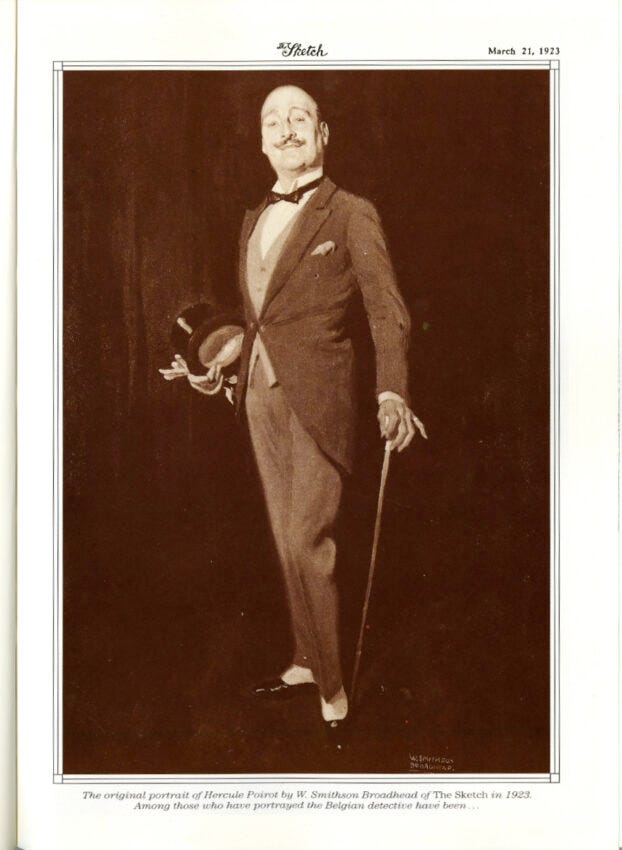
I still wish Hercule Poirot could help me make sense of the mysteries of my own life. I would like him to sit across from me, straighten a cufflink, and ask for a complete chronology. I would like him to identify the overlooked clue, the fact I failed to understand because I was too close to it. Unfortunately my grief is not a Christie novel with a final gathering of suspects with a satisfying answer in the end. Grief makes us detectives, though not necessarily successful ones. After we lose someone in a tragic or unexpected way we obsess over every detail trying to make sense out of it.
If you are grieving you can find great comfort in Christie. She gives us a soothing parallel world where facts can be arranged, contradictions explained, and the guilty found. Christie shows us how paying attention matters, and how somewhere inside a seemingly incoherent sequence of events there might be something worth looking at again. I most likely cannot solve my father’s death, but I will forever keep looking again.
P.S. A FEW FUN FACTS:
Agatha Christie was born on a day like today, September 15th, 1890.
Agatha Christie is the best-selling novelist in history.
Agatha Christie’s The Mousetrap holds the Guinness World Record for the longest theatrical run and the longest-running play and West End show in history.
On October 30th The British Library in London is opening Agatha Christie: A World of Mystery - through June 20, 2027 - a major exhibit that explores her life and legacy.
Until next week!