Armando Reverón: Prisoner of the Air
2025-04-18 · 2 min read
My dearest incurable humanist, most times when people talk about light in modern art, they usually go straight to France —Monet’s shimmering ponds or Matisse’s sun-lit interiors. Yet just forty minutes from Caracas, on the beach of Macuto, Armando Reverón forged an equally radical vision of…
My dearest incurable humanist, most times when people talk about light in modern art, they usually go straight to France —Monet’s shimmering ponds or Matisse’s sun-lit interiors. Yet just forty minutes from Caracas, on the beach of Macuto, Armando Reverón forged an equally radical vision of luminosity—one born of sand, sea, and heat.
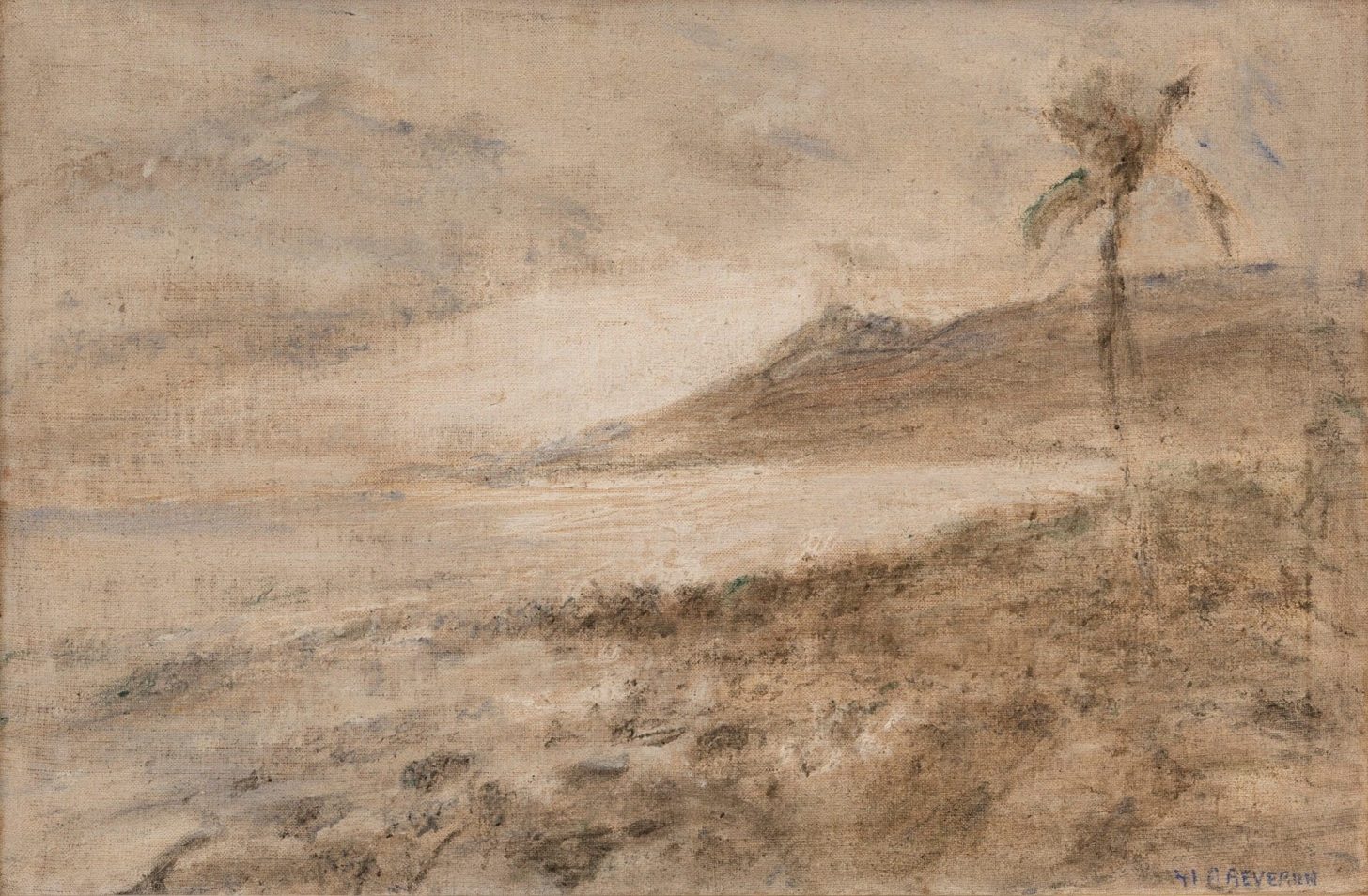
Armando Reverón (1889 - 1954), Playa, 1941, Oil on burlap
Thanks for reading The Incurable Humanist! Subscribe for free to receive new posts and support my work.
In April 2025, New York welcomes Reverón back for his first U.S. solo show since his Museum of Modern Art (MoMA) retrospective in 2007. Andrew Edlin Gallery’s Armando Reverón: Prisoner of the Air (April 17–May 31, 2025) brings together eighteen paintings and drawings spanning 1920 to 1954: paradise seascapes, poignant portraits, and raw material experiments that defy obvious categorization.
In 1921, Reverón and his partner Juanita Mota left Caracas behind, building their own studio‑home—El Castillete—from driftwood, palm thatch, and local stone. They crafted brushes from branches, stretched burlap over improvised frames, and mixed sand directly into their pigments. By dissolving the barrier between environment and artwork, the Caribbean tropics themselves became his medium.
As his practice evolved, Venezuelan art historian Alfredo Boulton identified three periods. His earliest “Blue” paintings (circa 1919–1924) pulse with melancholy nocturnes in deep blues. By the late 1920s into the 1930s, a “White” phase emerged: landscapes and beach scenes in chalky whites and ochres, where scraping away pigment revealed a flickering, sand‑dust texture. In his final years, rich sepias dominate—expressive marines, port scenes, nudes, and the uncanny dolls that seem to hover between object and apparition.
Luis Pérez‑Oramas, the renowned Venezuelan curator behind Reverón’s MoMA show, penned “prisoner of the air”, a 2008 poem—a fitting image for art born of blinding glare, heat, and profound solitude. Reverón wasn’t painting what he saw so much as what he felt: the grit of the sand, the weight of the sun, the silence of a shore.
Was he an Impressionist? An early performance artist? An abstract pioneer avant la lettre? In truth, he was all of these—and none. His work resists simplification, rooted in the South, shaped by solitude, and suffused with light.
Plan your visit before May 31, 2025—and to dive deeper into his world, watch Margot Benacerraf’s 1952 documentary Reverón or Diego Rísquez’s 2011 feature Reverón. Each film offers a different entry point into the world he both built and inhabited. If you’re in New York, don’t miss this chance to go.
Sources:
“Armando Reverón (1889-1954) Exposición Antológica: Museo Nacional Centro de Arte Reina Sofía.” Inicio, www.museoreinasofia.es/exposiciones/armando-reveron-1889-1954-exposicion-antologica. Accessed 18 Apr. 2025.
Armando Reverón | Moma, www.moma.org/artists/27447. Accessed 18 Apr. 2025.
“Armando Reverón: Prisoner of the Air.” Andrew Edlin Gallery, www.edlingallery.com/exhibitions/armando-reveron-prisoner-of-the-air. Accessed 18 Apr. 2025.
Thanks for reading The Incurable Humanist! Subscribe for free to receive new posts and support my work.