Ruth Asawa and the Art of Survival
2025-10-21 · 4 min read
My dearest incurable humanist, Currently at MoMa until February 7, 2026 there is an exhibit you must not miss, Ruth Asawa: A Retrospective . I am fascinated with how migration is an undeniable and recurrent theme in Ruth Asawa’s (1926-2013) life and work. This first posthumous exhibit compiles more…
My dearest incurable humanist,
Currently at MoMa until February 7, 2026 there is an exhibit you must not miss, Ruth Asawa: A Retrospective. I am fascinated with how migration is an undeniable and recurrent theme in Ruth Asawa’s (1926-2013) life and work.
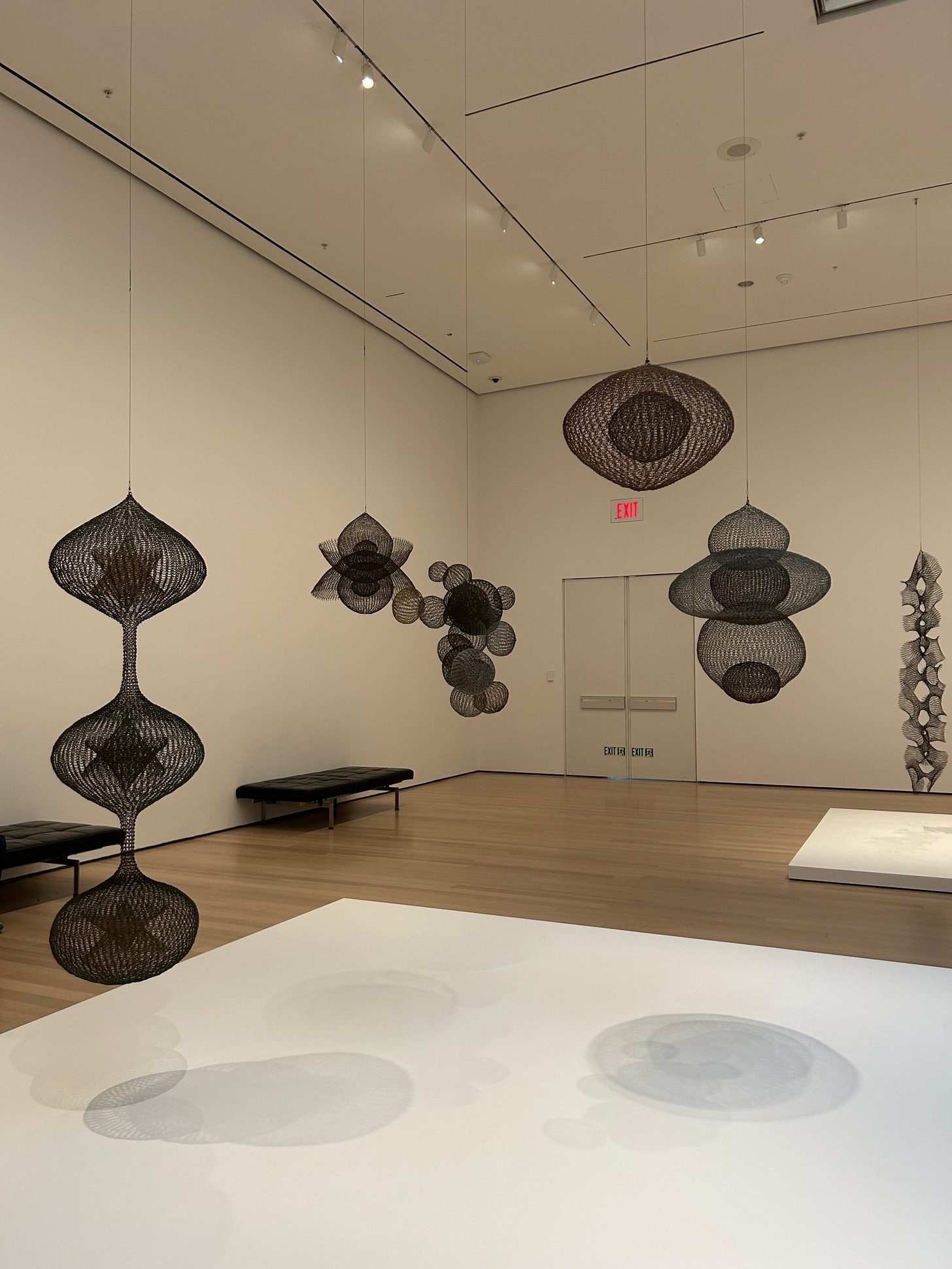
This first posthumous exhibit compiles more than 300 works including her signature looped-wire sculptures, bronze casts, drawings, paintings, prints, and public commissions. It traces Asawa’s journey from her formative years at Black Mountain College in the late 1940s to her life in San Francisco, where she became both artist and civic leader.
Born to Japanese immigrant farmers whose labor was constrained by exclusionary laws preventing citizenship, Asawa inherited displacement and trauma. In 1942 the FBI seized her father and the family was sent first to Santa Anita racetrack, then to Rohwer camp in Arkansas. Yet, despite the immesurable hardship, the camps became her first art school. Disney animators and other artists, who were also incarcerated, taught her to draw. She worked with whatever materials were available, a practice of resourcefulness born from confinement that would define her entire future. In the camps, art became survival.
After the war, she traveled to Mexico. This introduced another layer of migration, although this time it was chosen. Observing artisans weave egg baskets from single continuous strands, Asawa encountered a technique that became her signature: the looped-wire sculpture. I believe these encapsulate the in-between spaces migrants experience, reflecting states of being neither fully here nor there. This sense of in-betweenness is heightened by Asawa’s use of continuous, flowing forms that weave through space, symbolizing connection and transformation.
Back in California she enrolled at Black Mountain College in 1946 under Josef Albers and Buckminster Fuller. Asawa found a community that valued experimentation with everyday materials and holistic creativity. She had never felt Japanese or American, but, here she found a new identity, “a citizen of the universe”. She refused borders, transforming marginalization into art.
After graduating, Asawa settled in San Francisco with her husband, architect Albert Lanier, where she raised six children while maintaining a rigorous studio practice. Asawa became an advocate for arts education in public schools, co-founding the Alvarado School Arts Workshop in 1968. She fought for public art commissions and fountains throughout San Francisco, believing beauty belonged to everyone.
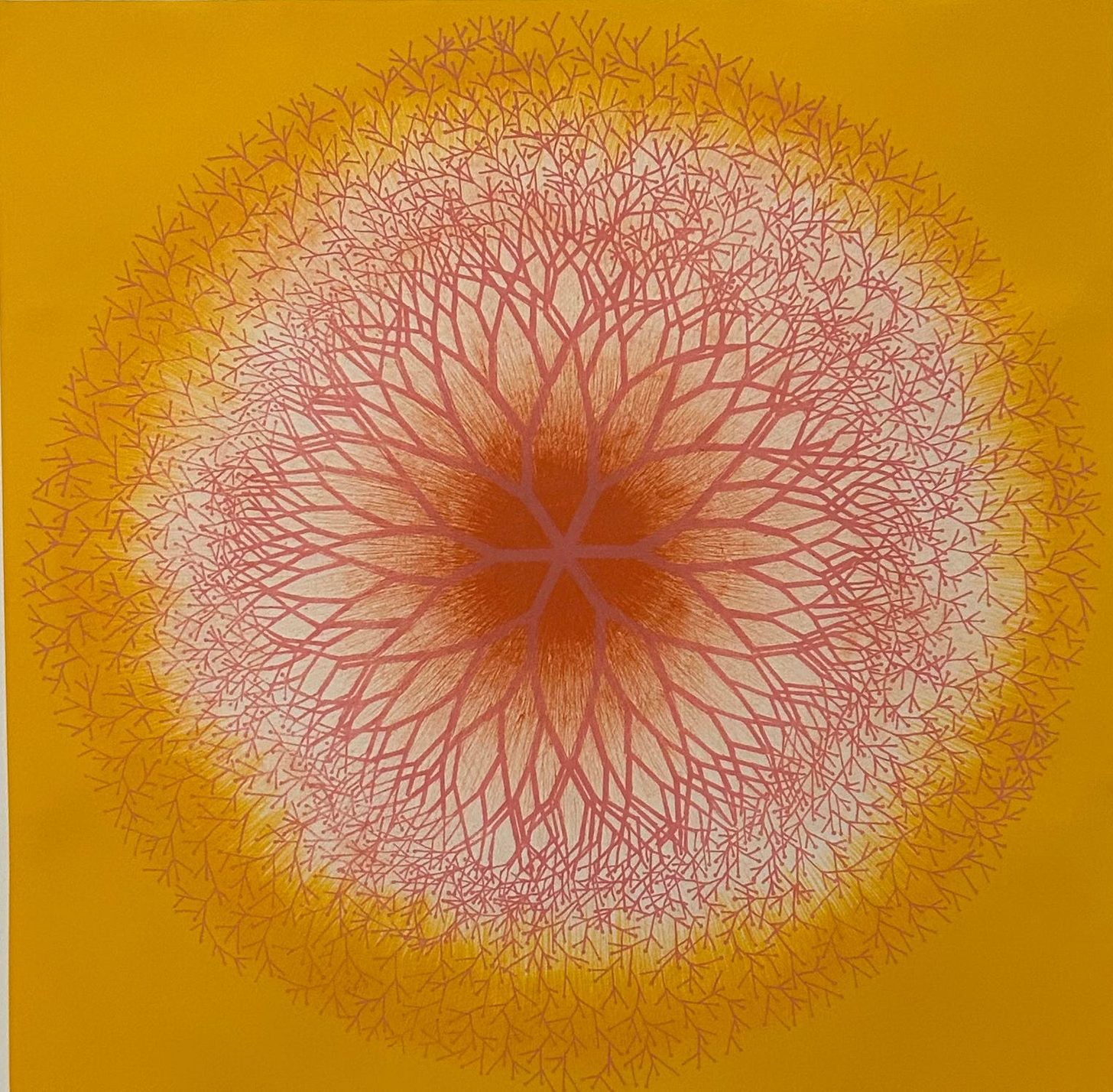
Asawa’s art was rooted in Zen Buddhism. As a girl she trained in calligraphy, a practice that taught her to watch both the negative and the positive space. This understanding shaped everything she made. Moreover, she studied nature attentively. In 1962, inspired by a dried plant, she discovered a new technique: tying bundles of wire and splaying their ends into branching networks. With each split, she multiplied the lines and the negative spaces between them. She drew regularly in Golden Gate Park, rendered the chairs in her home, found endless subject matter in the everyday. Nothing was too ordinary to deserve attention. She saw beauty and meaning exist everywhere if we learn to see what’s there and what isn’t.
The Garden of Remembrance (2000-2002), Asawa’s last commission, commemorated nineteen San Francisco State University students of Japanese descent who were removed and incarcerated during World War II. Working with landscape designers Isao Ogura and Shigeru Namba, she created a Japanese-style rock garden where ten boulders scattered across a meadow mapped the exact locations of concentration camps. The garden honors the historical trauma of forced incarceration while celebrating the renewal of community and resilience through art and nature.
To stand before Asawa’s work is to understand migration as art. As we’ve been exploring here at The Incurable Humanist, migration carries layers beyond moving. Ruth Asawa’s story embodies this complexity. Though born in California, she inherited her parents’ immigrant journey. Being first-generation American didn’t spare her, yet her life’s work proves art is a tool for survival, healing, and transformation. Asawa understood that freedom is the ability to create without fear. I grew up in Venezuela, where freedom eroded slowly, where speaking freely, moving freely, dreaming freely became dangerous. When Asawa said of her Garden of Remembrance, “we need to watch out for our liberty,” she was speaking to those of us who know its fragility. Migration is often a search for this freedom, to build a life unburdened by fear. From wire and paper, from trauma and resourcefulness, Asawa created new possibilities for herself and for everyone who encounters her work.
Go to MoMA. Whether you bring a friend to discuss what you see or go alone to sit with the silence between the sculptures. Stare at the looped wire until the light shifts. Trace the lines in her drawings. Let the work move through you. I promise you’ll leave lighter.
Until next week.