Stop Calling Frida and Diego "Relationship Goals"
2026-06-09 · 4 min read
My dearest incurable humanist, Last week, I went to MoMA to see Frida and Diego: The Last Dream , which opened in conjunction with the Met’s new production of El Último Sueño de Frida y Diego . I’ll admit it upfront, I walked in already skeptical, and unfortunately even with my low expectations, I…
My dearest incurable humanist,
Last week, I went to MoMA to see Frida and Diego: The Last Dream, which opened in conjunction with the Met’s new production of El Último Sueño de Frida y Diego. I’ll admit it upfront, I walked in already skeptical, and unfortunately even with my low expectations, I was still disappointed. If you live in New York, you’ve probably noticed some sort of Frida/Diego madness going around lately. The opera, the exhibition, the merch on every corner. A kind of cultural saturation that feels less like a canonization.
To start with a positive note, I want to highlight that the museography is genuinely striking. Jon Bausor’s scenographic approach is immersive without feeling gimmicky. He draws from the visual language of their lives—the Casa Azul, Frida’s bed, Coyoacán—and translates it into something theatrical but intimate. The space is dimlit, carefully constructed, and it transports you to a world of its own.
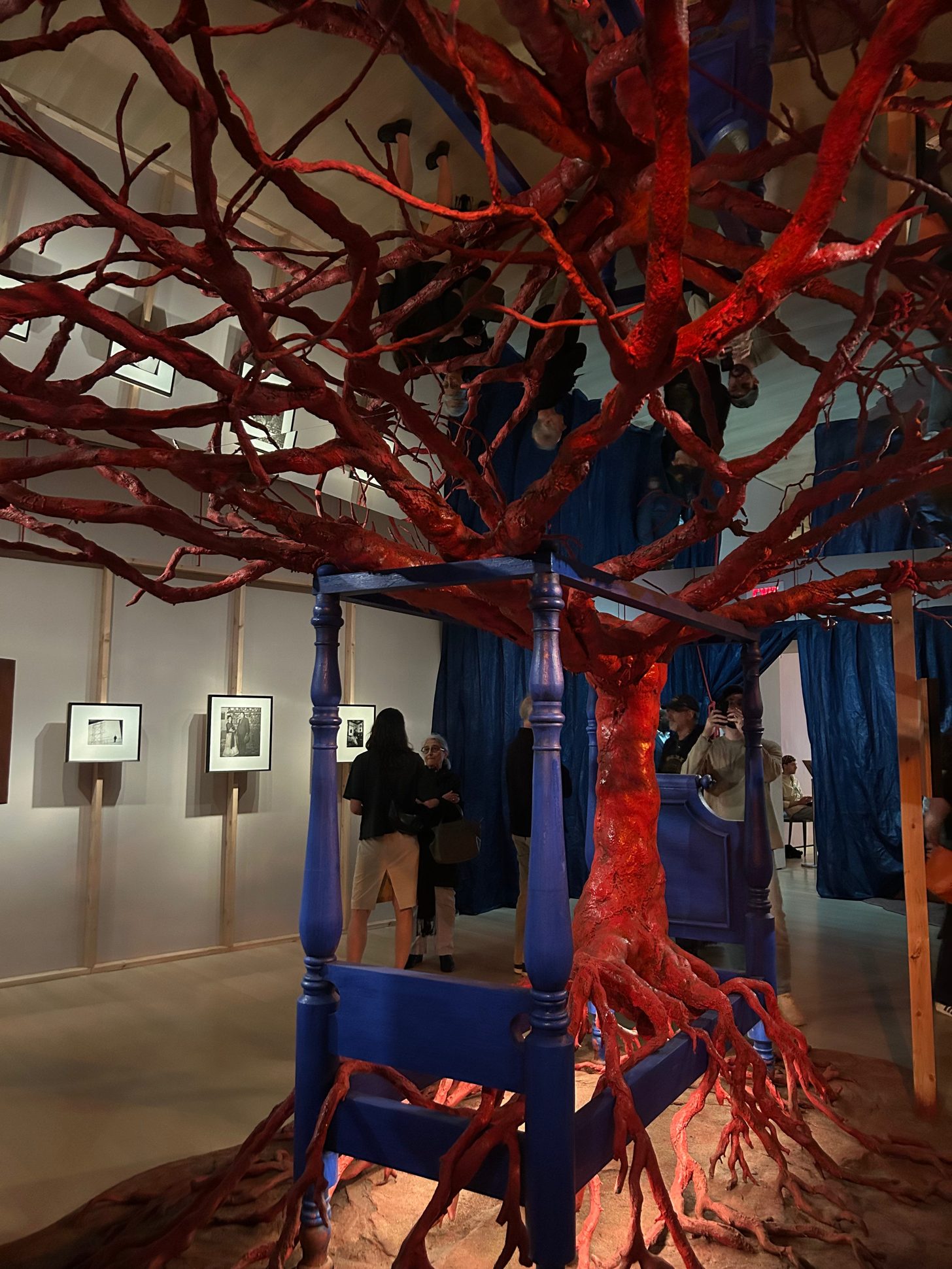
Yet, I struggle with the insistence on framing their relationship as a great love story. Because it was not. I am not undermining the artistic significance of both Kahlo and Rivera is unquestionable. Rivera’s murals reshaped public art in post-revolutionary Mexico, embedding political and historical narratives into collective space. Kahlo, in contrast, turned inward. Her work is intensely personal, grounded in the body, pain, identity, and symbolism. Their practices were distinct but ideologically aligned, both participating in the cultural redefinition of Mexico after the revolution.
Diego Rivera’s infidelity was habitual, humiliating, cruel, even including an affair with Frida’s own sister, Cristina, in 1934. That betrayal alone marked one of the most devastating periods of Kahlo’s life. Yes, Frida also had extramarital relationships, but largely within the context of a marriage already defined by betrayal. To flatten this into a story of “passionate, complicated love” feels reductive. Even more, it is dangerous and irresponsible to romanticize dysfunction at this scale, turning toxicity into myth. It aestheticizes a dynamic that, in any other context, we would recognize as deeply harmful.
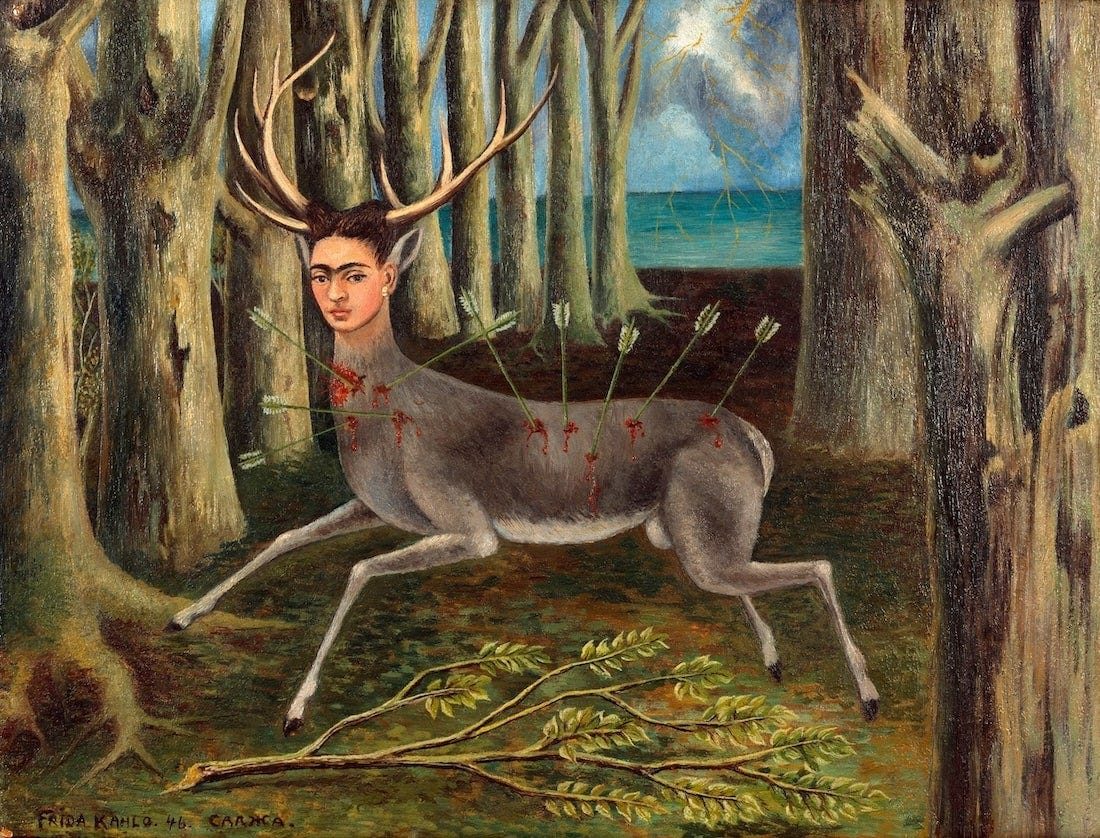
Having lived in Mexico City, I can’t help but see this through a broader cultural lens. Machismo is ingrained in society and lived every day. While in parallel, there is an ongoing effort by women to challenge and rewrite those structures. Which is why this kind of narrative feels so regressive. It reinforces the idea that a woman’s suffering in love is somehow necessary. Kahlo’s legacy should not require him as its frame! She is one of the greatest artists of the 20th century.
A few years ago, in 2018, I went to the Victoria and Albert Museum to see Frida Kahlo: Making Her Self Up. The exhibition presented an extraordinary collection of Kahlo’s personal artifacts and clothing. Although it did not center her paintings, it still told a powerful story about her, without being shadowed by him. Even now, the Tate Modern’s upcoming exhibition, Frida: The Making of an Icon (June 2026–January 2027), promises to trace how Kahlo became one of the most influential artists of the twentieth century, and a global cultural figure. I’m sorry New York, but London is winning this one.
Maybe the opera is brilliant. Maybe the music is extraordinary, the performances moving, and the production visually stunning. I haven’t seen it, so I’m not judging the quality of the production. But I can’t help wondering, why do we keep returning to this particular narrative?
According to the opera’s fictional premise, Diego Rivera, years after Frida Kahlo’s death, summons her back from the dead on Día de los Muertos. What are we supposed to take from this story, that enduring disrespect is proof of love? That a tumultuous relationship is somehow more meaningful because the people involved became famous? That after she passed she couldn’t even rest in peace but had to come back to ease his guilt and make him feel better about himself? And perhaps my bigger question is why Frida and Diego at all? If the goal is to tell a fictional story about love, loss, memory, and Mexican identity, then tell one. Take Coco for instance. Invent new characters, a new myth. Write an opera about a painter mourning a lost love. But why continue borrowing the lives of two real people and reshaping them into yet another romantic fantasy?
Frida Kahlo and Diego Rivera have become cultural icons, and sometimes it feels as though their names are being used less to explore who they actually were than to sell tickets. Their story is endlessly recycled because it’s familiar, marketable, and emotionally charged.
Until next week!