The Odyssey Through the Lens of Migration
2026-07-21 · 3 min read
My dearest incurable humanist, Christopher Nolan’s adaptation of The Odyssey has already achieved blockbuster status, breaking box office records this year. Yet long before it reached movie theaters, it was already the quintessential story for understanding the instability, hardship, and…
My dearest incurable humanist,
Christopher Nolan’s adaptation of The Odyssey has already achieved blockbuster status, breaking box office records this year. Yet long before it reached movie theaters, it was already the quintessential story for understanding the instability, hardship, and unpredictability of life, offering the metaphors that have shaped Western thought. Together with the Iliad, it underpins key philosophical traditions, including Stoicism. Today, I find myself thinking about The Odyssey through the lens of contemporary migration.
The Odyssey was composed nearly three millennia ago, and yet it remains timely. Although Homer is credited as its author, little is known about the poet. Historians generally place him in the eighth century BCE, though even his existence has long been the subject of debate. Scholars argue that Homer was not a single individual but an oral tradition through which generations of bards preserved and performed these stories before they were eventually written down. Regardless of which theory one finds most convincing, its importance is unequivocal.
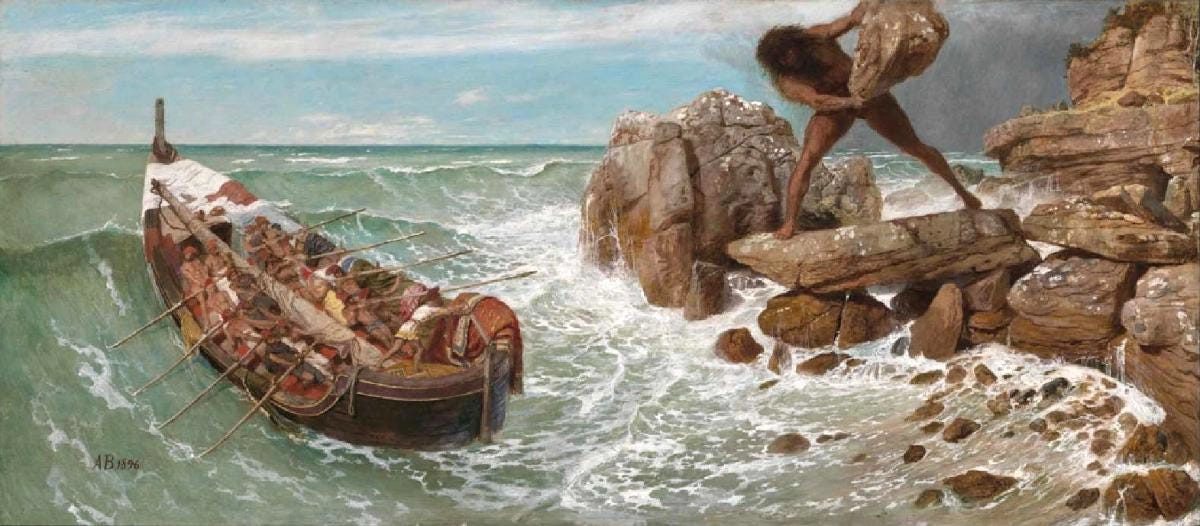
We often approach the Odyssey first as a tale of return (of nostos). Yet this framing can overshadow how Odysseus was displaced and reshaped by every shore, each new political and social order forcing him to renegotiate who he was. He survived by adaptability, by learning when to speak, when to remain silent.

For migrants today, that experience feels strikingly familiar. Migration is associated with policy, visas, borders, legal status. But beneath lies a more intimate and destabilizing experience; the ongoing reconstruction of the self. To migrate is to be reconstituted by each place, each system, each gaze that attempts to define you. Like Odysseus, we must navigate different ‘worlds’ that ask us to measure ourselves against shifting norms of belonging.

In The Odyssey, Ithaca is less a place than an idea that sustains Odysseus through years of uncertainty. Yet by the time he returns, he is no longer the man who left. He arrives disguised, unrecognizable even within his own household. This tension between the imagined permanence of home and the reality of personal transformation is central to the migrant experience. Return, if it happens at all, is an encounter between past and present selves that do not quite align.
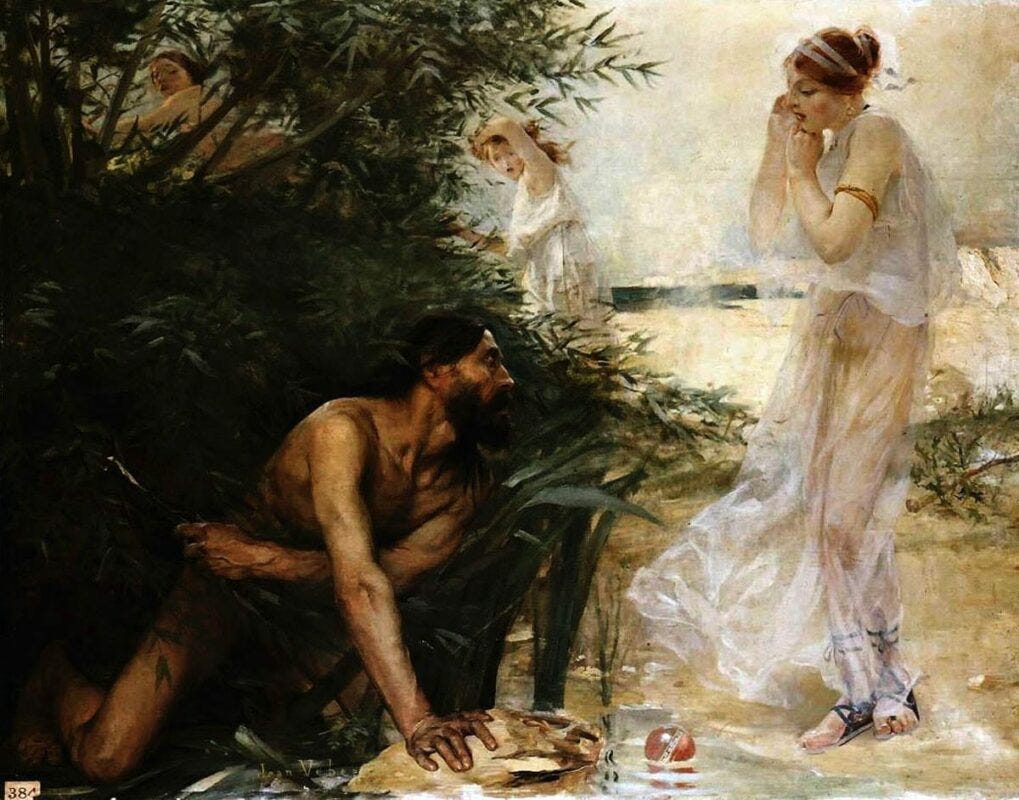
I first learned to think of Ithaca in this way in law school, when a professor introduced C. P. Cavafy’s poem Ithaka and used it to describe our passage through those years—as a journey whose meaning is made along the way. Nevertheless, at the time, I still thought Ithaca was somewhere I would finally arrive. I return to the poem now, after moving countries and rebuilding my life more than once, and understand that it’s all about the journey.
This is why The Odyssey endures. Its influence stretches from Dante’s Inferno to Alice in Wonderland and contemporary science fiction like Star Trek. Over time, it has given us a way to understand encounters with the unknown; from mythic underworlds and imagined planets to the arriving somewhere new.

Christopher Nolan’s adaptation of The Odyssey arrives at a moment when questions of migration, exile, and belonging dominate headlines. We are living through one of the largest periods of human displacement in modern history. Millions of people are crossing borders because of war, authoritarianism, and economic collapse. The questions Homer asked nearly three thousand years ago continue to condition how we think about exile, identity, and home.
The Odyssey reminds us that migration is a tale as old as time. Odysseus’s journey captures the enduring tension between movement and belonging, between the desire to arrive and the reality of becoming.
Until next week!