What Giacometti Taught Me About Not Texting Back
2026-07-28 · 3 min read
My dearest incurable humanist, I went to the Met for Giacometti in the Temple of Dendur , and if you’re feeling overwhelmed with life in general, you should too. The exhibition brings Alberto Giacometti’s sculptures to the Met for the first time, placing them in conversation with the Temple of…
My dearest incurable humanist,
I went to the Met for Giacometti in the Temple of Dendur, and if you’re feeling overwhelmed with life in general, you should too.
The exhibition brings Alberto Giacometti’s sculptures to the Met for the first time, placing them in conversation with the Temple of Dendur, one of the museum’s most beloved treasures. Built in ancient Egypt in 10 BCE during the reign of Emperor Augustus, now it’s our neighbor. Giacometti was a great admirer of Egyptian art. As a young artist, he encountered Egyptian sculptures that left a lasting impression on his understanding of the human body. Later, in Paris, he regularly visited the Louvre’s Egyptian galleries and studied it, absorbing its stillness, restraint, and simplicity. The exhibition stages a beautiful contrast of scale and presence. Placed before the Temple of Dendur, the sculptures enter into a timeless dialogue between past and present.
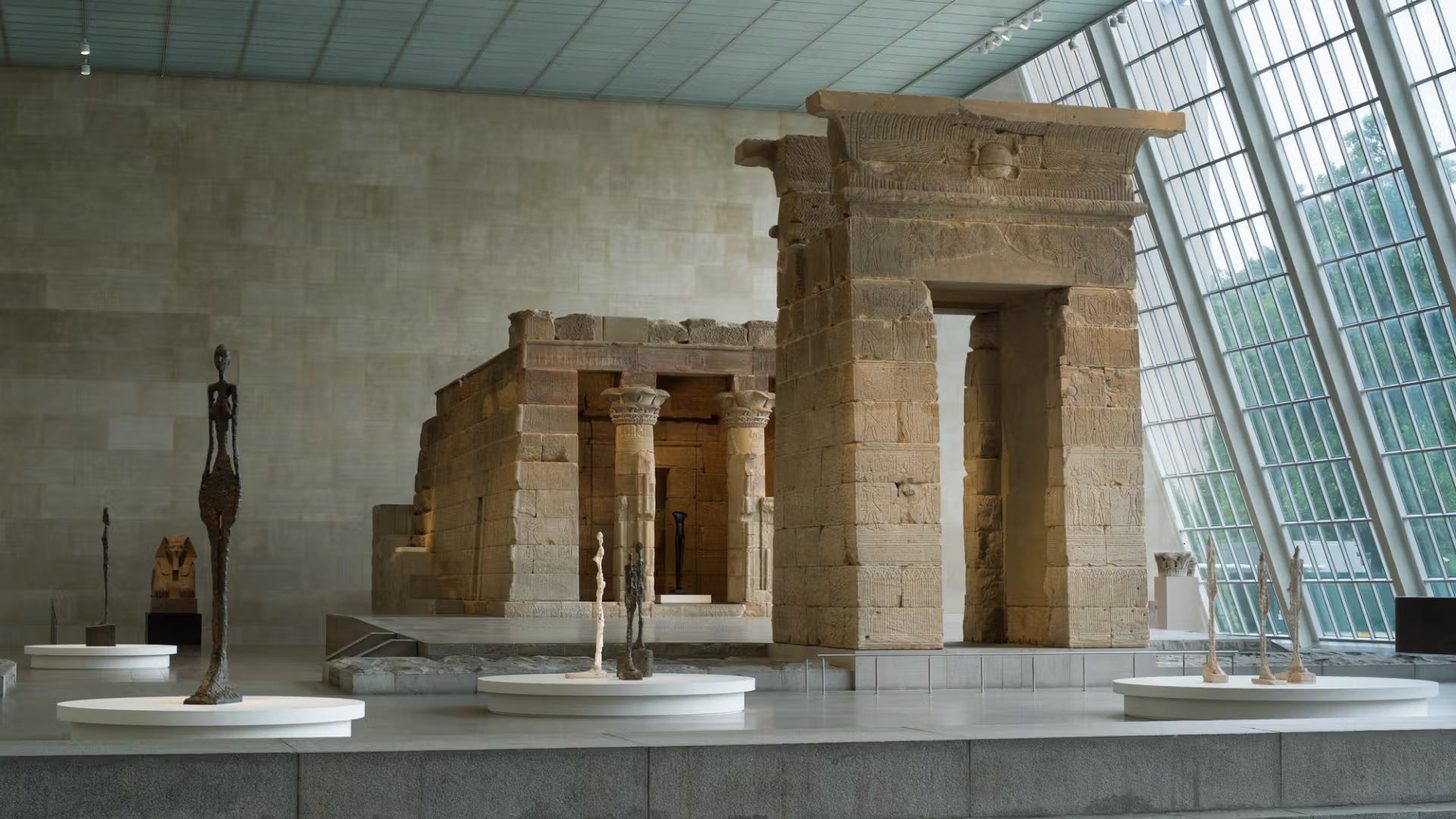
In Giacometti’s work, the human figure is continually rediscovered through our gaze. His figures seem suspended, as though he had stripped away everything that was unnecessary in order to preserve the irreducible fact of another person’s existence. This preoccupation resonated with Existentialism, which emerged as one of the defining intellectual movements in Europe after the Second World War. Existentialism rejected the idea that human life possesses an inherent or predetermined meaning, arguing instead that existence is marked by uncertainty, freedom, responsibility, and the necessity of creating meaning in a world that offers no guarantees.
Jean-Paul Sartre wrote two seminal essays on the artist in 1948 and 1954. Sartre saw Giacometti’s sculptures as visual expressions of existential concerns, posing that they reveal the difficulty of perceiving another human being in their entirety. His interpretation emphasized the distance that always exists in our encounters with others. No matter how closely we approach another person, they remain, in some way, beyond our complete understanding. Giacometti’s attenuated figures, isolated in vast expanses of space, give form to that philosophical insight. They are undeniably present, yet they resist possession, certainty, and complete comprehension.
Lately, I have found myself increasingly reluctant to meet the constant demands of communication. By the end of the workday, I have already spent hours answering questions, replying to emails, explaining decisions, sending updates, and making myself available. By the time I turn to my personal messages, I often feel emptied out. What should be a simple exchange feels like another demand to answer for oneself, to bear one’s freedom, and to remain exposed to the gaze of the Other, in a way that feels very Sartrean. I postpone replying, telling myself I will answer tomorrow, and then tomorrow becomes the next month. In other words, simply the exhaustion of existing. I long for the relief of occupying the world without having to account for my presence, explain my absence, or reassure anyone that my silence carries no hidden meaning. I feel like one of Giacometti’s figures, solitary, and suspended in space. Then, guilt inevitably follows. So do the apologies. Yet, I have grown weary of those too.
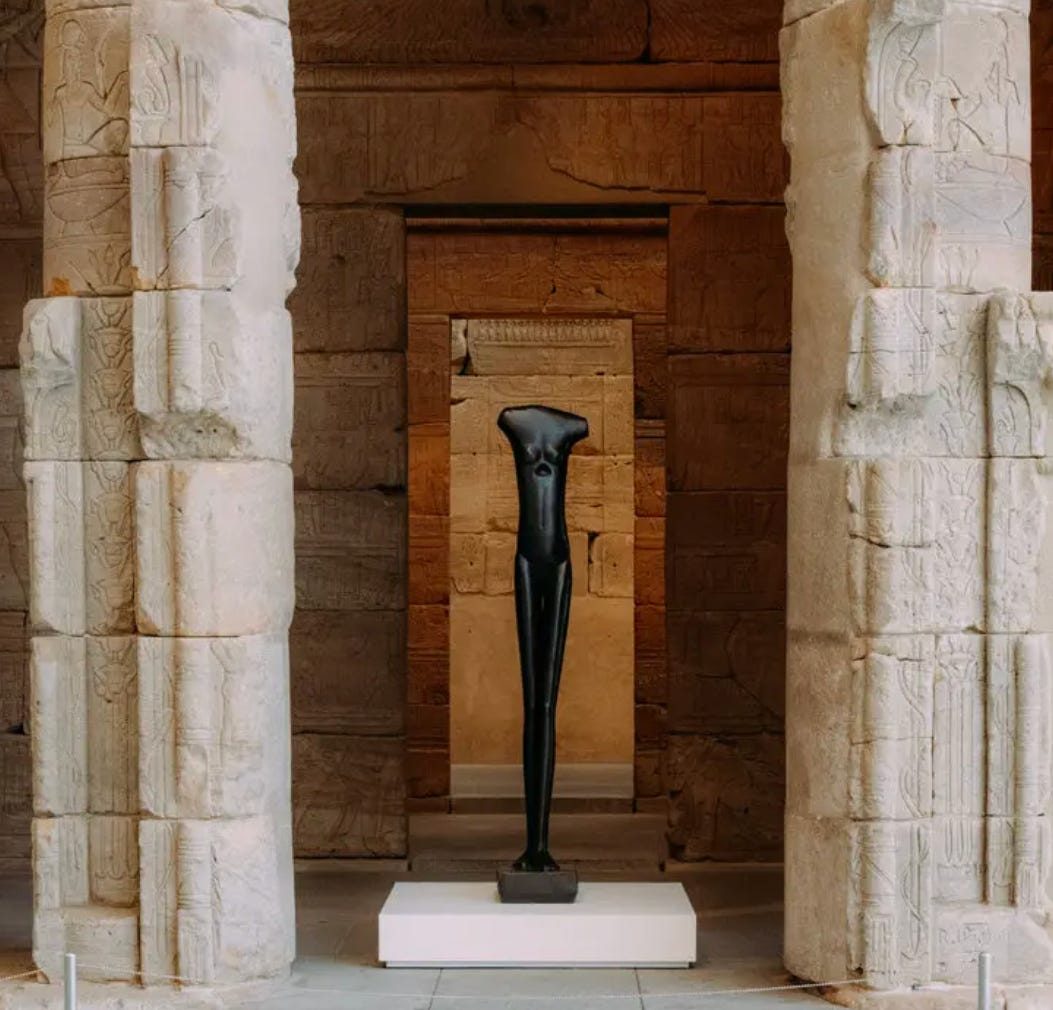
For now, I’ll stay with my newfound friend, Walking Woman (I) (1932), who, thankfully, is not asking me to explain myself.
Until next week!