On Art
2025-10-14 · 6 min read
My dearest incurable humanist, Art has always been a big part of who I am. When I say ‘art’ I mean it in the broad sense, including painting, sculpture, dance, cooking, writing, theatre, film, photography, music, poetry... You get the picture. All my happiest moments have been somehow related to…
My dearest incurable humanist,
Art has always been a big part of who I am. When I say ‘art’ I mean it in the broad sense, including painting, sculpture, dance, cooking, writing, theatre, film, photography, music, poetry... You get the picture.
All my happiest moments have been somehow related to art. From being in the car as a kid with my dad listening to Cat Stevens, to going to my grandparents’ house filled with paintings I’d stare at for hours analyzing every detail, to baking with my mom, to dancing flamenco as a kid, to having acted in school plays, to writing songs as a teenager, to discovering a new restaurant, to being an intern in a museum, to moving to New York and doing my MA at Christie’s, to some of my greatest friends, to working at an art gallery in Mexico City, to marrying my husband who’s a music producer, to starting this substack.
During the pandemic in New York, music was my greatest companion. Living alone in confinement, I would find ease in lyrics. I was completing my MA through Zoom, learning and staying busy. I also started an IGTV series interviewing artists about what they were doing in lockdown and how this had inspired them to create. Even in isolation, art connected me to others; it gave me purpose.
In Mexico City, still in confinement and not knowing anyone, music was again my best friend. And then art saved me again, working at the gallery, being surrounded by art all day, writing.
Art has always been there, but it wasn’t until I experienced deep grief and migration that I truly understood its power. I love how Philosophy constantly poses questions about anything and everything. It was my favorite subject in high school and in Law School, where I was even the TA for Philosophy of Law. German philosopher Martin Heidegger, in The Origin of the Work of Art (delivered 1935-36, published 1950), ontologically asks, “Where does art come from?”
Before I continue, I must acknowledge something important. What I have described as ‘art’ does not constitute ‘art’ for Heidegger but ‘aesthetics’. For him, this modern aesthetic approach treats art as objects that provide us with refined experiences, like appreciating a well-crafted matcha latte. Therefore, true “art” is something fundamental that shapes our understanding of reality.
So when Heidegger asks, “Where does art come from?” and when I describe how art has been there for me, we’re talking about different things. I’m aware of this difference. Nevertheless, I believe personal aesthetic experiences can serve as pathways to the deeper ontological truths Heidegger describes. (Even as he would most likely disagree with me… but bear with me.)
Heidegger argues that art “sets truth to work.” He uses the word aletheia, an ancient Greek concept that means to reveal what has been hidden. When you’re grieving, this is what you need: a new way to see to exist in a world that has changed.
Heidegger writes about the tension between Welt (world) and Erde (earth) in every artwork. Welt is the realm of meaning, culture, and shared practices. It’s everything that makes life coherent and familiar. Erde is the underlying material, the mysterious ground from which meaning emerges. According to Heidegger, artworks have a ‘thingly character’: the paint on canvas, the stone of a sculpture, the particular texture and weight of material existence.
When you migrate, you lose your Welt, your familiar context, your customs, your family, your friends, your home. You’re thrown back to Erde. You have to rebuild from scratch, relearning culture, language, history, and social norms. You don’t have to be the artist to benefit from art. When I stroll through a museum, when I listen to music, watch a film, or cook a meal, I’m participating in the creation of meaning. I’m engaging with the truth the artwork reveals. This matters for grief and migration because, as Heidegger shows, it opens up a world, creating a space of meaning you can inhabit.
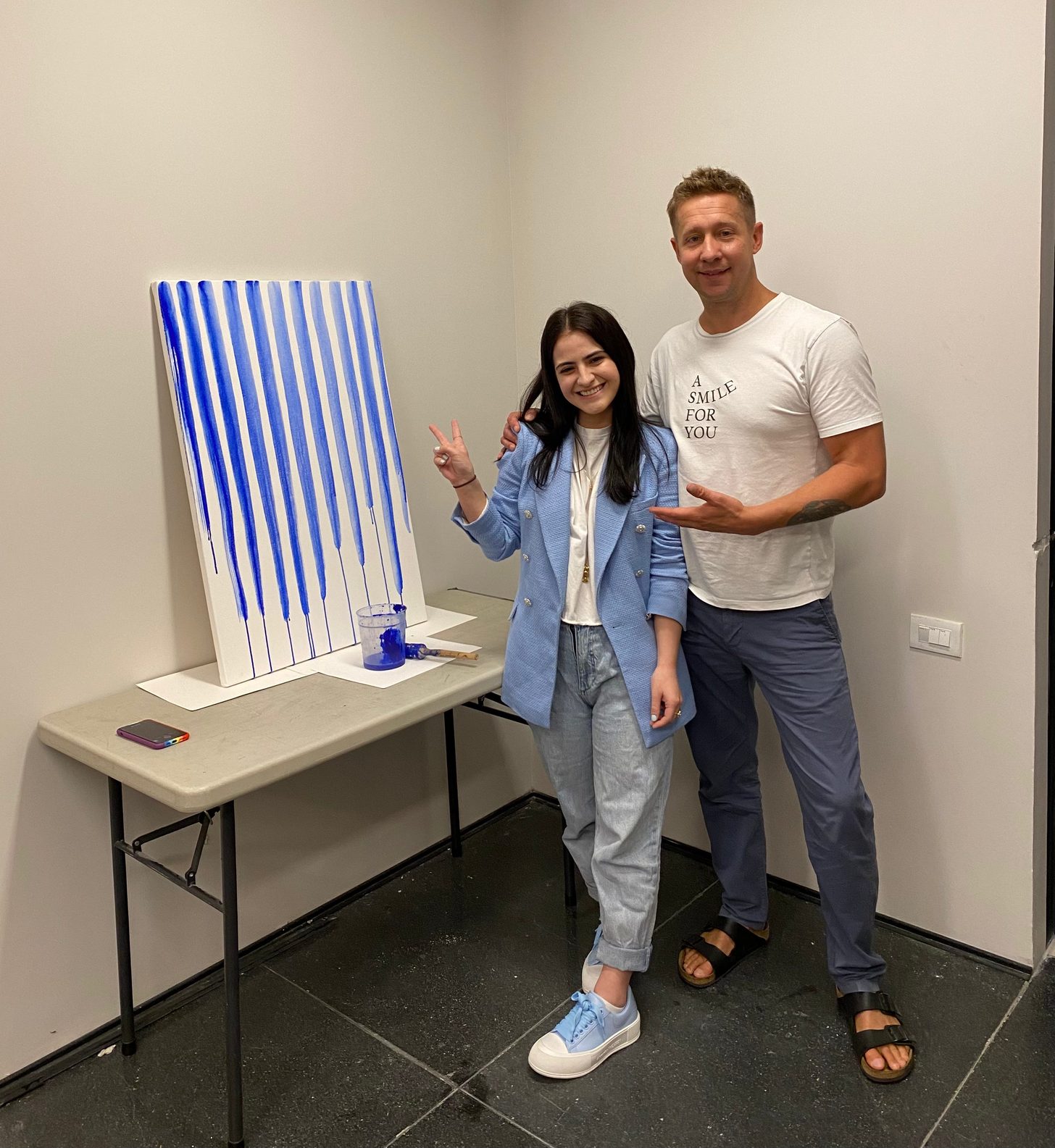
In 2021, while living in Mexico City, I started meditating. Around the same time, we did a solo show for artist Jeppe Hein at the gallery. He has an amazing breathwork practice that combines meditation with art called Breathe with Me, a participatory artwork that invites people to paint their individual breaths as vertical blue brushstrokes. Each brushstroke represents one exhale, creating a visual representation of breathing that connects personal awareness with communal experience. I had the opportunity to paint one with him that I now have at home. I also guided a session with participants at the gallery on a wall.
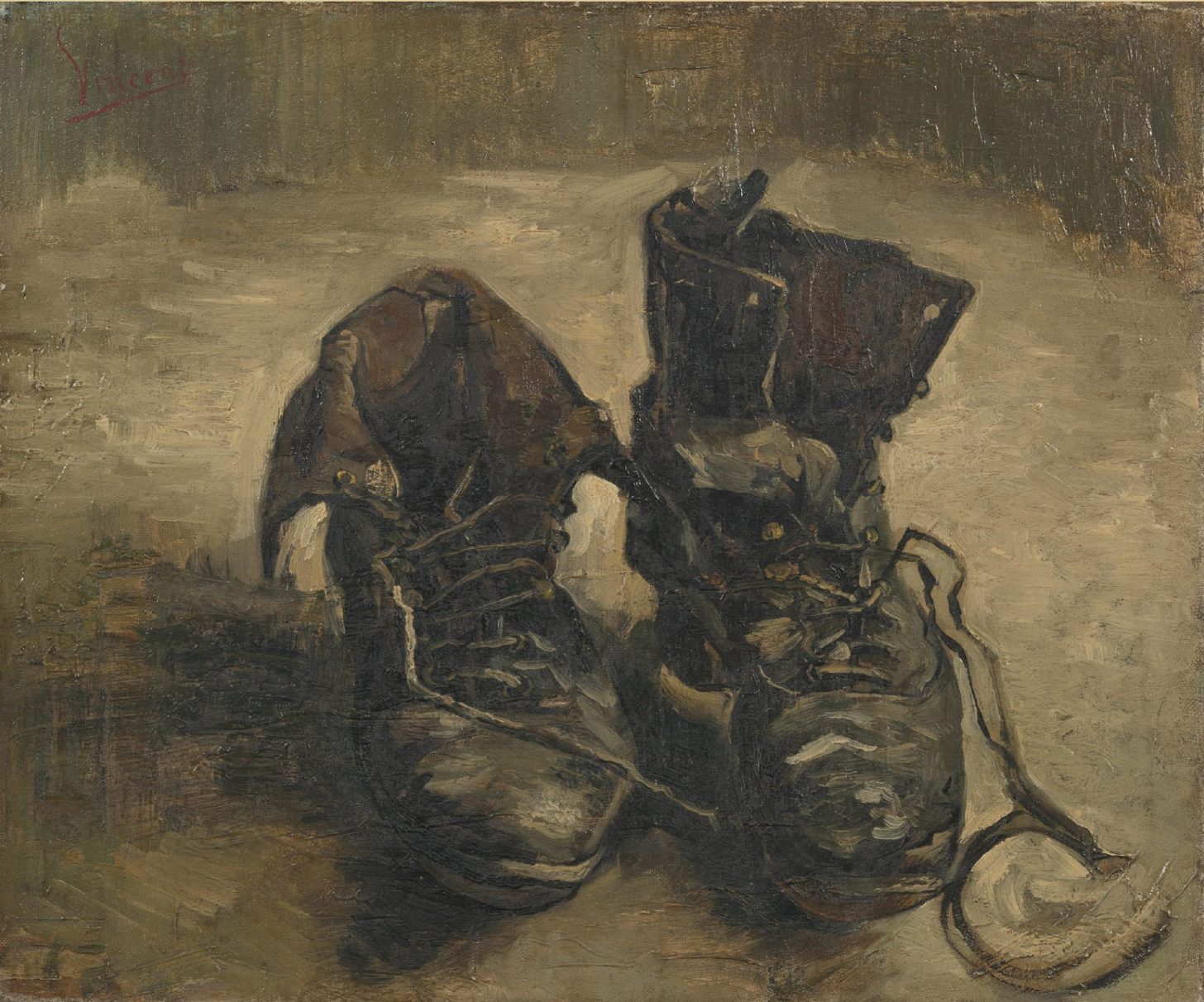
Heidegger uses Vincent Van Gogh’s painting Shoes (1886) to illustrate how art reveals deeper truths through what he calls the strife between Welt and Erde. The painting discloses an entire world: the toilsome tread of labor, the dampness of soil, the weight of work, and perseverance. Yet the shoes also retain their material presence, their worn leather and particular texture, while Erde continually withdraws and conceals itself, resisting complete disclosure. This tension between the world that opens up and the earth that remains mysterious and self-secluding is the structure of all meaning-making.
In the same way, Breathe with Me revealed something about this structure of existence at a moment when I felt lost. The blue brushstrokes had their concrete, material presence, while simultaneously opening up a world of breath, presence, and connection. In the strife between the physical marks and the meanings they disclosed, I encountered how meaning comes to be. This was a life-changing experience.
Moreover, after my ongoing experience with grief and migration, I can conclude too, that art is the origin point to begin again. Art taught me to cultivate understanding from the ground up, to see the shapes of meaning beginning to form in the darkness and draw them into the light.
Those practices I wrote about in my grief essay (going to museums alone, listening to music, watching movies, cooking) are acts of aletheia. Art has saved me many times. It has helped me reconnect. There is something that happens when you’re immersed in art; time stops and everything is right, even if it’s just for the three minutes a song lasts, or the two hours of a movie, or the meal you’re enjoying. In those moments, I encounter the structure of meaning-making.
I invite you to find your art, and I hope it will help you as much as it has helped me. Perhaps first as aesthetic experience, but maybe, if you attend carefully enough to what shows itself, as something deeper: a revelation of how meaning itself comes to be.
Until next week!