Reclaiming the Moral Center: Étienne Gilson, Virtue, and Art
2026-01-13 · 4 min read
My dearest incurable humanist, I see new faces here, so first and foremost: welcome. This space was born from grief, migration, and art; and from a stubborn conviction that, in a world turning us into data points, we choose to remain human. I’m not sure if you feel the same way, but to me, lately,…
My dearest incurable humanist,
I see new faces here, so first and foremost: welcome. This space was born from grief, migration, and art; and from a stubborn conviction that, in a world turning us into data points, we choose to remain human.
I’m not sure if you feel the same way, but to me, lately, everything feels polarized. Headlines demand faster reactions, social media rewards dumb scrolling, AI blurs reality and algorithms spread political radicalization. There’s less room to feel, to think, or wonder amid the noise. This week, I stepped back to reconnect with The Incurable Humanist’s origins by returning to my father’s favorite philosopher, Étienne Gilson. He was a French leading thinker of the 20th century; renowned for his scholarship on medieval philosophy, especially the works of Thomas Aquinas, he sought to reconnect modern thought with its classical and Catholic roots.
Gilson argues that Aquinas Christianized Aristotle’s Nicomachean Ethics by adapting its account of human ‘flourishing’ (eudaimonia) to Christian theology. In this context, ‘flourishing’ comes from virtues developed through habitual rational action. Each one of the four cardinal virtues play distinct roles: prudence helps us discern the right means to our ends, justice orders our relationships, fortitude enables us to endure hardship, and temperance moderates our desires. Aquinas added three theological virtues: faith, hope, and charity, to elevate this toward Divine Good, orienting human life.
Moral action is guided by natural law, which we grasp through synderesis, an innate habit of the mind that recognizes the first principle of practical reason: “Do good and avoid evil.” From this principle, we derive more specific moral norms and evaluate actions by examining three dimensions: the object (what is being done), the end (why it’s being done), and the circumstances (the context in which it occurs). Gilson explains this preserves Aristotle’s virtue ethics while reorienting it toward a divine telos rather than purely natural human ‘flourishing’.
In Gilson’s Thomistic philosophy, one loses their moral center when freely chosen acts cease to be ordered by right reason toward God as the final end, ergo, through repeated contrary habits that corrupt acquired virtues. Nevertheless, I believe that even for those who are not religious, one can still conceive of goodness as the ultimate end, rather than God. I realize this moves away from a strictly Thomistic read, but bear with me. In a more contemporary context, I would argue that experiences such as migration and grief can endanger one’s moral center when profound sorrow drives actions that erode acquired virtues through contrary habits. Yes, free will remains, even in suffering, and therefore one is still capable of reorientation through deliberate virtuous acts; but this is exceedingly difficult. It is here, I sustain that art becomes essential.
Following Gilson, art is understood as poiesis - from the Greek “making,” where the artist imposes form upon matter, bringing new realities into being.
Étienne Gilson, following Thomas Aquinas, understood beauty as something that reveals the splendor of being itself. For him, beautiful things please us because they show clarity, proportion, and wholeness, qualities that let us see the inner harmony of what exists.
In Painting and Reality (1957), Gilson looked at Piet Mondrian’s paintings, to test whether beauty can still be objective in modern art. He argued that even though Mondrian’s grids don’t imitate nature or express personal emotion, they still achieve beauty through order and balance. The harmony of lines and colors, perfectly arranged, reveals stability and intelligibility.
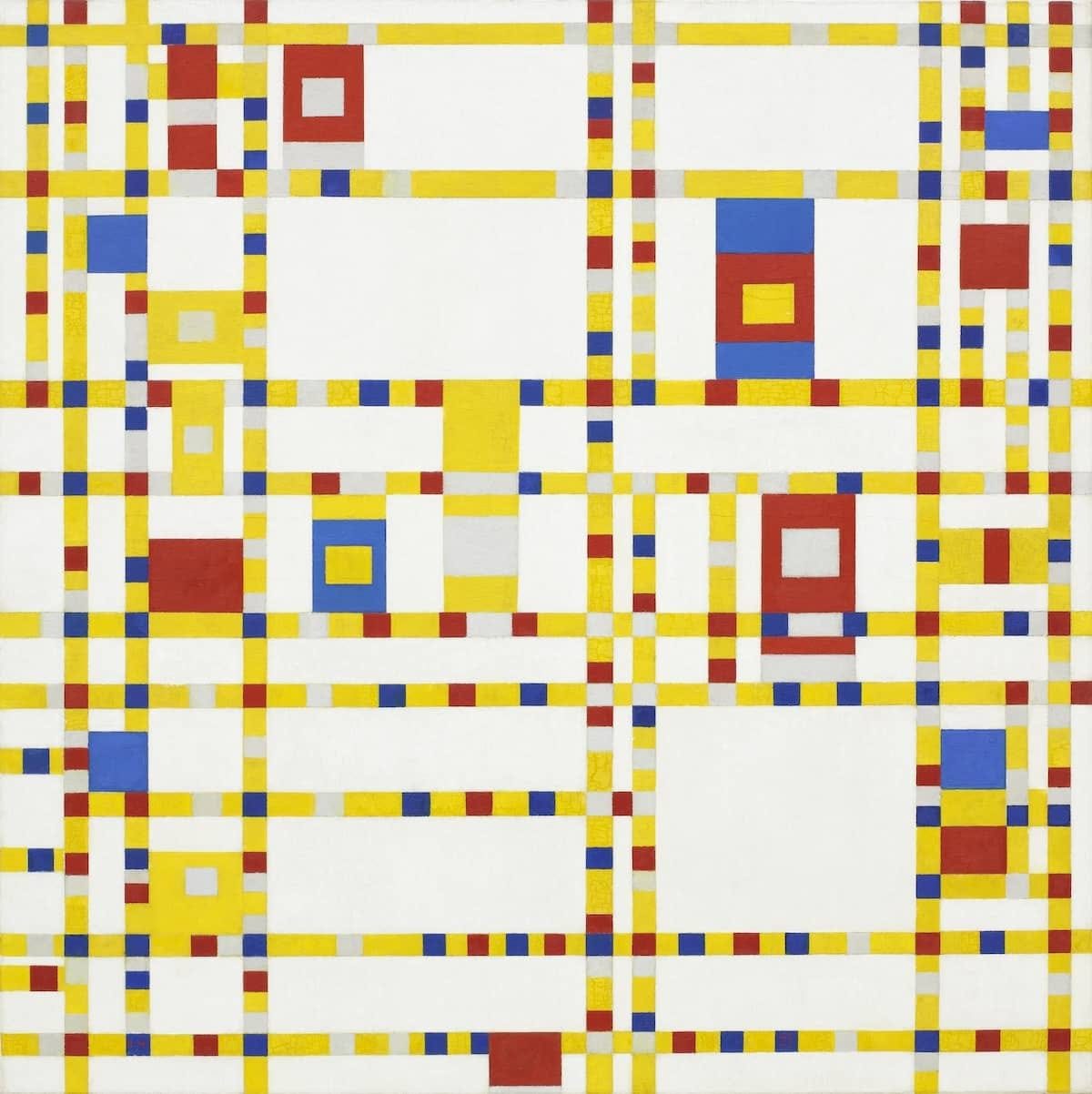
Later, in Forms and Substances in the Arts (1968), Gilson compares various art forms. Painting delivers wholeness at a glance, music synthesizes melody through time and memory, poetry binds words into rhythm, and theater integrates action and dialogue. Despite these differences, all exemplify poiesis; autonomous artistic making rooted in the work’s intrinsic esse.
Knowing this, I would argue that from a contemporary perspective, anyone can reclaim their moral center through everyday acts of creation. You don’t need to be a professional artist; baking a simple cookie recipe, writing down your scattered thoughts, or sketching something basic all qualify as poiesis. These acts recenter you amid grief or migration’s chaos, countering sorrow’s pull on the will. Through deliberate creation, you reactivate virtues.
Gilson modernized Aquinas, who modernized Aristotle; each generation rescuing humanism. As Gilson feared philosophy was losing humanism to science, I fear, we’re losing humanism to grief, migration, and political polarization.
Let us reconnect with Gilson, Aquinas and Aristotle, as their chain of virtue ethics calls us back to poiesis. Paint, bake, cook, write, sing, dance; and reclaim fortitude against sorrow, prudence amid chaos, temperance in division.
Above all, remain incurably humanist.
Until next week.