Who's the Clown?
2025-08-26 · 6 min read
My dearest incurable humanist, Ever since I was a child, I’ve felt like I walked into a party without an invitation. Awkward, clumsy, too aware of how not-enough I was. The kind of social anxiety where you stand in the corner, with a drink, replaying every gesture in your head while nobody notices…
My dearest incurable humanist,
Ever since I was a child, I’ve felt like I walked into a party without an invitation. Awkward, clumsy, too aware of how not-enough I was. The kind of social anxiety where you stand in the corner, with a drink, replaying every gesture in your head while nobody notices you. But there’s another kind of loneliness too, the one where you’re fine in your own company, yet longing for someone who truly sees you. That double-life of solitude shaped most of my twenties: overanalyzing every date, every pseudo-relationship, wondering if I would ever find “the one”.
A few weeks ago, I wrote about Billy Joel’s documentary. In it, Paul McCartney confessed that if there were ever a song he wished he had written, it was Just the Way You Are. This has been echoing in my head, especially after listening to Audrey Hobert’s debut album Who's the Clown? released on Friday, August 15th. My younger self is wishing I had written this entire 12 track record.
Hobert, twenty-six, is this year's breakout star. She began writing for a Nickelodeon sitcom, then co-wrote multiple hits on The Secret of Us, her friend Gracie Abrams’s, album, and now is starting a career as a singer/songwriter.
My TikTok algorithm brought me to Hobert when she released her first single Sue Me, and since then I was eagerly anticipating the full record. On the surface, it’s an upbeat, catchy anthem, but it’s not bubblegum pop. Hobert zeroes in on the small things you notice about someone you’ve been with (like their signature drink), and then undercuts it with “breaking patterns” and “getting so good at Pilates.” Lowkey, this hit close to home since I started Pilates myself a year ago.
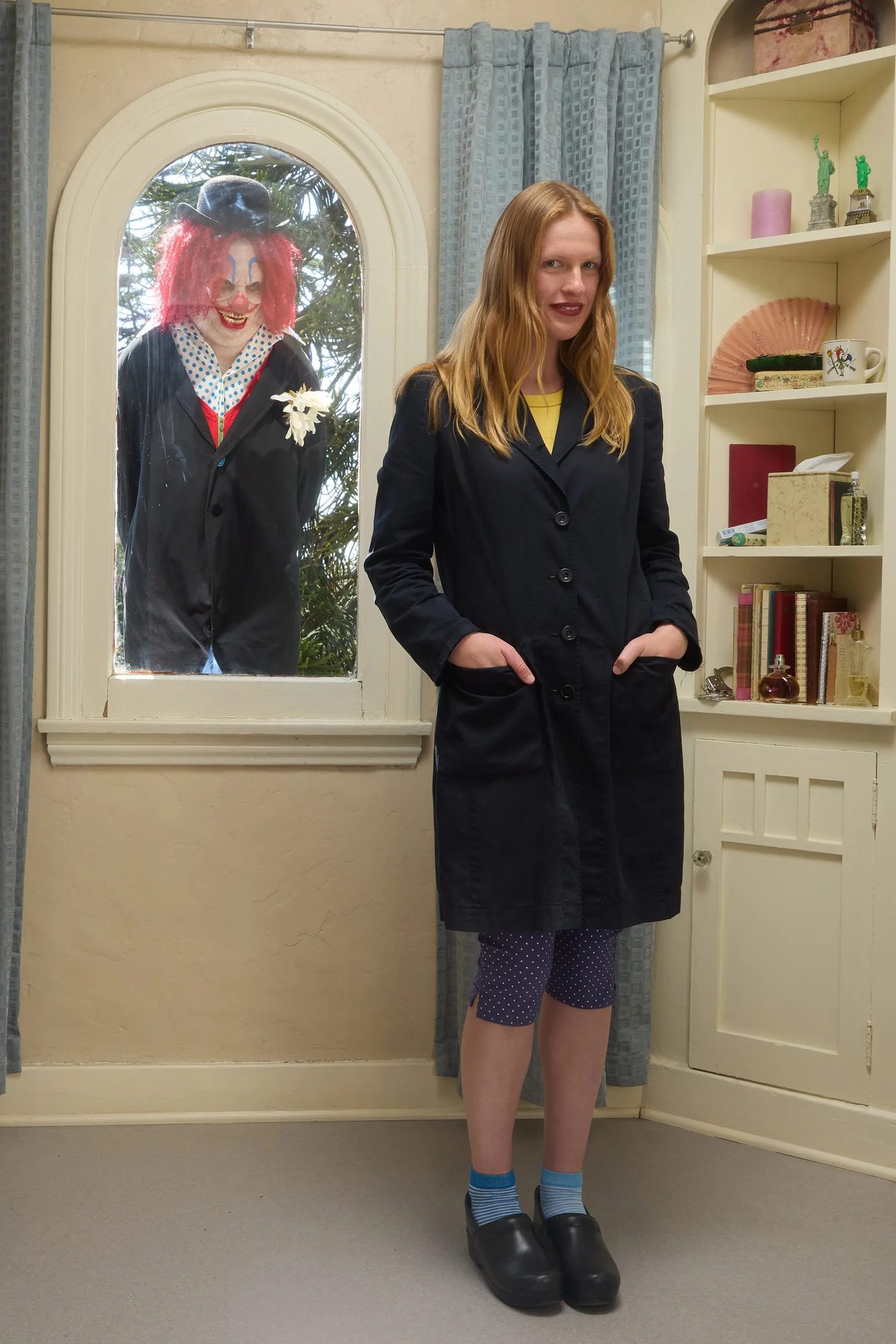
But what makes Sue Me more than just clever is the portrayal of the contradictions we all have. It’s about the unbearable urge to still be wanted by someone you’ve already decided is wrong for you. When she screams in the bridge:
“Sorry that your dog died / (...) / You’ll go to heaven and I’ll go to hell in the meantime.”
It reminded me of my early twenties, when I dated a guy who got a dog right before our first date. Three months later, the dog died. He was devastated, and I understood. But after a while, the loss became yet another reason not to see me on a Friday night. I remember thinking: just get over it already. That’s the brilliance of Hobert: she captures the selfishness inside our empathy.
Bowling Alley isn’t really about bowling, it’s about the little coping habits we build to keep ourselves from unraveling. The creams, the nightgowns, the prayers.
It’s a glimpse of how crisis routines turn into comfort (“I do it in a crisis, it’s a crisis nightly now”) and the fleeting high of being noticed: hitting a strike, soaking in the attention, then sneaking out with an Irish goodbye before the night can sour.
Wet Hair is an inner dialogue of insecurity masquerading as effortless confidence, showing up with wet hair like you don't care when you obviously do. It's that exhausting performance of being the cool, unbothered girl you're not, and Hobert nails every uncomfortable detail of that act.
I'm an album person. I like to digest and dissect every lyric as a complete body of work, and Who's the Clown? rewards that.
Hobert knows the stress of modern dating.Thirst Trap opens with an addictive melody that immediately transports you into that specific anxiety of early dating, pacing around your room, overthinking every scenario, cringing at your own over analysis. The song captures taking photos you hate, changing lighting, wondering if you're worth dating, all while knowing you're being ridiculous but unable to stop.
At its core, Hobert’s album is about never quite belonging.Chateau delivers early 2000s rom-com vibes while positioning Hobert as the eternal outsider. She's in the scene, referencing Chateau Marmont and delivering a killer guitar solo, but is she really part of it? Even Sex and the City, her most cinematic song, stays grounded in this outsider lens. She poses the heartbreaking question about what it's like to be admired, hot, and desired, the kind of existential wondering that hits you drunk in an Uber late at night after another disappointing evening. But then she seamlessly transitions into the mundane reality of rating her driver five stars, making the profound feel conversational.
I also love how she’s somehow taking iconic 90s singer/songwriter references. Don't Go Back to His Ass gives me Liz Phair’s Fuck and Run energy in the best possible way. It's brutally honest about the angst of cycling back to the toxic guy who never changes, wrapped in an absolutely addictive melody that makes you want to sing along to your romantic disasters.
Phoebe starts with Hobert moving to New York because an executive told her she'd be a star. Immediately contrasts that with feeling belittled because some guy doesn't care about her. It's painfully real, how you might be succeeding in your career but feel like nothing if that one person doesn't acknowledge you. In the bridge she describes being in the corner eating icing at a birthday party, surrounded by people who aren't really her friends and captures something I've never heard articulated so well. The way she merges loneliness, hope, self-doubt, and acceptance, ending with the revelation that she feels like Phoebe and doesn't care about being pretty anymore, is devastating and empowering signaling therapy.
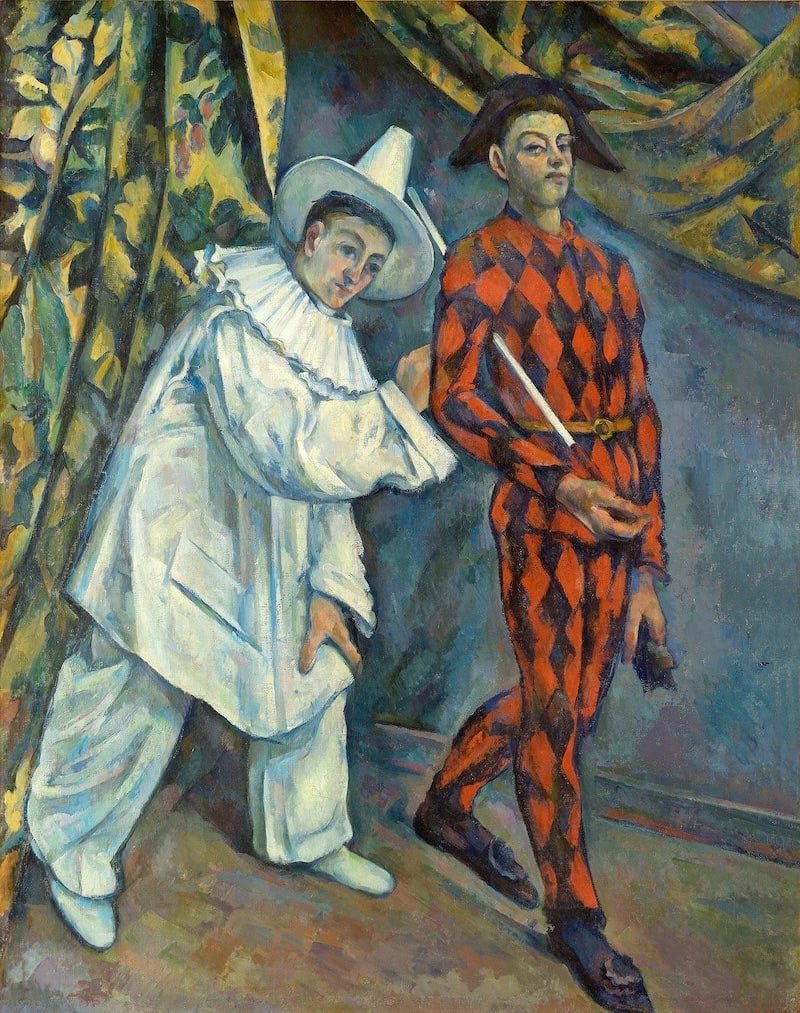
Clowns have long served as a symbol of complex human emotions in art, and Paul Cézanne’s work offers a striking example. In pieces like Pierrot and Harlequin, the clown is not merely a comic figure but a symbol for melancholy, introspection, and the tension between performance and vulnerability. This motif was echoed by contemporaries such as Henri de Toulouse-Lautrec and Georges Rouault, who often portray the duality of humor and sadness, the outsider navigating societal expectations while concealing private suffering. In this sense, the clown embodies the contradictions Hobert brings this into the contemporary realm by exploring the desire to be seen and admired while grappling with insecurity, longing, and the ache of not quite belonging.
Now, at thirty and married, I'm in a completely different phase of life. But listening to this album transports me instantly back to that restless younger self, the loneliness, the over-thinking (which I am not truly over with), the desperate hunger to be understood.
This is what sets Who's the Clown? apart from typical pop. In a world of carefully curated personas, Hobert embraces the mess. She transforms the anxious internal monologue into catchy songs.
The album's title question becomes its answer: we're all the clown sometimes, stumbling through our own performances, and that's precisely what makes us real. Hobert reminds us that our most awkward selves don't need to be hidden, they deserve to be celebrated. For anyone who's ever stood in the corner of a party, wondering if they belong, this album proves that our messiest feelings can be our most meaningful art.
(Read by the author. Theme song, The Incurable Humanist, by Carlos Escalona Cruz. All Rights Reserved 2025.)