Becoming a Plantain Chip Connoisseur
2025-07-29 · 5 min read
My dearest incurable humanist, "The connoisseur is concerned with distinguishing the better from the good and the best from the better." – Giorgio Vasari Every night for seven years, from age seventeen until I left Venezuela at twenty-four, I ate plantain chips for dinner. With ketchup. (I know,…
My dearest incurable humanist,
"The connoisseur is concerned with distinguishing the better from the good and the best from the better." – Giorgio Vasari
Every night for seven years, from age seventeen until I left Venezuela at twenty-four, I ate plantain chips for dinner. With ketchup. (I know, don't judge.)
Not just any plantain chips: only NatuChips.
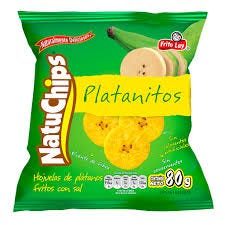
PepsiCo owns NatuChips, but they feel like something more unique than just a corporate snack. Produced in Venezuela, proudly "del campo," made from local plantains. There was a commercial with a farmer holding a plantain, saying, "Este es el plátano más bonito que he cosechado" ("This is the most beautiful plantain I've ever grown."). To me, this wasn't marketing; it was true.
They come in garlic, sweet, wavy, and even gourmet-like varieties. But I stayed loyal to the classic: thin, salty, perfect yellow circles.
Since leaving Venezuela in 2019, I have become a plantain chip connoisseur, searching New York's bodegas and grocery stores for something that approaches the NatuChips standard.
Years of eating plantain chips have trained my palate in surprising ways. I understand how storage impacts texture, why some bags go stale faster, and how I dislike chips fried in coconut oil (yuck!) even if they claim to be healthier.
This is the connoisseur's connondrum: once you know what perfect tastes like, everything else becomes a comparison. But it's also led to unexpected discoveries, to appreciating the different philosophies embedded in each brand's approach. Some prioritize paper-thin delicacy. Others embrace substantial chew. Some are aggressively salted; others let the plantain's natural earthiness dominate. Each brand tells a story about its origins, about what the makers believe plantain chips should be and do.
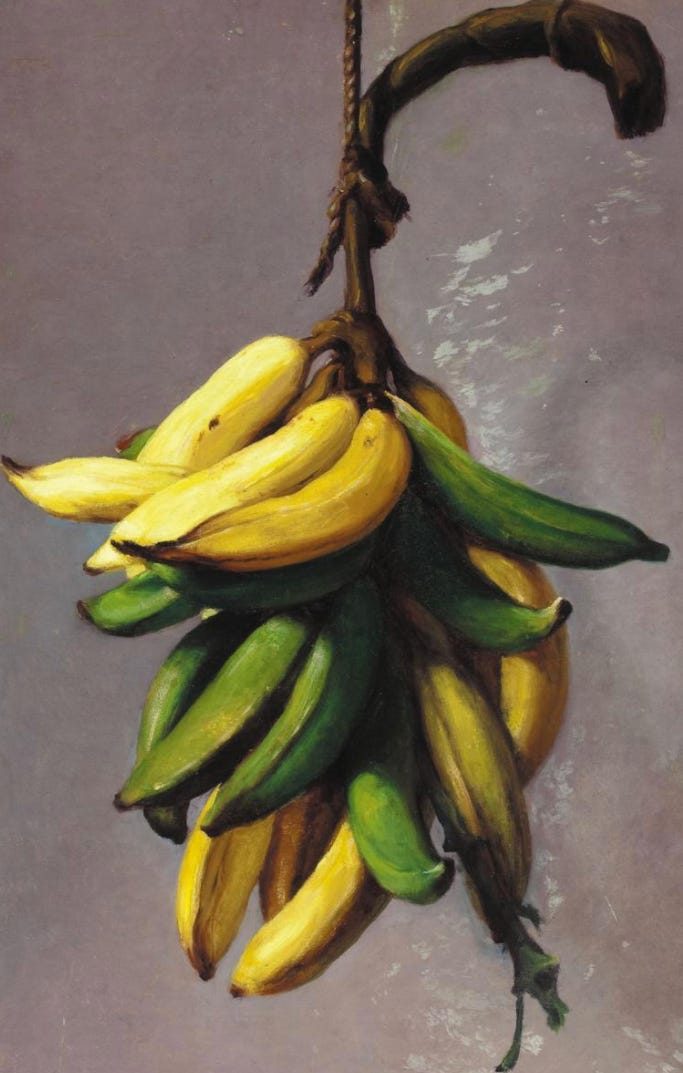
I think about Puerto Rican painter Francisco Oller’s still lifes. In Plátanos amarillos (1893), he painted a bunch suspended from a rope against a muted grey background, the weight of the fruit pulling downward while individual plantains curve in different directions, some yellow and ripe, others still green. Oller was a transatlantic cosmopolitan who traveled twice to Europe, but he kept returning to Puerto Rico, and what we see in his plantains is both a literal and metaphorical reference to his island. His compact compositions make the everyday monumental, magnifying fruits that are part of the daily Puerto Rican diet.
In New York, finding NatuChips requires the persistence of an urban archaeologist. They appear sporadically in certain bodegas, often dusty and overpriced, sometimes there for weeks before vanishing entirely. This has transformed my friends and family into smugglers. Anyone traveling to Venezuela knows the drill: bring back bags of NatuChips. They've learned it's the most valuable gift they can offer me, worth more than rum. This somehow mirrors the ancient impulse that created plantain chips in the first place. West Africans sliced and preserved their plantains to make abundance last through scarcity.
I've spent years trying to explain to friends why I can't just eat any plantain chips. Some things become irreplaceable not because they're objectively superior, but because they've become entangled with memory. (Though NatuChips are objectively superior.)
When I lived in Mexico City, the quest continued, but all I could find were plantain chips dusted with chile or overly sweetened, both of which I did not enjoy one bit. I tried them anyway, but each bag ended in disappointment. Then, on a trip to Bogotá, I spotted a familiar green of NatuChips! I bought ten bags on the spot. Last month at a Publix in Miami, I did the same, elated in the snack aisle like I’d won the lottery.
This obsession has mellowed over time. I no longer eat them for dinner every night, though I absolutely would if I could reliably find them at my local grocery store. But the fundamental appreciation remains. I still experience genuine joy when I spot those green bags in an unexpected corner store.
My plantain chip fascination has made me think about how every migrant carries their catalog of impossible cravings. I don't mean the foods that have successfully crossed borders: arepas, tacos, sushi, and tapas that have found homes everywhere. I mean the deeply specific things: the brand of cookie that tastes like childhood, the exact formulation of a soft drink that no longer exists, the street food that can't be recreated because it requires a specific corner and a particular vendor's hands. We carry these phantom tastes like grief, weighted with the centuries of movement that brought these foods to us in the first place. Plantains themselves traveled from Southeast Asia to Africa to the Caribbean, becoming a part of the DNA of tropical cuisines through migration and trade, just as they've become folded into mine.
The irony isn't lost on me that I'm obsessing over a food that isn't even native to Venezuela. Plantains arrived in the Americas through colonial trade routes, yet they became so central to Venezuelan cuisine that dishes like pabellón, our national dish, are unimaginable without tajadas (ripe fried plantain).
In the end, we're all searching for our version of NatuChips. That perfect thing that satisfies not just physical hunger, but our need for comfort, for home. The fact that mine happens to be a Venezuelan plantain chip eaten with ketchup is proof that grace comes in the most unexpected packages.
P.S. What food is your version of NatuChips?