Patsy’s in East Harlem: The Immigrant Story Behind New York’s First Pizza Slice
2026-03-24 · 5 min read
My dearest incurable humanist, There’s a corner in East Harlem where the present feels paused. On the surface, Patsy’s looks like any other old-school New York pizzeria, a window dusted with flour and time, and pictures with celebrities hung on the walls. But this is no ordinary pizza joint.…
My dearest incurable humanist,
There’s a corner in East Harlem where the present feels paused. On the surface, Patsy’s looks like any other old-school New York pizzeria, a window dusted with flour and time, and pictures with celebrities hung on the walls. But this is no ordinary pizza joint. Founded in 1933 by Pasquale “Patsy” Lancieri, a young Neapolitan immigrant. Rumor has it that Patsy’s, became the first place in New York to sell pizza by the slice, and one of the first to have a coal fire oven.
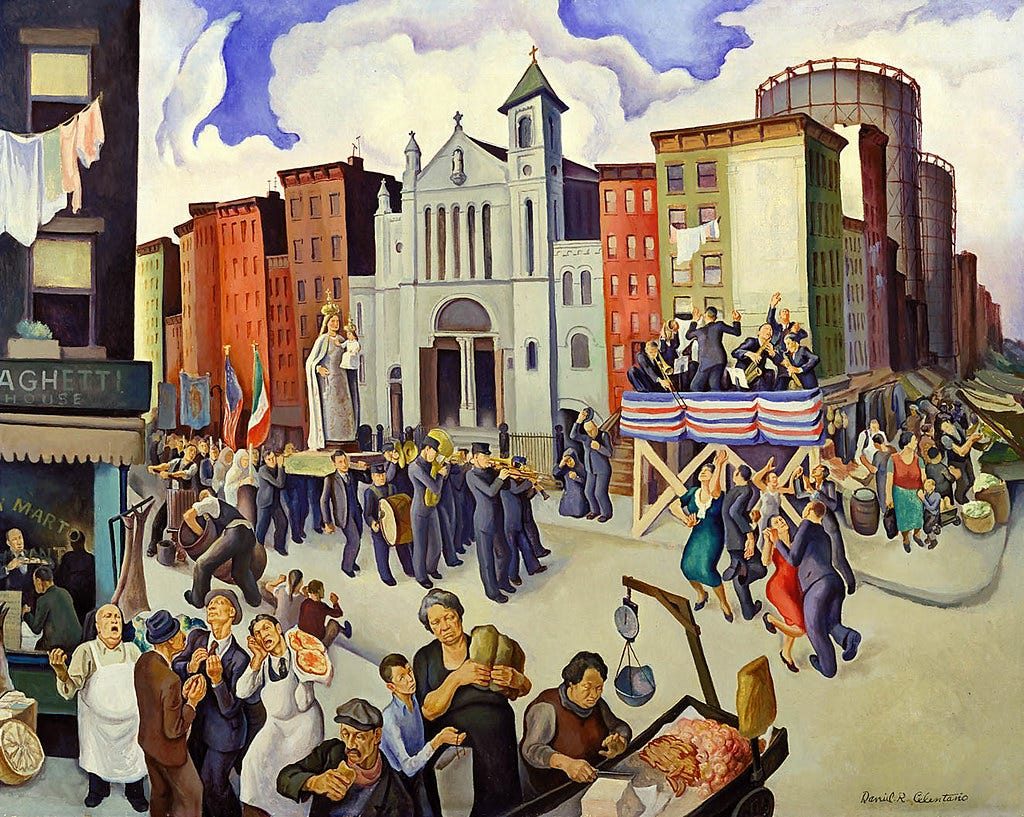
Patsy learned his trade at Lombardi’s in Little Italy before heading uptown to open his own place in Harlem in 1933. The neighborhood wasn’t an obvious choice for an Italian pizzeria, but it wasn’t as unlikely as it sounds since Harlem in the 1930s had a significant Italian community alongside its better-known African American and Puerto Rican population.
Patsy’s started selling individual slices at 10 cents making pizza accessible to factory workers and anyone else who couldn’t commit to a whole pie. That model would eventually become the defining feature of New York pizza culture.
I have been living in Harlem for a few years now and my husband and I have ordered from Patsy’s a few times but to be honest we had never been in person. I am not a huge pizza girl because I cannot eat dairy for health reasons so I’m usually trying to find “dairy-free” or “vegan” options although they are never quite the same. Nevertheless, every now and then I will do a “cheat meal” and have a real pizza. Tonight March 23rd, was our 10th anniversary of having met (we haven’t been together for ten years but that’s a tale for another day) - I was tired from work and got home around 6:30 so we didn’t feel like cooking but also didn’t feel like going somewhere far, so we figured why not go to Patsy’s since we’ve always been curious to go - and so we did!
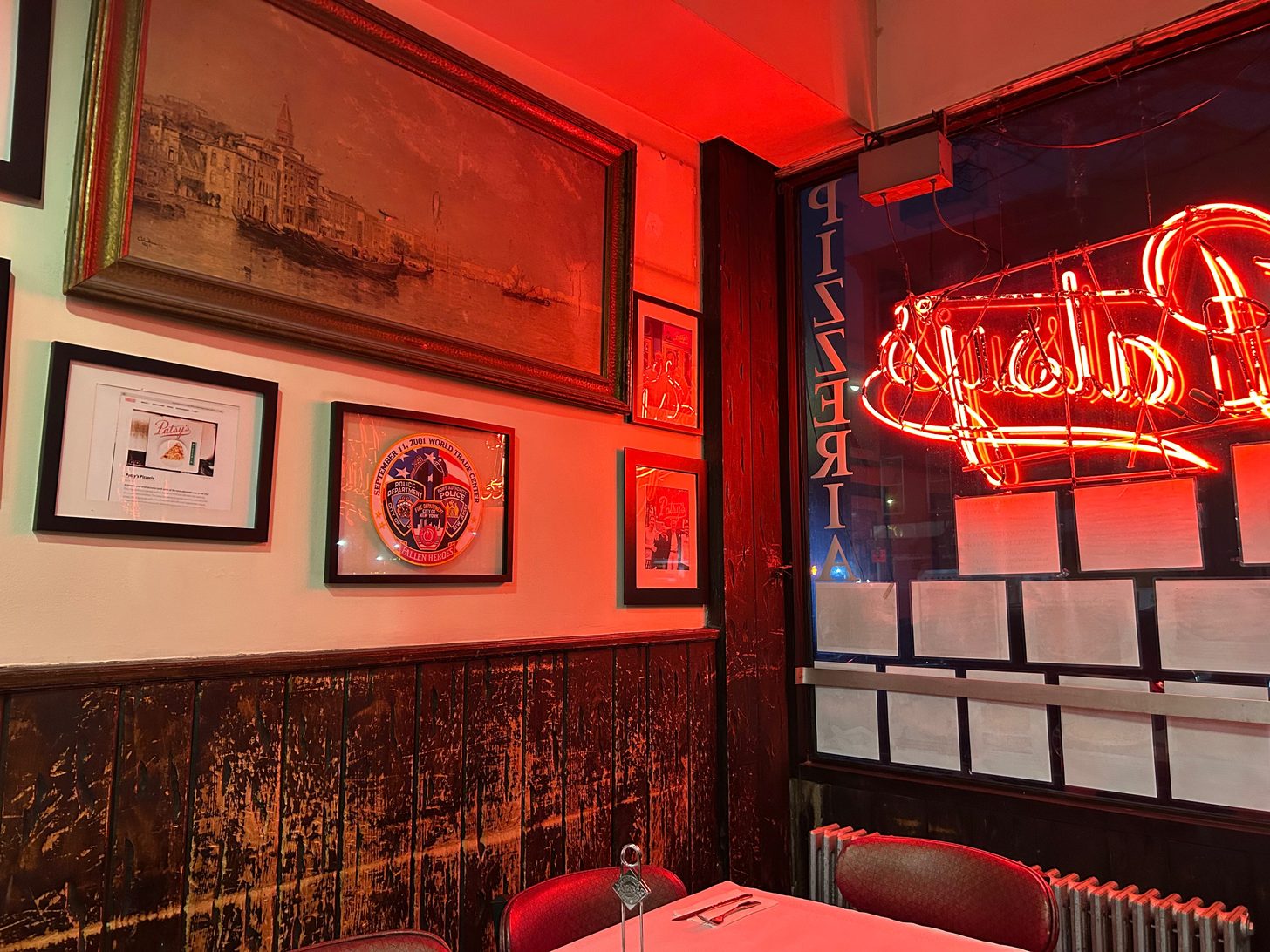
We ordered a bottle of Cabernet Sauvignon for only $33 — which, in NYC, is basically free. The pizza was $18, we added pepperoni for $2, and everything including the tip came to $65. Can you believe it? Greatest anniversary dinner ever (LOL) — but price aside, the pizza was genuinely delicious. Classic New York pizza. (I’m praying I won’t have a horrible stomachache tomorrow and that my skin stays clear of breakouts.) Anyway … the staff was great, everyone super friendly. The place is old and a little worn, but the atmosphere is wonderful — good music, and you get that feeling of the real old New York.
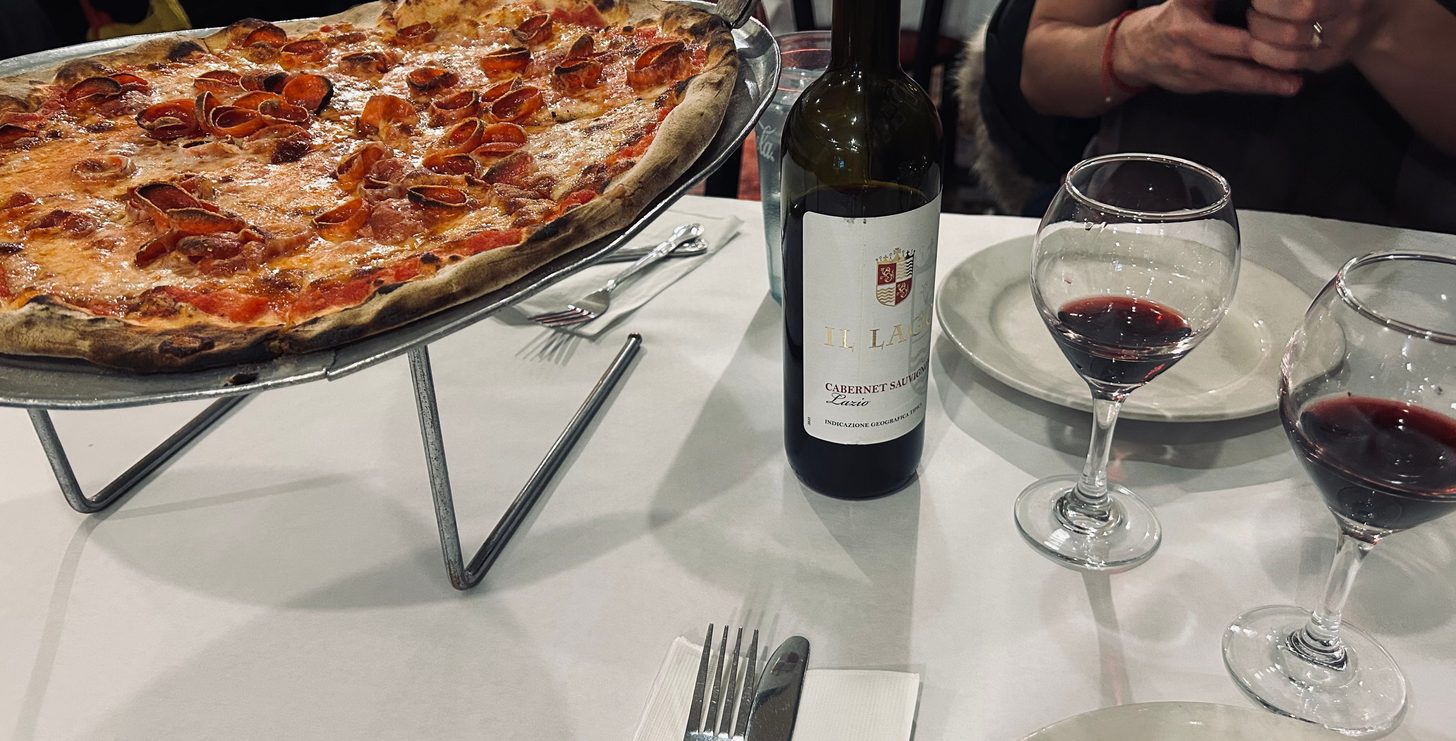
Patsy’s story got me thinking, of course, about migration and food. When Italian immigrants arrived in the early 20th century, they brought pizza with them. At the time a working-class street food from Naples, made with dough, tomato, and cheese. In New York, the recipe shifted out of necessity. Wood-fired ovens gave way to coal, water buffalo mozzarella was replaced by whole-milk mozzarella, and tomatoes came canned rather than fresh. The result was something distinct from its Neapolitan origin, shaped by what was available.
By the time Patsy’s opened in Harlem, pizza was already changing. The New York slice that Patsy’s helped define was thin, slightly charred from the coal oven, large enough to fold in half and eat on the go. That format was practical, suited to a city where most people were eating quickly and cheaply between shifts.
I was very curious about its history, so I went down an internet rabbit hole and found out that after Patsy died in 1979, his widow Carmela sold the original Harlem place. Within a few years, new restaurants opened under variations of the name including Patsy’s Pizzeria in Manhattan, Patsy’s Italian Restaurant in Midtown, etc. each with some claim, direct or implied, to the original East Harlem spot. Trademark lawsuits followed. The core question was who had the right to the name, and what that name represented. The dispute got more complicated when some of the offshoots began franchising. The courts eventually landed on a split ruling: no single party could monopolize the name outright, but the original Harlem location retained its claim to its own history. Today, Patsy’s Pizzeria has evolved into a recognizable chain across the city, with more than a dozen locations from the Upper West Side to Staten Island. (Mind you this is quite summarized. If you want to read a more detailed version click here.)
Harlem has changed around Patsy’s a thousand times. The Italian vibe that once surrounded the restaurant dissolved decades ago, absorbed by waves of migration from West Africa, and the Caribbean. Yet Patsy’s stayed, adapting without losing its soul. I find it so fascinating that the original is still here and that we are able to go eat there anytime at such a historic landmark. To sit there tonight beneath the faded photos of Sinatra, Joe DiMaggio, and Al Pacino, with neighborhood kids grinning with sauce-stained fingers, is to feel the persistence of immigrant craft in a city that feeds on reinvention.
Patsy’s embodies the magic of migration. The spread of pizza, from New York to Chicago to Detroit and beyond, has always followed the movement of people, and work. By the 1960s, pizza had become the quintessential American comfort food. And now, as the world consumes an estimated five billion pizzas a year, we’re reminded that something born of scarcity can become a global symbol of abundance. That the immigrant dream can expand across generations and continents.
In Manhattan today where most things feel like temporary trends, Patsy’s is the endurance of migration and ever lasting perseverance. Walking home tonight, happy on cheap wine and nostalgia, I realized how lucky I am to call Harlem home. This neighborhood carries so many immigrant stories, African, Puerto Rican, Dominican, Italian - and mine too, Venezuelan. All of us gathered within the same few blocks, each writing a new chapter.
Until next week!