Before France, There Was Venezuela: Camille Pissarro and the Making of an Artist
2026-07-14 · 5 min read
My dearest incurable humanist, Over the past two weeks, I have been writing about the aftermath of the earthquakes in Venezuela and, about La Guaira, one of the hardest-hit areas. I find it important to continue to raise awareness of what is still happening in Venezuela, but for this week, I want…
My dearest incurable humanist,
Over the past two weeks, I have been writing about the aftermath of the earthquakes in Venezuela and, about La Guaira, one of the hardest-hit areas. I find it important to continue to raise awareness of what is still happening in Venezuela, but for this week, I want to tell you about La Guaira from another perspective, as a breath of fresh air.
In November 1852, Camille Pissarro, a twenty-two-year-old immigrant, stepped off a ship into the port of La Guaira. You might be wondering what Pissarro, the Impressionist, has to do with La Guaira. Well… more than you might think, because before he became one of the fathers of Impressionism, there was Venezuela.
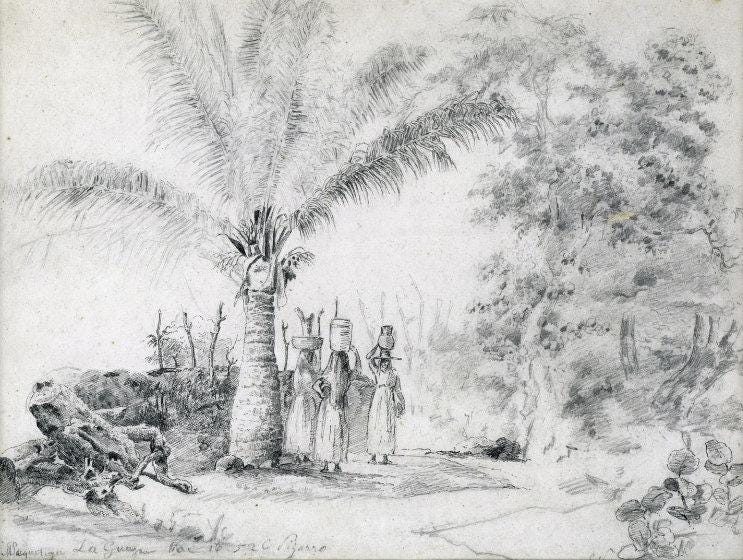
Pissarro was born in St. Thomas, then a Danish colony, to a family of Portuguese Jewish heritage. He studied briefly in Paris before being sent back to help in his father’s business, but he wanted to paint. Determined to become a painter, he sailed to Venezuela with the Danish artist Fritz Melbye.
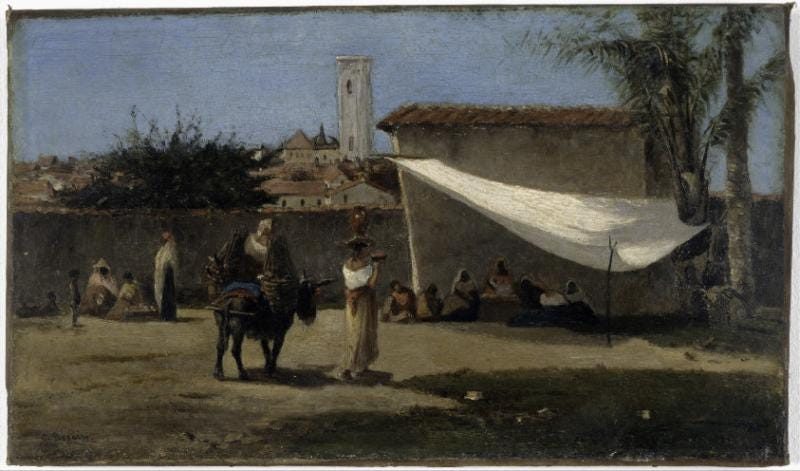
When we think of Impressionism, we think of France, Parisian boulevards, the Seine, water lilies, cafés, and the circle of painters who rejected the rigid conventions of the Salon. Rarely does the Caribbean Sea, El Ávila rising above the coast, or the streets of Caracas, cross our minds. Yet Pissarro’s encounter with Venezuela was one of the experiences that fundamentally shaped the way he learned to see.
For nearly two years, he moved between La Guaira, Caracas, and Galipán, filling pages with mountains, fishermen, street musicians, homes, and processions. Among the drawings from this period there is a sketch of the Caracas cathedral, then the tallest building in the city, and another of the market. These were more than preparatory exercises, they were how he was learning to look.
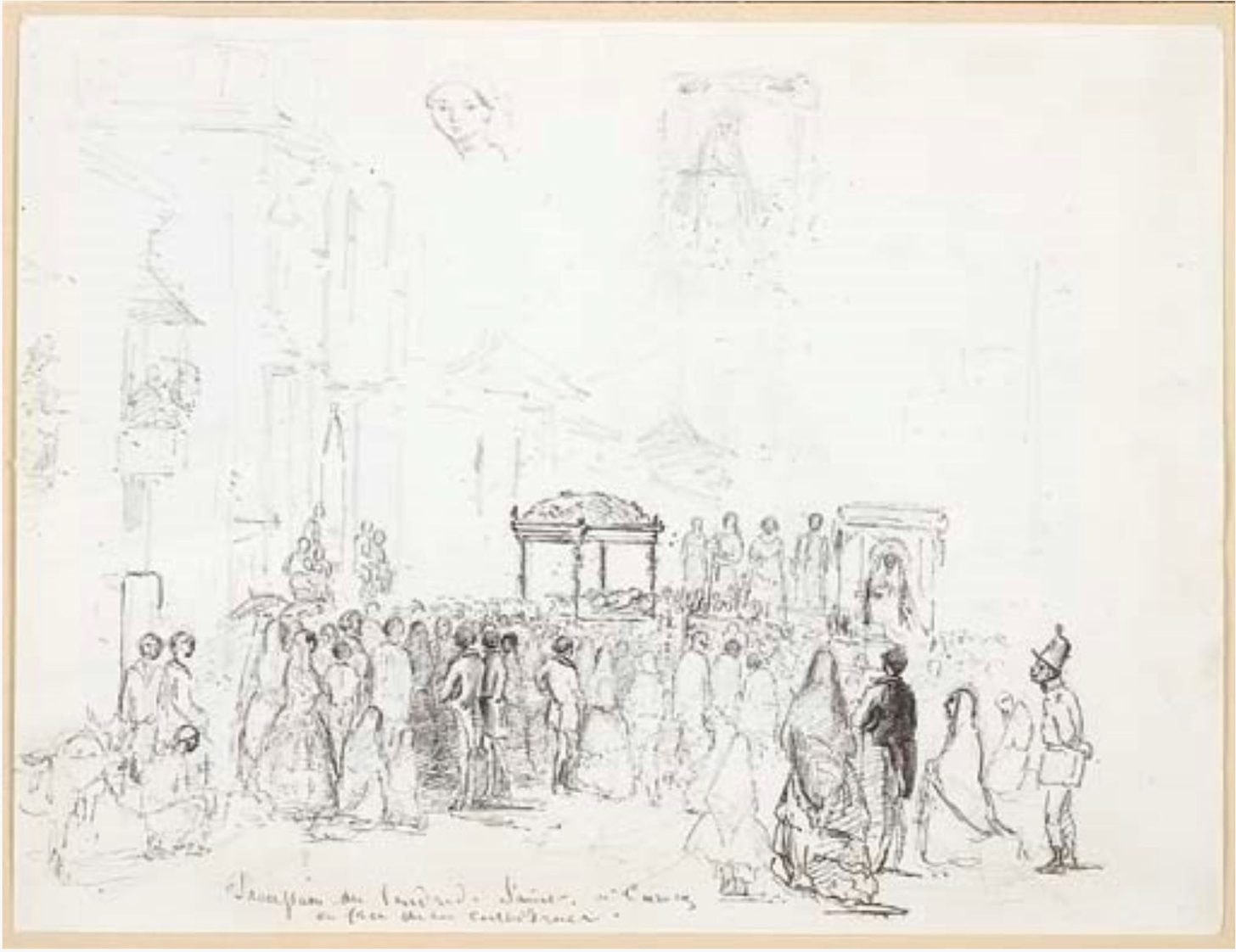
In 1966, the Venezuelan art critic Alfredo Boulton published Camille Pissarro en Venezuela, a book dedicated entirely to these years, arguing that Pissarro’s true academy was nature. Instead of mastering classical casts and academic perspective, he immersed himself in tropical light, dense vegetation, mountain landscapes, and the everyday rhythms of Venezuelan life. It was here, Boulton argues, that Pissarro developed the sensitivity to light and color that would later become central to Impressionism. Antonio Casas González, who studied the drawings closely, describes them as unfinished in appearance, quick and fluid, light always caught in the space between objects, and argues that this was the very foundation on which Pissarro built his later paintings.
It helps to remember, too, where Venezuela was historically speaking in these years. The ‘Gran Colombia’ had dissolved barely two decades earlier, the country was still finding its footing as a republic, and new art academies were only beginning to take shape. Hence, Pissarro arrived at a place mid-formation, and it shaped him back.
What fascinates me, however, is how rarely that story is told. For instance, John Rewald’s classic study of the painter moves seamlessly from St. Thomas to France, treating Venezuela as a parenthesis. Art history often celebrates the mature Impressionist while overlooking the young immigrant who wandered through La Guaira and Caracas filling sketchbooks.
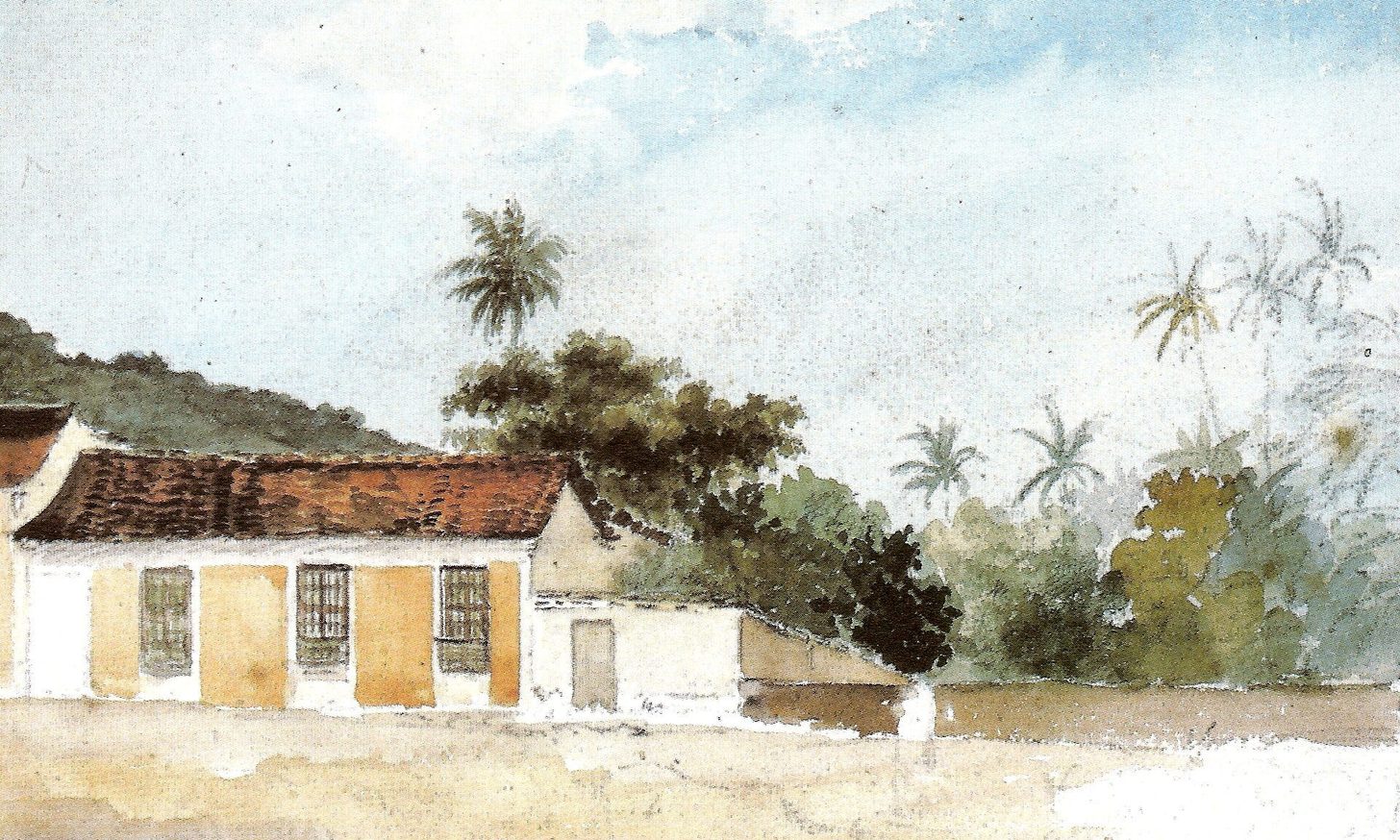
But I mean, are we surprised? Latin America has often occupied the margins of Western art history, acknowledged only insofar as it serves as a backdrop to European achievement. And even Pissarro was not entirely exempt from that gaze. Art critic Adrián Alvarado Boscán has argued that despite growing up in the Caribbean, Pissarro’s Venezuelan drawings still lean toward the picturesque muleteer, the woman doing laundry, rather than the fuller social world of Caracas around him.
Nevertheless, in February 1968, the Center for Inter-American Relations on Park Avenue opened an exhibition titled Pissarro in Venezuela, drawings and watercolors on loan from three institutions in Caracas. The critic John Canaday, reviewing it for The New York Times, also agreed that these early studies anticipated Impressionism.
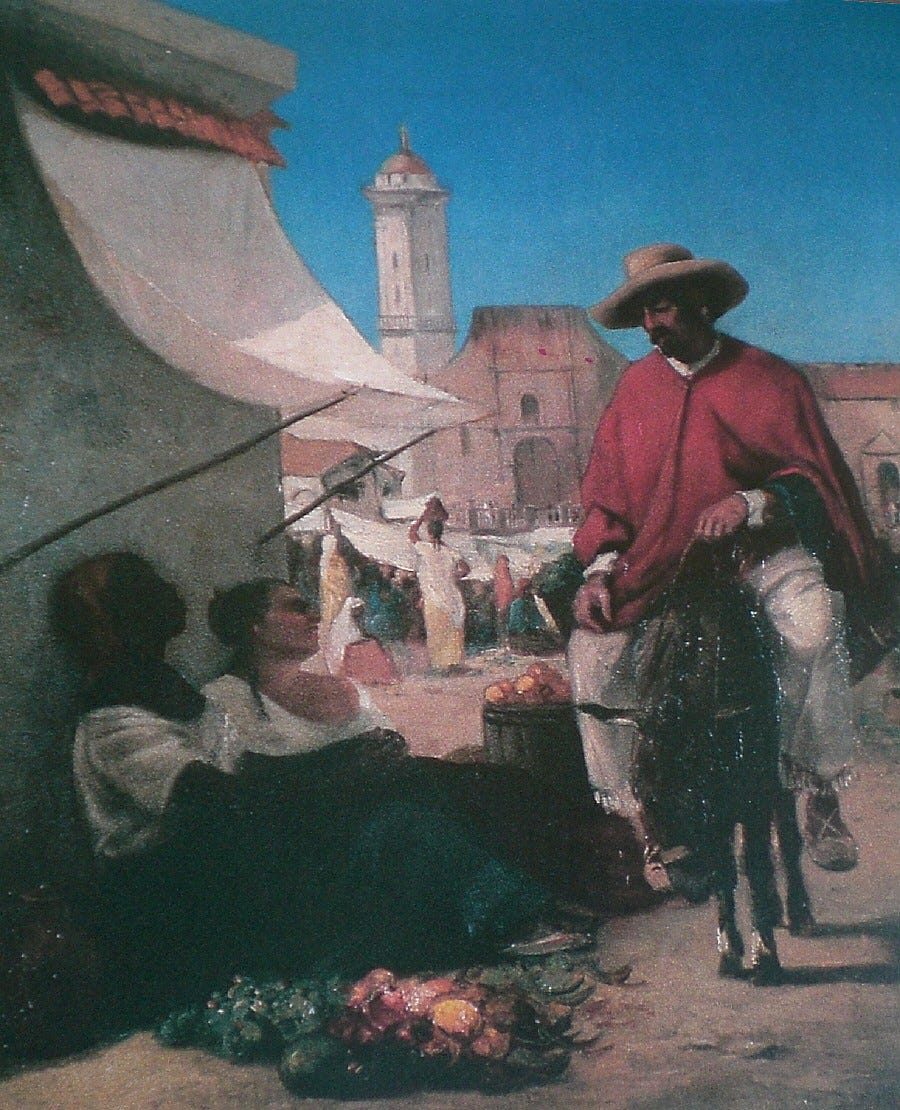
Looking at the drawings after the earthquakes has changed the way I see them. I keep searching for another La Guaira, the one that existed before it became a name associated with loss. Art cannot rebuild homes or recover the lives that have been taken. But it can preserve memory. It can remind us that long before Venezuela was reduced in the global imagination to crisis and displacement, it was also a place that helped shape how an artist learned to look.
Until next week!
P.S. Bastille Day and the France-Spain semifinal are both today… So I guess we're trending with the French theme this week, just with a detour in Venezuela.
If you want to help, these are reliable ways to donate:
I Love Venezuela Foundation + We Love Foundation
ImpaKtemos (Zelle: imaktemos@impaktemos.org - IMPKTEMOS LLC)
BIBLIOGRAPHY:
Rewald, John. “Camille Pissarro: His Work and Influence.” The Burlington Magazine for Connoisseurs 72, no. 423 (1938): 280-91. www.jstor.org/stable/867339.
Boulton, Alfredo. Camille Pissarro En Venezuela. Caracas: Editorial Arte, 1966.
Boulton, Alfredo. Historia Abreviada De La Pintura En Venezuela. Vol. II. Caracas: Monte Ávila Editores Latinoamericana, 1971, p. 139-144.
Erminy, Perán and Calzadilla, Juan. El paisaje como tema en la pintura venezolana. Special Edition. Caracas: Compañía Shell de Venezuela, 1975, p. 24 -25.
Casas González, Antonio. Banco Central De Venezuela: colección De Arte, 1940-1996. 1st ed. Caracas: Editorial ExLibris, 1997, p.61-105.
Lloyd, Christopher, and Joachim Pissarro. “Camille Pissarro: A Case Study in Impressionist Drawing.” On Paper 2, no. 2 (1997): 24-28. www.jstor.org/stable/24555156.
Angel, Félix and Caballero, Marián. Leading Figures in Venezuelan Painting of the Nineteenth Century. Washington, DC: Inter-American Development Bank Cultural Center, 1999. www.iadb.org/document.cfm?id=2015916
Alvarado Boscán, Adrián. “XIII Jornada De Jóvenes Críticos.” XIII Jornada De Jóvenes Críticos. 2016.
Canaday, John. “Art: The Young Pissarro's Venezuelan Adventure; Impressionist's Works of 1852-54 on View”. The New York Times, 1968 https://www.nytimes.com/1968/02/02/archives/art-the-young-pissarros-venezuelan-adventure-impressionists-works.html