How Cancer Raised Me
2025-09-23 · 18 min read
My dearest incurable humanist, I tend to stress, overthink, and feel anxious. I need my space and often get lost in my own head. After years of therapy, I can finally share this story with you, one that explains so much about who I became. When there’s a sick child in a family, attention naturally…
My dearest incurable humanist,
I tend to stress, overthink, and feel anxious. I need my space and often get lost in my own head. After years of therapy, I can finally share this story with you, one that explains so much about who I became.
When there’s a sick child in a family, attention naturally flows to them, and the other child’s needs often go unnoticed. I don’t blame my parents for this, honestly, I would have done the same. My brother’s health was always my priority, too. But this experience shaped me in ways I’m only now understanding: I learned to always put everyone else’s needs before my own.
This is a form of grief. Mourning that little girl who felt so alone and fragile. Today, I share this story not as a victim, but as someone who survived alongside her family. My mother is one of the most resilient women I know, enduring my brother’s illness while juggling being a wife, daughter, and mother to me, always trying to make me feel loved. Even after losing her husband (my dad) under such tragic circumstances, she remains the glue that holds our family together, and she still has a smile.
So thank you, Mom. I love you.
Some names and details have been changed to protect privacy.
Caracas, Venezuela, August 2001
I woke up at 5 am, startled. I was six. It was a hot August morning. I put my small feet on the cold Saltillo tile of my pitch-dark room from the blackout shades. Sensing something was off, I walked out and headed into my parents’ bedroom. As I entered, I saw my maternal grandparents there instead of them. I was confused. My grandmother, Tita, woke up immediately, while Tito, my grandfather, kept snoring. Tita hurried out of bed, careful not to wake him. She put on her elegant robe and guided me out of the room, heading downstairs with her skinny, soft, freezing hands delicately on my shoulders.
“Where’s my mom? Where’s my dad?”
“They’re at the hospital with Manuel Alfredo,” she said, settling me at the kitchen table. “Remember how his tummy was hurting?” I nodded, watching Elsa, my nanny, make coffee with shaky hands. “Well, he got much worse last night. Throwing up, very swollen. So, your parents took him to the emergency room.”
“When are they coming back?”
“Soon, sweetheart. Soon.”
She seemed so sure of what she was saying, but something seemed off to me. Soon enough, Tito came downstairs, fully dressed. In a few minutes, Tita was ready too, and they left for the hospital, leaving me with Elsa, who suggested we play Barbies. I asked her a thousand questions, but she didn’t seem to have any answers.
Finally, my dad appeared in the doorway wearing jeans and a t-shirt. I'd never seen him on a weekday without a suit. I ran and hugged his legs.
“Dad, what’s wrong with MA?”
He picked me up, and I felt his body trembling. “Nothing for you to worry about. Mom has to stay with him for a while.”
Another non-answer. I was six, not stupid.
After he showered and changed, he drove me to my grandparents’ house and disappeared again. I spent the night there, staring at the ceiling, imagining all the terrible things that could be happening to my little brother.
The next afternoon, Dad picked me up and took me home. We ordered pizza for dinner, another first. Mom never let us eat pizza on weekdays.
“Your brother will have surgery tomorrow. He has something called a Wilms tumor. It’s in his kidney, and they have to take it out,” he said, cutting my slice. I didn't quite understand what he was saying, but he was using all the right terms and talking to me like an adult, which I appreciated. “From now on, we have to take care of him and do everything possible to help him get well,” he continued.
He asked me if I would like to see a friend while he was undergoing surgery, and I said yes. So, he called Alice, my friend Andrea’s mom, and told her the situation. I remember that day vividly. Early in the morning, my dad dropped me off. We played for a few hours, and Alice took us to a mall where we had McDonald’s for lunch. Then, we headed to the toy store where we each picked a Barbie. Mine was wearing a blue and green summer outfit. We went back to their house and we watched The Parent Trap. It was the first time I ever watched it. It felt bittersweet. I was sad. I could not truly comprehend what was going on, but I felt a shadow over me, a heaviness that not even the new Barbie could cure. My dad picked me up, and all I wanted was to see my mom and my brother. The next day, we went to see them. I recall entering the hospital room full of people, family members, doctors, and there he was, so small in that huge hospital bed, smiling, my little brother who was only two years old.
When they finally came back home, everything changed. The house became very quiet. I once tried to play music, Maria Maria by Santana, and my mom told me to turn it off because we were not in a celebratory mood. I walked into my parents’ bedroom, and they were lying down, sobbing. I had never seen either of them cry, but I was particularly distressed by seeing my dad cry. He seemed so invincible always, so strong, and there he was tears on his cheeks. I asked why they were crying. Everything was so confusing. They kept saying everything was fine, but this was far from fine.
The following months are a blur. I don’t remember anything well. Maybe glimpses. I remember MA losing his hair. I remember his surgery scar in the middle of his tummy. I remember him in his Fisher-Price blue car bed. I remember the long chemotherapy sessions. I remember my mom bought paper cups from Monsters Inc., because it was more sanitary. I remember a lot of blue Gatorade, which is the one he liked best. I remember wanting to go out and do summer things, but not being able to, fearing I would bring germs home, so I’d stay playing in my bedroom all day. I remember being in the car with my dad in long traffic between the hospital and home. I remember my mom’s friends picking me up and taking me to an ice cream shop or the golf club.
After months of treatment, he recovered, and it seemed like a miracle.
Caracas, Venezuela, February 2005
He had a check-up in January. Dr. Frida said he was healthy. By February, he was not.
My mom took him to the hospital for what we thought was just the flu. They hospitalized him immediately with severe pneumonia. Tita picked me up from home to spend the night at her house while my parents stayed at the hospital. In the car, I found myself reassuring her this time.
“It's just pneumonia, not the C word,” I said, watching her worried face.
She wasn't convinced. The AC was barely on because Tita is always cold, and the car felt airless. We made tuna sandwiches for dinner, her classic with mayo, tomatoes, and lightly toasted whole wheat bread. When Tito got home, he had the same reaction I’d had: “Well, it's not the C word. He’ll be fine.”
But it was the C word. A full-on metastasis in the lung.
On the day of the diagnosis, I was in the hospital room with my mom, my brother, a friend of his, and his mom. My mom left the room abruptly, crying to my dad outside. Then she came in as if nothing had happened. But I had noticed.
That night, Dad and I cooked pasta together, a tradition since I was a toddler. It was so much fun doing it together: tomato sauce, garlic, salt, and pepper. As we stirred the sauce, he told me how irritated he was with the doctor’s incompetence and negligence. "I saw them in the hallway," he said, voice tight. “Dr. Henry, the pediatrician, and Dr. Frida, all staring at the radiography, saying, ‘What the hell do we do now?’
At dinner, Dad continued expressing his frustration, insisting the best route was for Mom and MA to go to the US for treatment after surgery. I nodded.
February 18th was a Friday. MA had been hospitalized for over a week, and it was his sixth birthday. School felt endless. Everything my teacher and classmates said sounded muted. I couldn’t concentrate. I had to get out. I faked a stomachache to leave early. I spent the afternoon in the hospital room playing LIFE (the board game) and singing Happy Birthday over a SpongeBob cake.
More weeks passed. I hadn't seen my mom in over ten days. The principal, a nun, had scheduled a meeting to show my mom support, but I didn't know. After gym class, I walked to my classroom in line. I saw her sitting in the reception. My heart jumped. She’d come for me!, I thought, so I started running toward her.
“Rodriguez! Come back here right this second!” The teacher grabbed my arm. “You are under no circumstances allowed to go downstairs.”
“But my mom is there! I haven't seen her, and I just want to hug her!”
“In the classroom! Now!” she yelled.
I sat at my desk, tears streaming down my face, while the rest of the girls stared, confused.
Surgery came and went. My parents studied the chemotherapy and radiotherapy protocols in Venezuela versus the US and Europe. For this kind of cancer, the treatment was the same everywhere. They decided to stay home.
Once again, our house became a germ-free zone. I saw MA’s body marked with radiotherapy markers. A new scar on his chest above the old one on his stomach. I watched him turn pale, lose his eyelashes, his eyebrows, his hair; again.
During chemo sessions, we played Mario Party 6 on the Nintendo GameCube. At home, when he had IV medication, we played video games, made music with a toy piano and my school flute, and painted until he was too tired to continue.
In the blink of an eye, it was already April 7th, my 10th birthday. I was excited about turning ten! Wow! My first decade! I thought. A week earlier, I had gone with my mom to a pastry shop that made themed cakes, and we ordered a Lizzie McGuire one. We bought a few matching cardboard cups and plates. I begged my mom to let me have a guest, and after much of my insistence, she finally agreed to let me have one person over. No one else.
I woke up at 5 am sharp, full of that birthday thrill. I headed to my mom's room, and she was already up, showered, hair done, and finishing her makeup. I hugged her, smelling her perfume, and she hugged me back. She gave me a small box wrapped up in pink paper with a bow. I opened it enthusiastically and saw this beautiful transparent Swatch watch with drips of paint all over it, and I put it on immediately.
We had breakfast, and she took me to school for the first time in months. This was the best present I could get. She had baked me a scrumptious chocolate cake and brought it to school so my classmates would sing me Happy Birthday. Later, my friend came home, and we spent the afternoon playing, ending it with my Lizzie McGuire cake. It had been a great day where all the problems from the past months had seemed to be paused for a second.
The next morning, I woke up at 5 am again. Yet, this time, to the noise outside my bedroom. My mom was quite agitated. Again, already dressed, packing some things in a bag, and told me they had to run to the hospital because my brother had decompensated and needed a blood transfusion. "This is why we cannot have anyone over, the germs can cause him an infection and kill him!" she said, annoyed.
I understood this was a life and death situation. I understood it was not a game. I understood I could lose my baby brother forever if I miscalculated just one move. From that day on, I never asked my mom to have anyone else over again.
My only social life revolved around school and the one hundred thousand first holy communion parties I got invited to, as all my classmates were doing theirs. In Caracas, it is quite an event, I would even dare to compare it to a Bat Mitzvah kind of situation, where there's a lot of food and music. We would play games, jump on trampolines, and dance. It was a breath of fresh air. But most of the other parents were there, and mine never were. My dad would pick me up, or someone would give me a ride, and then back in the black silent hole that was my home.
I was a good student. At the beginning of the school year, I had won "The Best Reader Award" in English class, a big yellow medal sticker that was glued on my desk, after I read aloud a chapter of The Snow Queen by Hans Christian Andersen. I was the first one to ever win it. But with time, my grades started to decline. I didn't do my homework, I didn't finish my schoolwork, and my tests were below average. One day, I forged my mom's signature because I didn't want her to see I had failed a test. The teacher stared at the forgery, raising an eyebrow, asking, "Did your mom sign this?" I lied. I think she knew it was not hers. But she let it slide.
All the girls at school were planning to go to summer camps. All I heard every day at recess was all about camp this, camp that, camp the other. Naturally, I wanted to go too. I went to Camp Lagonia's website, daydreaming about how perfect my summer would be there. My parents were not sure about letting me go; they had never been the type to allow sleepovers and much less three weeks away from home. I persisted and conquered. By the time I had their approval, applications were closed. But I managed to find a way to get Lagonia to accept me. I sent them a compelling email explaining my situation, and Lina, the owner, said yes!
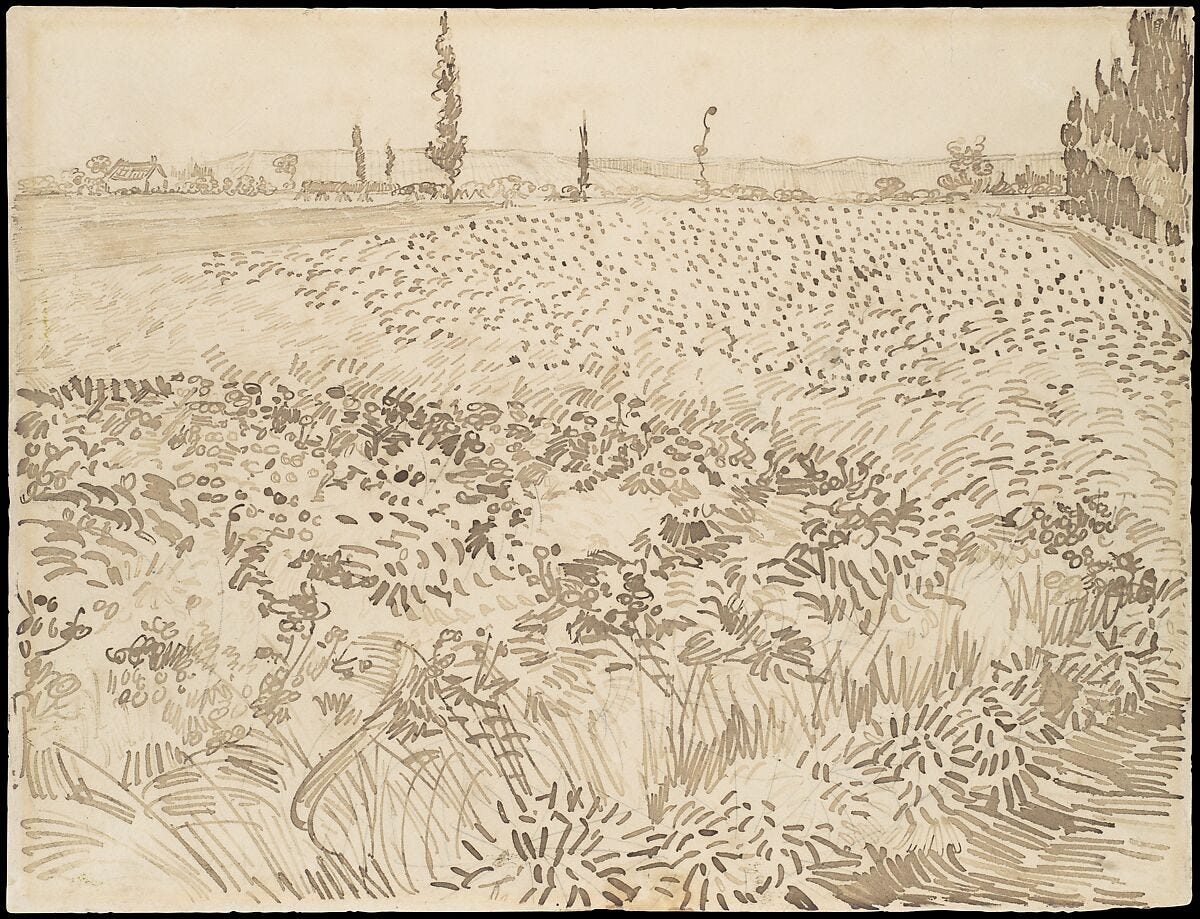
July finally arrived, and off to Lagonia I was. Beyond myself with excitement, I hopped on the bus and 5 hours later, there, in the middle of the Venezuelan plains, it hit me, home was hundreds of miles away. I wanted to escape so badly, I didn't stop for a minute to think about how it would feel. We wrote my cabin's anthem using Shakira and Alejandro Sanz's La Tortura as the melody. We had dinner and headed back to the cabin to hang out for a little bit and sleep. I lay on my bunkbed, tucked into my flowery pink and yellow sleeping bag in the ice-cold room, and I felt a kind of homesickness I had never felt before. I felt trapped in this immense place; there was no way for me to get out. I felt claustrophobic as spacious as the camp was. My dad had said jokingly that if I ever felt even slightly homesick that I could call him even at 3 am and that he would come in a helicopter to save me. His words bounced in my head. I wanted my daddy! I regretted with every bone in my body my decision to come here! I should've listened! I got out of bed to clean my face and went out to the cabin's hallway. There was a Van Gogh in Arles poster. I stared at it, sobbing uncontrollably, gasping between breaths, longing for home. A counselor looked at me through the window, and I panicked. I leaned down so he couldn't see me anymore and ran back to bed until I finally fell asleep with my salty, swollen, red face. I wished that tomorrow I could sort everything out and go back home, but things were not as simple as I believed.
The sun rose, and up we were in front of the lake doing the morning calisthenics, singing, or more like yelling, songs the counselors taught us. Everything was a competition, which cabin got to eat first based on who sang louder, who did this, and who did that. I was not enjoying one ounce of it. For breakfast, there was burnt French toast with a distasteful syrup, and on other days, soggy eggs. I frankly cannot remember the rest of the meals. Activities varied from day to day. We went to the pool, rode horses, swam in the lake, played team games like rallies, and even had a World Cup. My team was the Netherlands, and we dyed our t-shirts orange. I still cried every night. I tried to fake gastritis to go to the doctor's office, but he always fixed it with Tums. I tried to fake a headache, also fixed with a pill. In the meantime, I read Anastasia's diaries and fantasized about her life, wondering if she had known what would happen to her, what she would have felt. And then also wondering what was going to happen to me when I returned home. Would my brother still be alive? Would my parents still love me? I kept asking to go back, but the answer was always no.
Then came the day when the letters and presents from the parents arrived. And there was nothing for me. The other girls got boxes with chocolates and candy, and letters with stickers and hearts. I was even more devastated. I cried and cried for hours under the covers again, faking yet another stomachache so they'd allow me to stay in the cabin reading and avoid the activities. Was it possible that my parents had truly forgotten me? Later, my mother told me, she had sent me a letter that they did not give me because they said the language was not appropriate, as it said, they missed me. But that is what I needed! Reassurance that they cared! That they loved me and missed me! That it was ok that I felt that way too! She never sent candies, though, because she had read the rules, and they specifically stated not to send any sweets, and yet, everyone broke the rules.
I thought things could not get worse when it was announced that we were going camping, actually, camping, outside in a tent. We left early on a never-ending hike, and just before sunset, we stopped to set up the site. For dinner, we had juice and ham, and cheese sandwiches with stale bread. There was a fire, and songs, and everyone was in a cheery mood. Until it poured rain. We all went inside our tents. There were around four girls per tent. I couldn't sleep. I still remember the wet surface and my sleeping bag slowly getting moist until it was soaking wet. The smell of sweat, wet grass, and farts. I wanted to pee so badly, but there was no way I could go outside in the rain and wake everyone up in the process. I held it up and waited and waited. I thought about my home, about my warm, cozy, and dry bed. I wondered what my family was up to and kept regretting having forced my way to come here. What had I been thinking?
This hellish night became my escape, but not so quickly. When we finally returned to the cabin, I started to feel sick, this time for real, not just the theatrics I had beforehand. I felt the urge to pee every second, had a burning sensation, and excruciating pain. I rushed out of the dining hall, headed back to the bathroom, and couldn't get off the toilet. My counselor, a sweet twenty-something, sat beside me holding my hand, worried. I managed to sleep after the doctor gave me a pill. However, I worsened by morning. I now had a high fever and chills, along with the twinge. The doctor came to check on me and gave me orange juice, but since I wasn't improving, Lina, Lagonia's owner, hurried me to the nearest ER in the small town of Tinaquillo. There, the doctor ordered a urine test and hooked me up to an IV. The results confirmed I had a UTI. There, on top of a gurney, Lina finally called my mom.
The next day, my dad arrived. I saw the car pull up in front of the main house. Our driver was behind the wheel; my dad sat in the front seat. He stepped out in a polo shirt, beige pants, and aviator sunglasses. I ran to meet him. He scooped me into his arms and hugged me tight, his skin still cool from the AC. I cried tears of joy. My dad was there. I was safe.
Today, my brother is 26, and I am the luckiest sister in the world to have him.
Until next week.
(Read by the author. Theme song, The Incurable Humanist, by Carlos Escalona Cruz. All Rights Reserved 2025.)