The Phobia
2025-05-05 · 18 min read
My dearest Incurable Humanist, A few weeks ago, I was having dinner with my friend Ale, and I was telling her how I just started my Substack. Ale has been my friend for as long as I can remember so she will always be a good judge of character and, she knows me well. Really well. There is nothing I…
My dearest Incurable Humanist,
A few weeks ago, I was having dinner with my friend Ale, and I was telling her how I just started my Substack. Ale has been my friend for as long as I can remember so she will always be a good judge of character and, she knows me well. Really well. There is nothing I can hide from her because she just knows. She saw me through puberty and all the embarrassing moments, supported me through my dreams of becoming a famous singer-songwriter, and learned the lyrics to all my songs. She was there during my first crush and heard every detail about how he hadn’t texted me yet and encouraged me to change my BlackBerry Message profile picture and status so he would get the notification and finally reply (yes, we were those teenagers). She was there during my first heartbreak, and I was there for hers. I was there when she got her tiny, adored dog, Glotis, that got her through med school. You get the picture. But that’s not the point of this story. The point is: that while I was telling her about the Substack, she stopped me and said, you must write about the dog thing. And I blinked. Because the “dog thing” is so tangled up in my life that I had honestly forgotten it was a story at all. But of course, she remembered. She always remembers. So here we are.
Thanks for reading The Incurable Humanist! Subscribe for free to receive new posts and support my work.
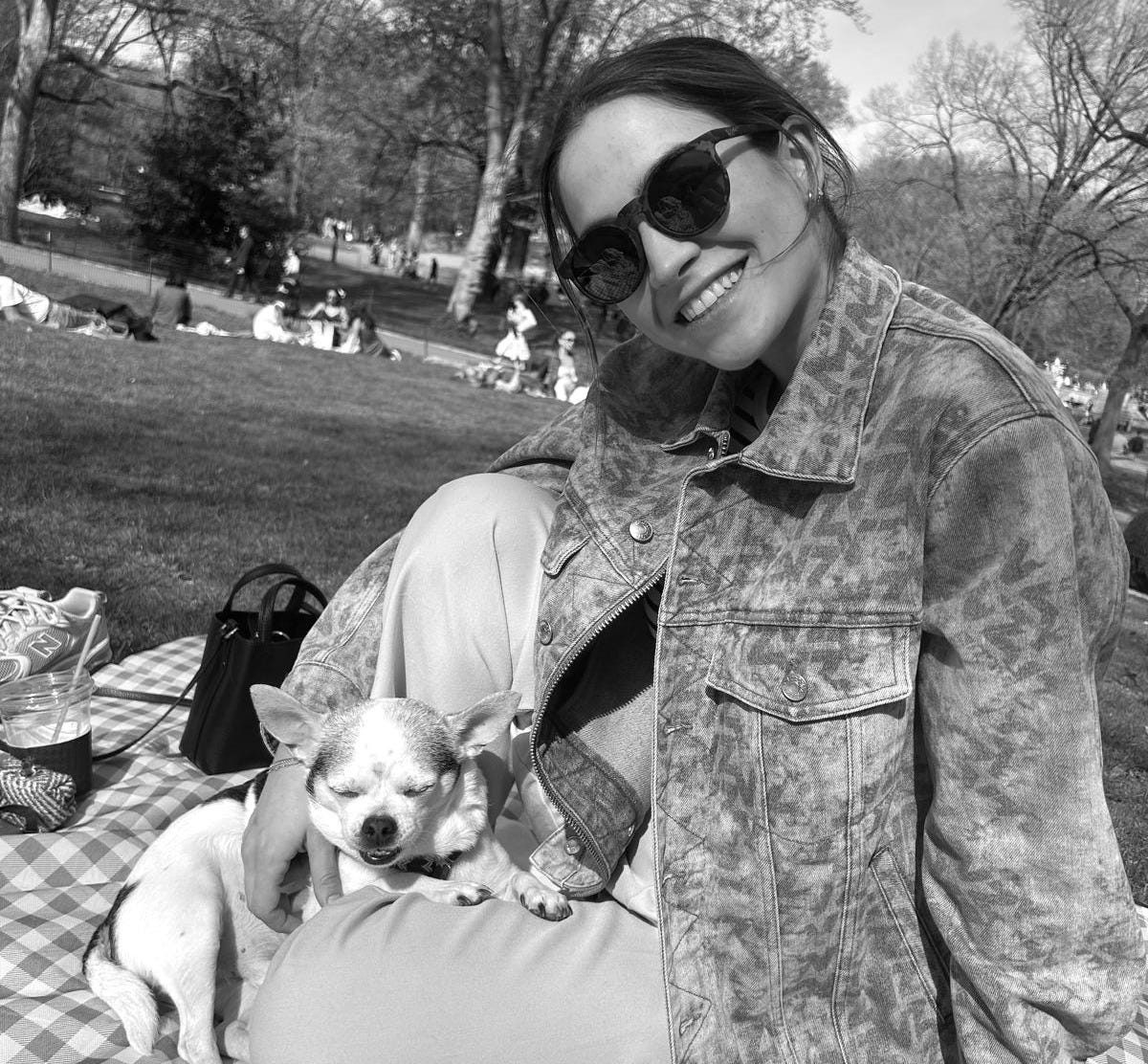
For the longest time, almost half the life I’ve already lived, I suffered from crippling cynophobia. In plain English: I was tremendously afraid of dogs. The kind of fear that shapes your days ruins your plans and makes you live smaller than you want to. How does something like that even begin? Trauma, of course. Most phobias start there. I was about two years old, living in an apartment in Caracas. One morning my mom and I went downstairs to say goodbye to a guest, and on our way back up, a huge Dobermann appeared out of nowhere and lunged at us. It jumped at my mom and knocked her down. She was holding me, so I went down too and suddenly the dog was on top of us, barking and growling and trying to bite. It was chaos. I was screaming. She was screaming. The owner came eventually and got the dog. The whole thing probably lasted no more than two minutes. But in my toddler brain, it lasted a century. We went back upstairs and told my dad what happened, but to be completely honest, I don’t remember anything else about that day. But my body remembered everything. After that, every time I saw a dog; big, small, fluffy, toothless, it didn’t matter. I’d start shaking. Sweating. I couldn’t breathe. My heart would race like it was trying to outrun something, and I was convinced I was going to die. My brain believed that every dog in the world was a threat. I lived in a state of constant, silent vigilance. And you don’t realize how many dogs there are in the world until you start actively trying to avoid them.
Every time I left the house; I had to prepare. What if there’s one in the elevator? What if there’s one on the street? What if it’s unleashed? Caracas gave me some relief because we moved mostly by car, and the car was the only place I knew no dog could reach me. But the truth is, you can’t hide from dogs forever. And the cruel irony is that dogs know when you’re afraid. They can smell fear on you. It draws them in. So, they always came to me. And I would panic, scream, flinch, bolt in the other direction, and that would make them think I wanted to play, which would make them chase me, which would convince me I was under attack. It became a loop I couldn’t escape. A brutal, humiliating cycle. My mom would call ahead before any playdate and warn the other parents. Most of my friends had dogs, which meant it was always complicated. Sometimes they’d put the dog in a separate room. But if someone forgot and the dog came out I would lose it. A full meltdown. Screaming, crying, shaking. I started declining invitations altogether. I didn’t want to go anywhere anymore. I couldn’t relax. Even inside a car, if I saw a dog through the window, or worse, if one appeared in a movie, I would tremble uncontrollably. People knew. Everyone who knew me knew. I became “the girl who’s afraid of dogs.” It became part of my reputation. Part of my personality, even.
Coming to New York as a kid, sometimes I would spend entire days inside the apartment, not because I didn’t want to go out, but because of the irrational, heart-in-throat fear that I might see a dog. And in New York, there is one in every corner. It didn’t matter that they were leashed, well-behaved, or the size of a slipper. It didn’t matter what kind of dog or who it belonged to or what anyone told me. Fear is not a democratic process. It is not a system that listens to reason. The only moments I felt semi-functional, even vaguely tethered to the world outside the panic, were the ones in which my father walked beside me. Because I trusted he could push a dog away. Because in my mind, he had the strength to keep me untouched. But of course, my father was not there every second of every day. That kind of protection was both imagined and fleeting.
So yes, as I was telling you, the fear kept growing. These weren’t isolated events anymore, they were accumulating. Each one thickened the fear, tightening its grip. Once, I was leaving a children’s birthday party with my mom and brother. There was a bulldog. I started running. Trembling. Screaming. Crying for help in the kind of voice that doesn’t feel like it belongs to a child anymore. My mother tried to stop me, but it was impossible. I was a force stronger than reason. I made all three of us fall.
When I was about seven, my mother enrolled me in after-school English classes. The classes were held in a teacher’s house. At first, I didn’t mind, until I saw she had two dogs. From that moment on, it was torture. Every Wednesday, for what must have been six months, I would enter that house like I was walking into a war zone. She would lock the dogs in the kitchen, but they always got out. Always. For two hours, I would sit there stiff as a statue, legs crossed high on the chair. The grass in her garden had a particular smell, always damp. The couch was worn out. There was a scent of dog pee that never left the cushions. My pencil would shake across the page as I tried to focus on the grammar workbook, but my mind was busy negotiating survival.
At a barbecue with my parents, on a terrace overlooking a cliff, I was told the dog was inside, shut in a bedroom. But dogs don’t stay in bedrooms. That golden retriever leaped out of nowhere. I very nearly launched myself off the edge. Another time, at a friend’s house, in the backyard that sloped into a hill covered in trees, a tiny schnauzer showed up. I ran. I climbed the hill, screaming, even though her father had already picked up the dog. I didn’t see it. I didn’t register safety. I lost a shoe in the woods.
Stories like this go on and on. I fainted. I cried. I ruined gatherings. I lived in constant high alert. What people don’t understand about phobias is that it isn’t just fear. It isn’t “being scared.” It’s a full-body occupation.
“Phobias are intense, persistent, and often irrational fears of specific objects, situations, or concepts. These fears can be so overwhelming that they significantly disrupt a person's daily life, causing distress and avoidance behaviors. While many people experience some degree of fear or anxiety, phobias are characterized by an exaggerated and persistent fear that is out of proportion to the actual danger.” — (Osborn)
Everyone had something to say. I was overreacting. I needed to calm down. How could I be afraid of a little dog? Dogs were man’s best friend, after all. But two things can be true at once. Dogs are loving, loyal, harmless companions and I was living in a mental war I couldn’t evacuate. People told my mother that exposure therapy would fix it. That if I just spent time around dogs, I'd start to love them. But the idea alone made me sick. Not metaphorically but literally nauseous. Exposure felt like violence. Or the idea of a dog in our house? I didn’t sleep for days. I’m not exaggerating when I say it would’ve broken me. Thank God my parents knew. Thank God they didn’t listen to the crowd.
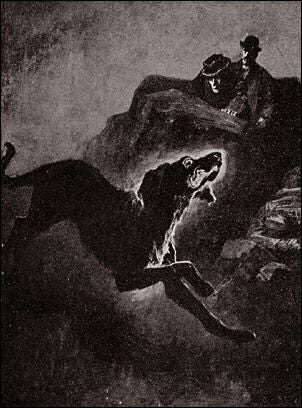
I read The Hound of the Baskervilles in middle school. I wasn’t prepared for that dog—the hellish kind with glowing eyes and a growl that echoes. I was already terrified of dogs, and there was literature confirming what my body already knew: that some dogs weren’t just animals, they were omens. In British folklore, black dogs and hellhounds have long been messengers of death. Conan Doyle didn’t invent that fear—he just sharpened it. Even Holmes, the coldest rationalist in fiction, had to entertain the possibility that the monster might be real. And for me, already breathless with phobia, it was too late to separate legend from life. The dog wasn’t just in the book. It was in the world.
Still, I went to therapy. I wanted it to work. The therapist said we wouldn’t jump into exposure. We’d take it slow, tiny step by tiny step. And so I went, every Thursday, to talk about dogs. We never met one. We just talked. Her husband owned a pet shop, so one day she brought me a bag of dog treats and asked me to take them to a friend’s dog. I put them in my backpack. I couldn’t touch them. Every time I opened my bag and saw the bone-shaped cookies, my hands trembled. I carried them around for months. Eventually, I threw them out. That was as far as I could go. This wasn’t healing.
Later, we traveled to Egypt. I was finally going to see the pyramids. But when we arrived, ready to ride camels for a photo, I spotted the dogs. Strays, lying under the desert sun near the camels. I refused to get out of the van. I cried. I knew I couldn’t do it. I knew my body well enough by then. My father stayed with me in the car. Everyone else judged me. But not him. He didn’t push. He knew. And while the others disappeared into the sand, I sat next to him and thought about Anubis. About jackals and what they meant. In ancient Egypt, the dog-headed god was the guardian of the underworld, the god of death. And I wondered if maybe I had been right all along to be afraid
The tipping point came without warning but not without precedent. I was fourteen. A friend and I had been invited to a party, there would be boys, which at that time felt not like a detail but a gravitational fact. We spent the afternoon getting ready with a sense of occasion that bordered on ritual: eyeliner, perfume, borrowed tops we thought made us look older. We were excited, but we were also nervous. We rang the bell. We were the first to arrive. And then, there it was. A small white dog trotting toward us. I saw it and lost all composure. I screamed, panicked, and threw myself backward. In the chaos, I pushed my friend and ended up sprawled on the ground. Everything about the moment was graceless. Embarrassing doesn’t quite cover it; it was mortifying in that specifically teenage way when you are convinced the world is watching and that its judgment is absolute. I called my parents immediately. They had just dropped us off and were still three blocks away. My friend sat beside me in the car, silent with rage. I don’t blame her. She had every right. And I still shaking, still flushed with shame, knew something had shifted. This couldn’t go on. I was growing up, and whatever this was, it wasn’t just a quirk anymore. It wasn’t cute. It wasn’t manageable. It was derailing.
That night I didn’t sleep. I lay in bed with my laptop glowing in the dark and typed, over and over, the same search: how to cure a phobia. For the first time, I understood it not “just something weird I have” but a phobia. And naming it, as with most things, was the beginning. The internet offered its usual buffet of promises and pseudoscience: breathing exercises, exposure therapy, and EFT tapping. I read until my eyes hurt. Then, somewhere in the comment thread of a blog, a name appeared: hypnosis. It seemed theatrical, but I remembered something. Years ago, my great-aunt had quit smoking because of some man in Boston; a man who, she said, had cured her. I looked him up. His name was Yefim Shubentsov, though everyone called him The Mad Russian. He was born in Moscow, immigrated to Boston, and built a quiet empire on word-of-mouth miracles. No advertisements, no billboards. Just stories. Over the years, Shubentsov has treated thousands of people, among them celebrities like Billy Joel, Drew Barrymore, and Courteney Cox. He claimed to use bio-energy, to remove the craving or the fear as if lifting a stain. It sounded absurd. It also sounded like hope. I told my mother the next morning. She didn’t laugh. She didn’t raise an eyebrow. She said, “Let’s go.” We emailed the Mad Russian and told him my story and how much I yearned to heal. After some back and forth he agreed for me to go. He usually only took patients that were eighteen and older, I was fourteen going on fifteen but he would make an exception because I really wanted to go.
And so, on February 12, 2010, we flew from Caracas to Boston. The next morning, a cold winter Saturday, the city was dressed forValentine’s Day. Red foil hearts taped to storefronts, paper cupids dangling in pharmacy windows. We ordered room service. We got lost on the way (GPS confusion), one wrong turn, and arrived only slightly late. The office was ordinary. A waiting room. A few chairs. An assistant who looked unbothered by our nerves. She led me in. A circle of people had already formed addicts, I assumed, although that word felt too sharp to say out loud. I was scared. I sat among them and watched him. The Mad Russian. He did not look mad. He looked like someone who had long since stopped caring what people thought of him. He talked for a long time, about the brain, about habit, about deviation from the natural state. He said we weren’t born afraid. We weren’t born craving. These were interruptions. Detours. He had a thick accent. He spoke with authority and without showmanship, which somehow made it all more unreal. Then he asked if anyone had pain. A man raised his hand. Neck pain. He moved toward him, did something with his hands—what, I can’t exactly recall—and he said it was gone. I did not believe him. But I didn’t not believe him, either. I was already too far in.
Eventually, we were asked to leave the room and return one by one. When my turn came, I stood and followed directions. He told me to close my eyes. He told me to think I have a dog phobia. When I had the thought clearly in my mind, I was to raise my hand. I did. He said something soft, final. Poof!. I’m not certain. I opened my eyes, and it was over. That was it. No ceremony. No catharsis. No explanation. I left the room unsure if anything had happened at all. It felt like nothing. It felt like something I’d imagined. But he had told us: if it didn’t work, you could return. He said most people didn’t have to. My aunt and my mother wanted to test it. So drove straight to the nearest dog shelter.
We arrived at the shelter, my mother and aunt pressing me to see if this this thing would work. It hadn’t, at least not in the way I’d hoped. There were too many dogs, too many of them angry, and I was once again trembling, tears spilling, my stomach in knots. Had I been wrong? Was I the problem? Did I drag my mother all the way here, only to leave empty-handed?
We ate lunch in silence. And then, back to his office. This time, it was only us, more intense, but somehow more deliberate. He looked at me, straight into my eyes, in a way I hadn't experienced before, not really. It was the kind of gaze that strips away everything but the two of you. His voice, low and constant, washed over me as he spoke about dogs and their place in our lives, but his words didn’t feel like the usual clichés I’d heard from people who didn't get it. His voice had a rhythm that seemed to coax me out of myself, a quiet pull toward something else, something outside the cage of my fear. I was adrift, as though everything had stopped moving, and I was floating there, suspended in his presence. Then, he asked me to close my eyes. It was the same exercise we had tried before, but this time, there was no resistance. I let my mind settle on the terror that had once gripped me, the phobia that had kept me at the edge of every room and every street, afraid to breathe too deeply. He did his usual poof an almost comical gesture, but something in the air shifted. He told me I was cured. This wasn’t magic. It was a process. He explained it like a map I could follow, each step a new territory. I wouldn’t be sleeping with a dog tonight, or kissing one, or embracing the world of fur and paws in some dramatic gesture. But I would be able to stand in an elevator with one or cross paths without breaking into a cold sweat. I would learn to control the panic, the suffocating fear. The shelter he said, was a mistake. It wasn’t going to happen like that.
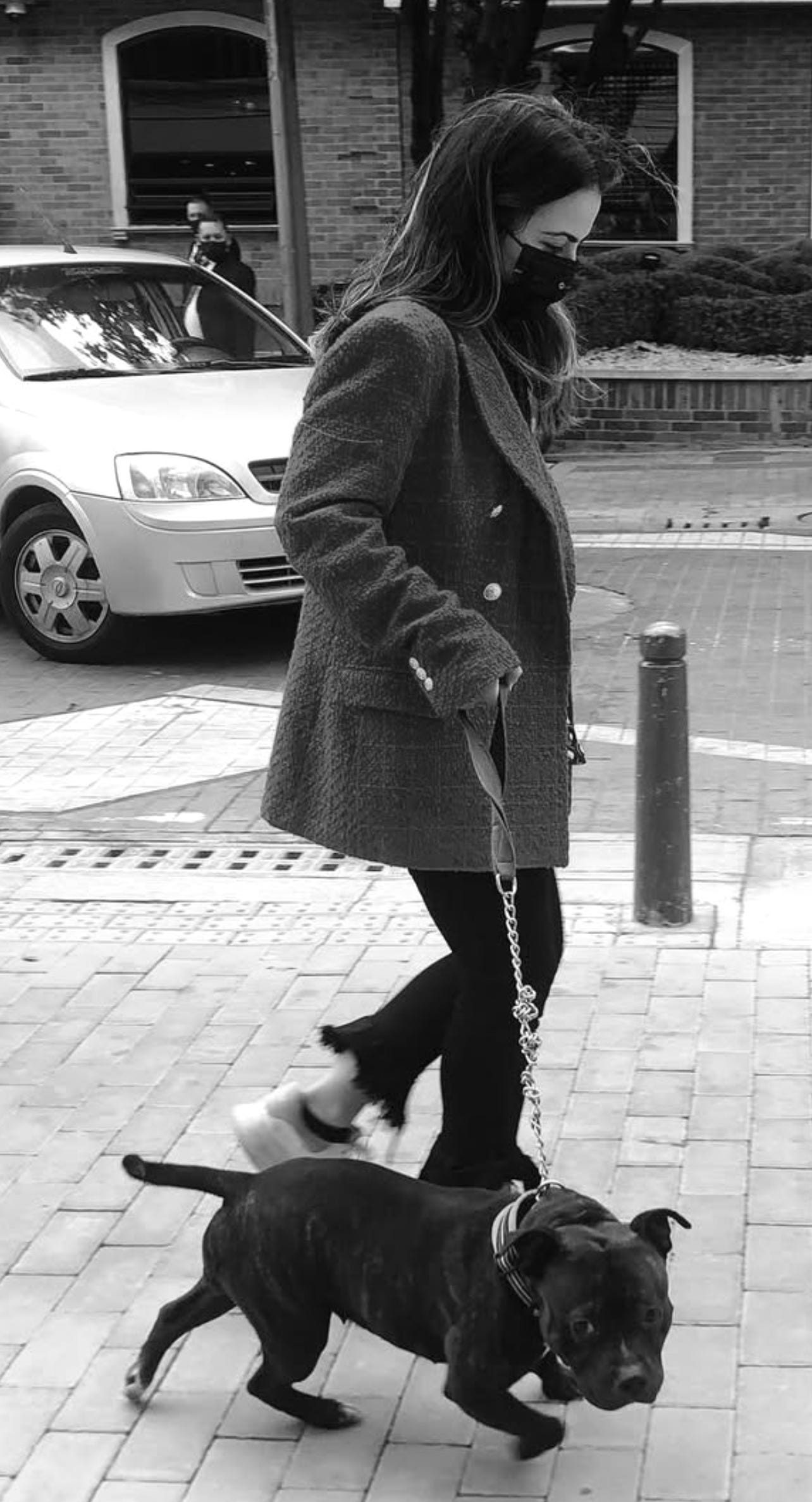
Back in Caracas, I encountered dogs again. They were at the airport, roaming the terminals, but I didn’t die, as I had feared. I could breathe. And then, at my friend’s house, there was her dog, sitting at my feet. I was able to sit there with it, to coexist in the same room. The fear began to dissolve. Slowly, quietly, I forgot it had ever been there. People who know me now, those who have only ever seen the adult I’ve become would never guess that once upon a time, I couldn’t even step outside without looking over my shoulder. But that fear, that haunting terror, was real, and Yefim Shubentsov changed my life.
Afterward, things began to shift inside me. My self-esteem, once cracked and fragile, began to stitch itself together again. I started to write songs, to see the world through a different lens, and perhaps most dramatically I was no longer afraid of stepping out.
I did some research to write this, and it seems that after the pandemic, he stopped taking patients. But if you’re curious, if you want to know how a person like him might touch your life, here are some links below. Watch them. Listen to the things he says. He may not cure you overnight, but he might just change the way you see the world forever.
PS. Thank you Ale for reminding me.
Sources:
Guru: Yefim Shubentsov; a Rasputin for Smokers (Published 1998), www.nytimes.com/1998/11/08/archives/guru-yefim-shubentsov-a-rasputin-for-smokers.html. Accessed 4 May 2025.
Wiki, Contributors to Unsolved Mysteries. “Yefim Shubentsov.” Unsolved Mysteries Wiki, Fandom, Inc., unsolvedmysteries.fandom.com/wiki/Yefim_Shubentsov. Accessed 4 May 2025.
Osborn, Corinne O’Keefe. “Can I Be Afraid of Phobias? Common or Unique Fears Explained.” Healthline, Healthline Media, 19 May 2023, www.healthline.com/health/list-of-phobias.
“ Yefim Shubentsov, The Mad Russian - 20/20, ABC News.” YouTube, YouTube, 21 Feb. 2012, www.youtube.com/watch?v=XOHlZTfR-Nc.
Thanks for reading The Incurable Humanist! Subscribe for free to receive new posts and support my work.