The Voice You Ignore Until You Have No Choice
2025-05-13 · 8 min read
When I was in my mother’s womb, my dad read aloud the Venezuelan Civil Code and Constitution. He said I was already preparing to be a lawyer. When I was born, he stayed up through the night until I fell asleep. I’d hold on tight to his finger with my tiny hand. If he tried to leave, I’d cry. He’d…
When I was in my mother’s womb, my dad read aloud the Venezuelan Civil Code and Constitution. He said I was already preparing to be a lawyer.
When I was born, he stayed up through the night until I fell asleep. I’d hold on tight to his finger with my tiny hand. If he tried to leave, I’d cry. He’d stay.
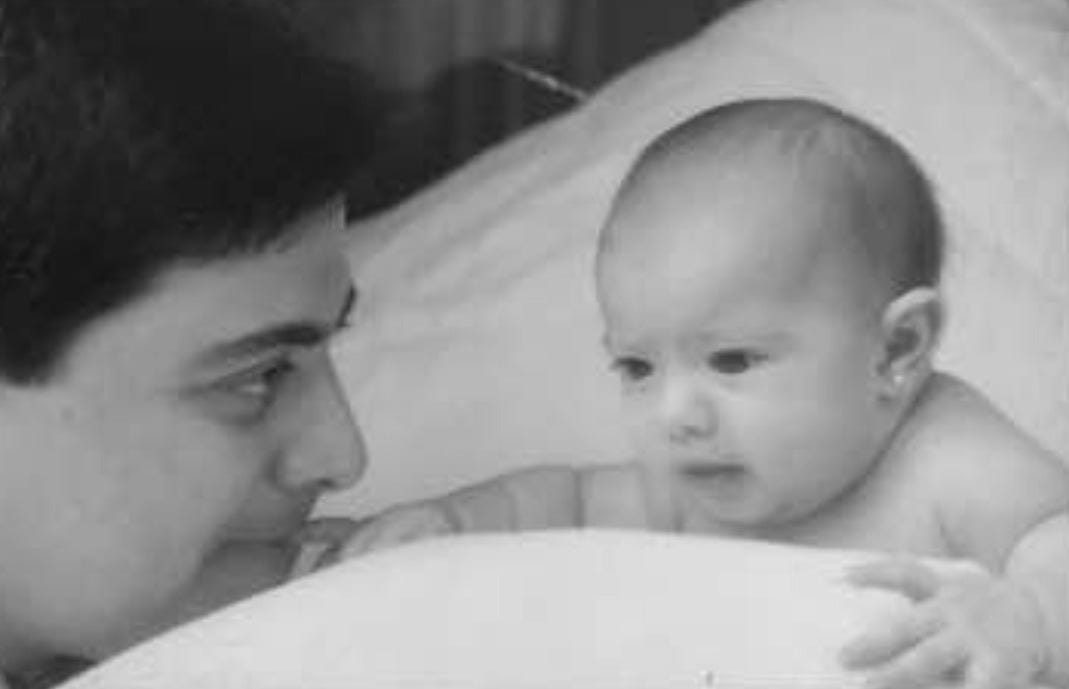
When I was one, he told me I was a big girl now and didn’t need a pacifier. I got up, walked to the trash, and dropped it in, never looking back.
When I was two, he drove me to my first day of kindergarten. He played Stairway to Heaven and Hotel California and told me not to forget this moment. It was the beginning of something big. The start of learning.
When I was three, we’d go to the playground early, just the two of us. Afterward, we’d share a banana split, two spoons, one bowl, and sticky fingers.
When I was four, we had our Saturday breakfast ritual. Just him and me. Always “cachito de jamón.”
When I was five, he said I was as old as the fingers on one hand. He remembered being asked how old he was and proudly showing his whole hand. I did the same.
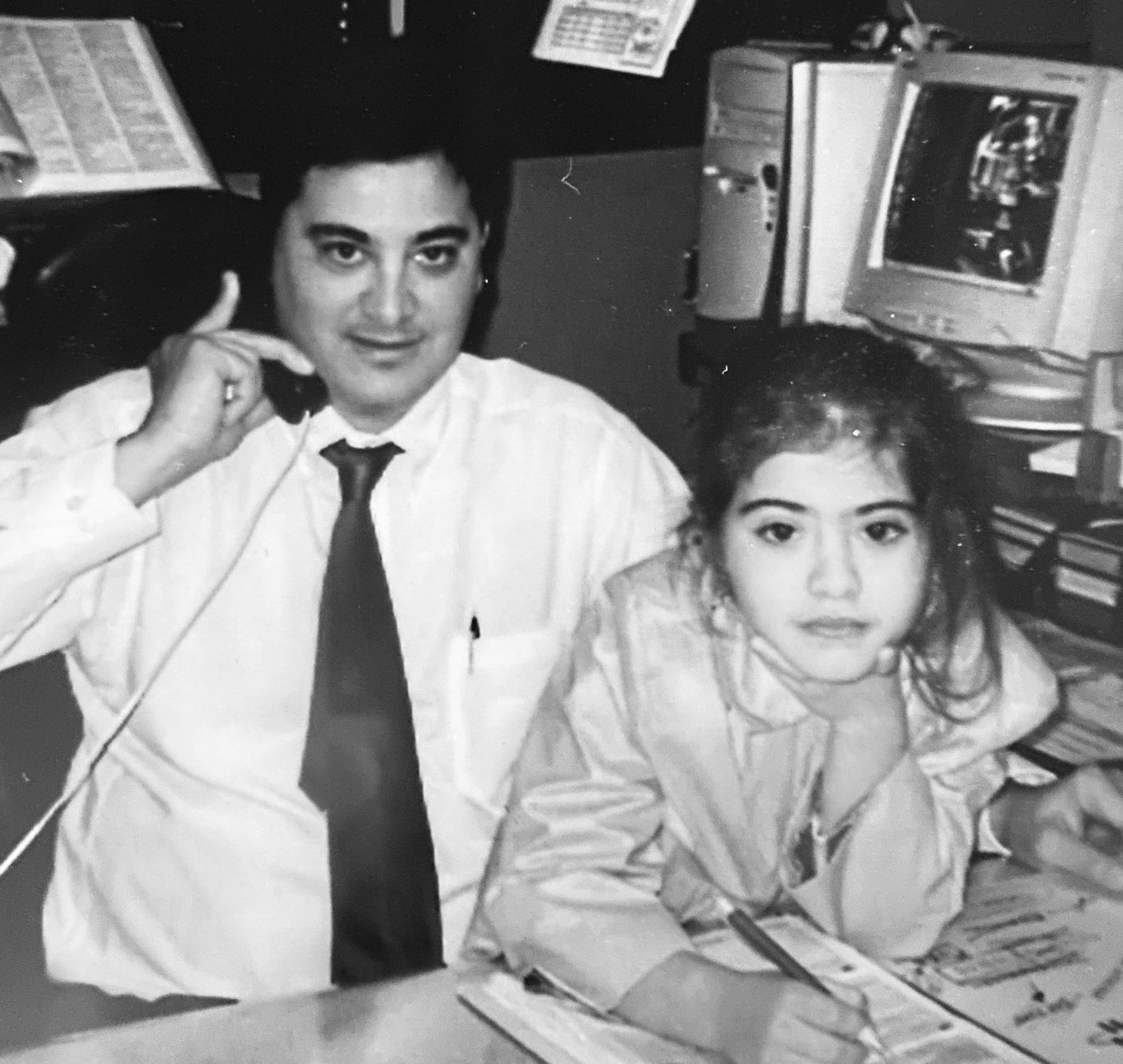
When I was six, he took me to client meetings, introduced me as a future lawyer, and brought me to the Law class he taught. I raised my hand and asked questions.
When I was seven, he read me Don Quijote de la Mancha as a bedtime story. I fell asleep to the imagery of windmills, knights, and damsels in distress.
When I was eight, we were on our way to a Father’s Day event at school when he taught me a principle of Law: ignorantia iuris non excusat (ignorance of the law is no excuse). Actions have consequences, whether you understand them or not. You must think, be accountable, and understand the weight of your actions because sometimes, saying sorry comes too late. I listened quietly from the backseat.
When I was nine, my brother was undergoing Cancer treatment. I’d go to school, then to the hospital. My dad came after work. We’d go home together and have dinner, trying to keep a semblance of normal.
When I was ten, I went to summer camp. Homesick, anxious, sure that if I stayed, I’d return to find my brother gone. I stared at a Van Gogh poster in the cabin, crying. My dad came early to pick me up and saved me.
When I was eleven, he took me to get my first ID and made me memorize the number as we walked out. He quizzed me all the way back home.
When I was twelve, my dad woke me up every morning at 6:30 sharp. It was summer, but there were still tutors, schedules, and no room for laziness. “Discipline is a habit,” he’d say. “Routine builds character.” Bedtime was 8 p.m., with no exceptions. While my friends stayed up watching cartoons, I read under the covers with a flashlight. This had always been our way, but now, approaching adolescence, I started to feel it differently. I resisted more, but in the end, those lessons became the tools that shaped who I am today.
When I was thirteen, I helped my dad back up his book onto CDs and floppy disks, stacking them carefully and labeling each with a Sharpie marker in my neatest handwriting. He’d been working on it for years. At the time, I didn’t fully understand why it mattered so much, but I knew it was important to him.
When I was fourteen, we went to Egypt. I had a panic attack over a stray dog and couldn’t leave the car. He stayed with me the whole time. He didn’t make me get out.
When I was fifteen, he helped me study history. We’d sit at the dining table for hours, debating whether José Antonio Páez or Cristóbal Mendoza was the first president of Venezuela. I’d say Páez; he’d say Mendoza. But when it came to Miranda, we were always in agreement.
When I was sixteen, he taught me to drive. I was terrible with the brake. He’d joke and say that I had to be gentle with it, like a kiss.
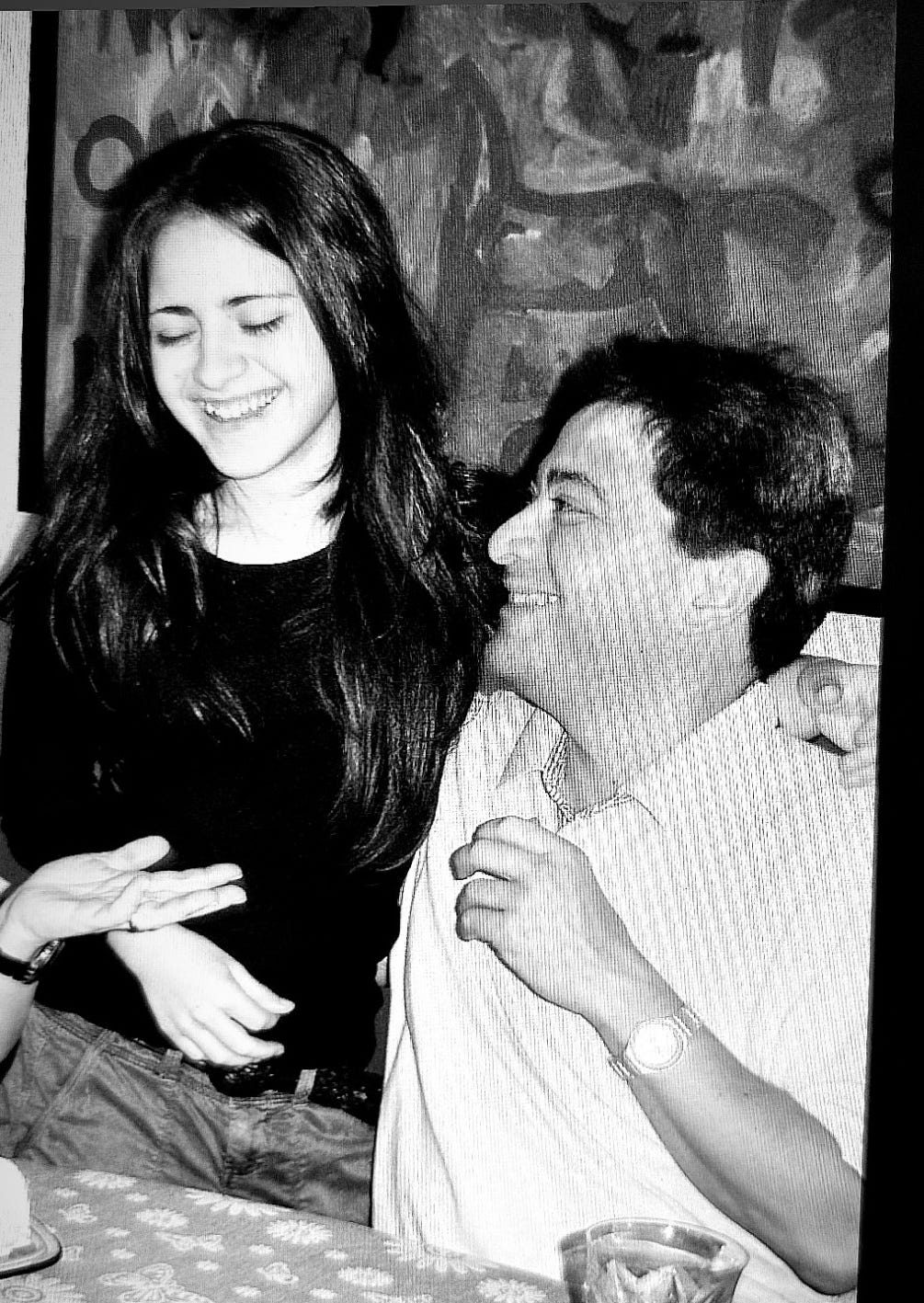
When I was seventeen, we woke up at 4:30 every morning to jog around the neighborhood. He recited sections of his Constitutional Law thesis while we ran. I listened, catching my breath as he spoke.
When I was eighteen, he made me start law school. I didn’t want to. But now I know he was right. Law wasn’t just a career; it was a way of thinking. Protection for life.
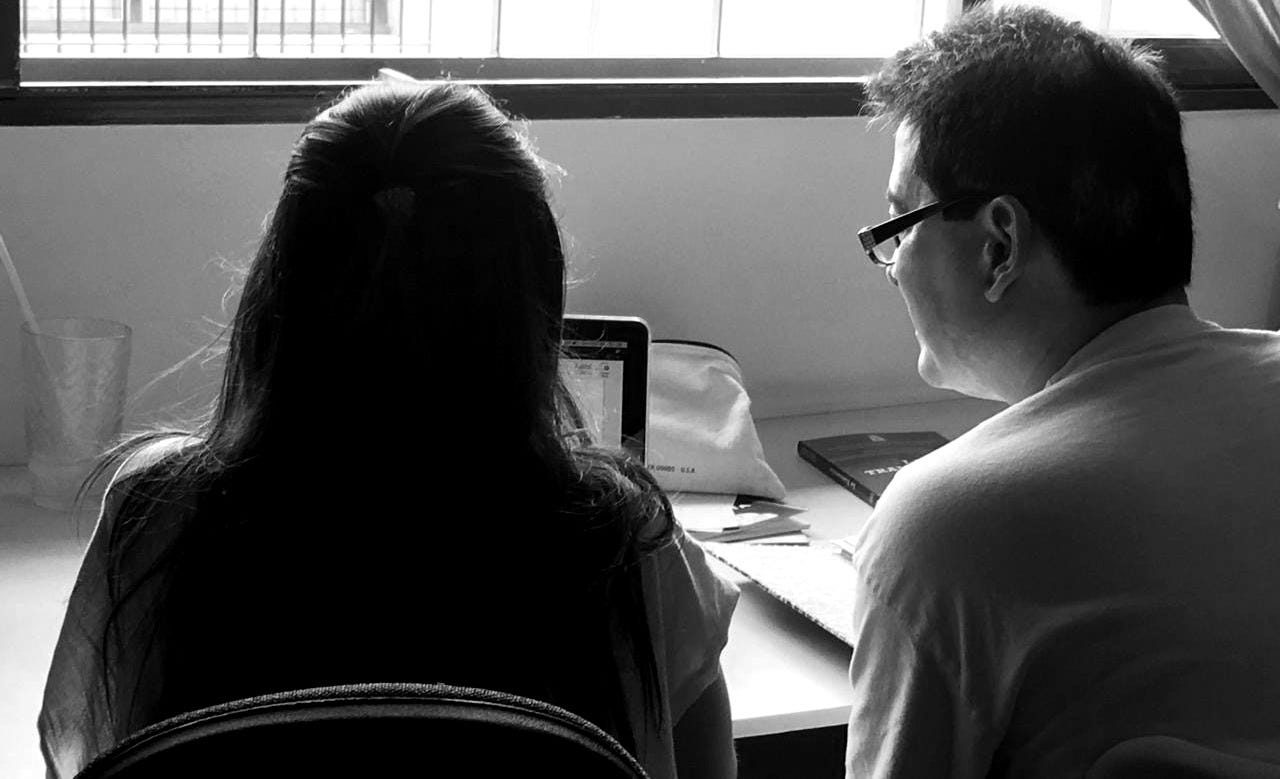
When I was nineteen, I was falling behind. He spent hours helping me study Civil Law until I aced the exam. He never doubted me, even when I did.
When I was twenty, I crashed my car on the highway. The road was slippery, and my car spun around, leaving me facing the wrong way as a huge truck came toward me. He rushed to get there, and after everything was sorted out, he had my car fixed in a month. He always took care of things.
When I was twenty-one, we made pasta or risotto on Friday nights and drank whiskey like lawyers do, chatting about everything; the week, what was on our minds, and what was coming next.
When I was twenty-two, he asked me every single day what my action plan was. It gave me anxiety and made me furious. In hindsight, I understand he was teaching me to anticipate, to strategize, to never lose focus.
When I was twenty-three, he picked me up every Thursday from my internship at the museum. We’d head to “El Aranjuez,” a steakhouse, for lunch. Always with arepas and salad. I looked forward to it every week.
When I was twenty-four, I left home and moved to New York. I said goodbye. I didn’t know how much that would mean later.
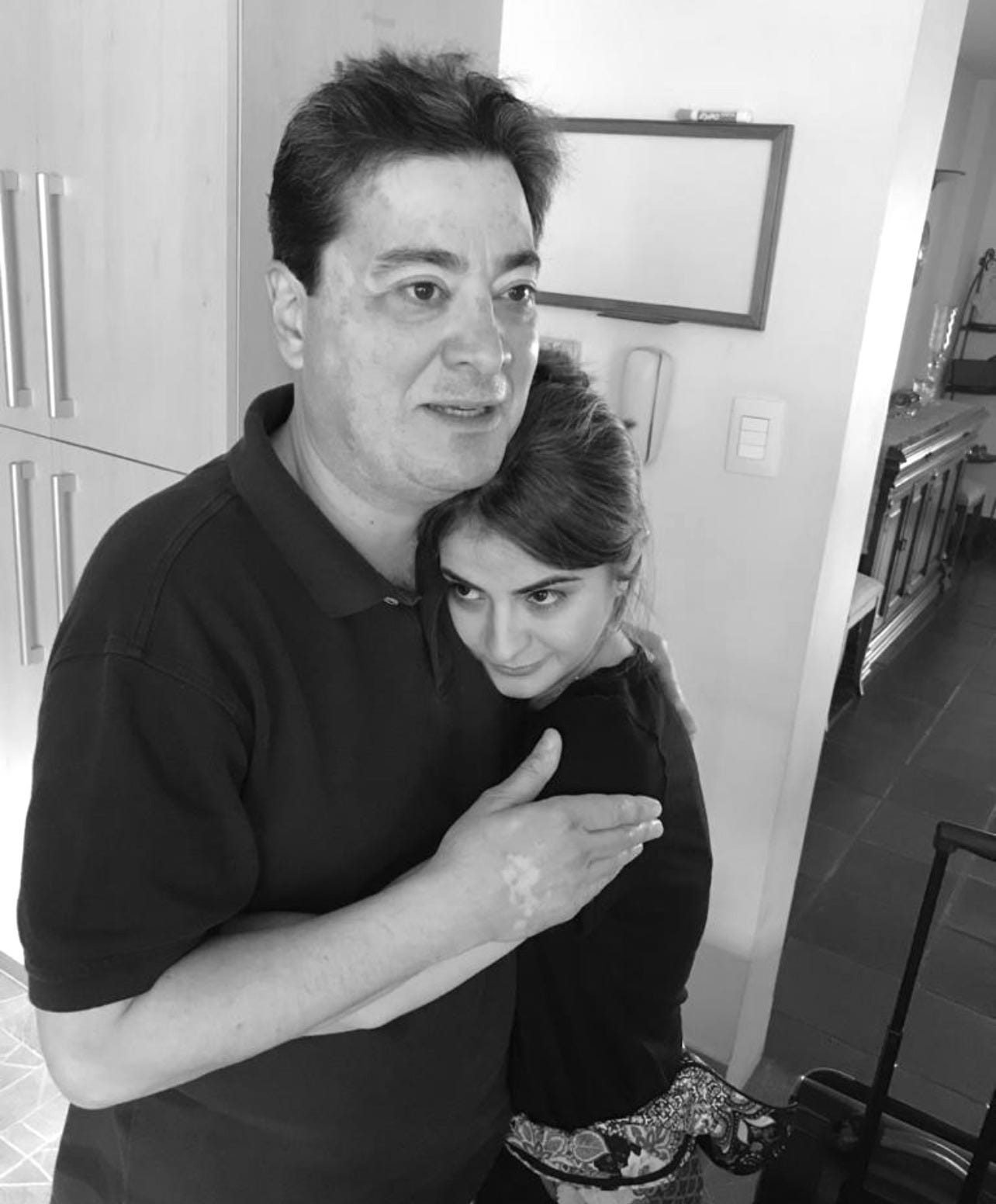
When I was twenty-five, and living in Mexico City, we talked early in the morning before my mom woke up while he made her coffee. We talked about art and law, about how collectivism, populism, and communism ruin everything, and about how Venezuela fell apart.
When I was twenty-six, we hugged for the last time. I didn’t know it would be the last time.
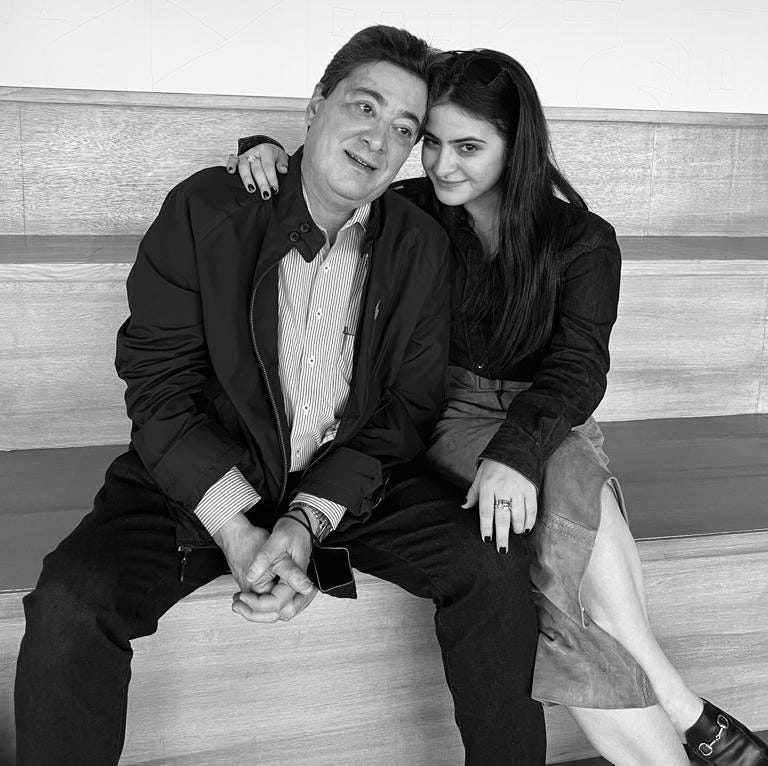
Now I am thirty. And I miss him every day.
Grief is strange. It's the hollow space where his presence used to be, where there’s nothing but aching silence. It’s when something good happens, and you reach for the phone, ready to share. I still do that, even after three years. I cannot tell him about the good things, the little victories, or the breakthroughs. The hardest part is knowing that I can never ask him for guidance again. He was my pillar, my protector. He taught me so much, but it was all those years of subtle lessons, the things I took for granted, that I now realize were the most precious. The wisdom he left, the quiet pieces of his life that I thought I understood but now see through a different lens.
I remember how proud I was to finally be living in New York and working at the law firm. But every achievement, every small success feels incomplete because I can’t call him to share it. Even on my wedding day, in joy, I felt a part of me was broken. I couldn’t feel the fullness of it all because he wasn’t there to see it, to celebrate it with me, to say “I’m proud of you.” He always told me, “Someday, you will understand.” And now, I do. I understand the weight of everything he carried, the sacrifices, the struggles. I understand the strength it took to be who he was unyielding, determined, and unconditionally there. I miss him in a way that cuts to the core. But in the absence, I’ve found myself standing on the foundation he built for me. I feel the impact of everything he gave me. His legacy, his lessons, and the quiet ways he shaped me into who I am today. His absence doesn’t lessen that. It makes it clearer.
I wish I could have told him, really told him, how grateful I am and how much I admired him, how much I still do. How much I see his life now with new eyes and respect him more than I ever could have understood before. He was right about everything, and I finally understood the weight of his words. I carry that weight with me now, as I navigate a world without him.
I wish to teach my future children about my dad and how he shaped me in ways I’m only now beginning to fully grasp. I hope that if I’m even half the parent he was, I’ll have succeeded. Because if I can pass on even a fraction of the love, the guidance, the wisdom he gave me, I’ll have done something right. And one day, when my children ask, I’ll tell them: “Someday, you will understand”.