I'm in a New York State of Mind
2025-08-05 · 6 min read
My dearest incurable humanist, For over a decade, I’ve been obsessed with memoirs. I love learning how people make sense of their lives, how they survive grief, failure, and reinvention, through their perspectives. Not because they’re literary, but because they’re human. Long before that, as a…
My dearest incurable humanist,
For over a decade, I’ve been obsessed with memoirs. I love learning how people make sense of their lives, how they survive grief, failure, and reinvention, through their perspectives. Not because they’re literary, but because they’re human. Long before that, as a preteen, I was hooked on diaries. Anne Frank’s, Anastasia’s, and so on.
Watching HBO's new two-part documentary, Billy Joel: And So It Goes, I was struck by how it carried that same memoir-like quality. Joel was involved in the documentary’s making, and you can feel it. There’s an unfiltered honesty that comes only when someone has made peace with their past and is finally ready to share, even when not everything is flattering.
Billy Joel was part of the soundtrack to my childhood weekends. My dad adored him, and I have sunlit memories of family car rides, Piano Man, Uptown Girl, or Tell Her About It, playing as we headed to the beach.
But it wasn’t until I was sixteen that I understood Joel as something more. It happened in the most academic way possible: a school assignment. My English teacher, Olga, made us memorize We Didn’t Start the Fire and paired it with an essay by Venezuelan writer Toto Aguerrevere about the song. Each pair of students was assigned a stanza to research and present. I got:
“Roy Cohn, Juan Perón, Toscanini, Dacron / Dien Bien Phu falls, Rock Around the Clock.”
I had never been so excited to do homework in my life. I went home, printed the lyrics, googled every event and name, and learned the entire song by heart. I still know every single word and could sing it in my sleep. At the time, I was writing a song a day, dreaming of being a singer-songwriter. I was fascinated by how Joel had created something so catchy and timeless, not about love or clichés, but about history. I was mesmerized by how a great songwriter can take anything and make it into a hit.
That assignment made me a Billy Joel fan overnight. I started dissecting his lyrics. But as happens with teenage passions, life got in the way and my obsession faded. Although I never stopped listening completely. I had a little tradition of my own that every time I had a test in law school, I would drive listening to Piano Man cause somehow it calmed me. But overall, I was not paying attention. Then came this documentary, and I remembered.
The film doesn’t flinch from the mess: Joel’s exploitative first record deal, which meant he didn’t earn royalties for Piano Man for years. Or the estranged relationship with his father, a man shaped by unspeakable trauma having escaped Nazi Germany in a twist of fate that spared him the camps but not the psychological toll. Joel doesn’t dramatize it. He just tells it, plainly, in that New York cadence that doesn’t sugarcoat.
When I learned that Vienna was written about his father, I burst into tears. That song always got me, but now it feels personal. I thought about my dad. About how grief and love often speak the same language, just in a different key.
And then came the lullaby he wrote for his daughter: Lullabye (Goodnight My Angel). The tenderness of him trying to be a better father than the one he had, trying to break the cycle. There’s a moment where he says:
“I promised I would never leave you
And you should always know
Wherever you may go
No matter where you are
I never will be far away”
This reminded me of what my dad used to tell me. And I just sat there on the couch, wrecked staring at the TV.
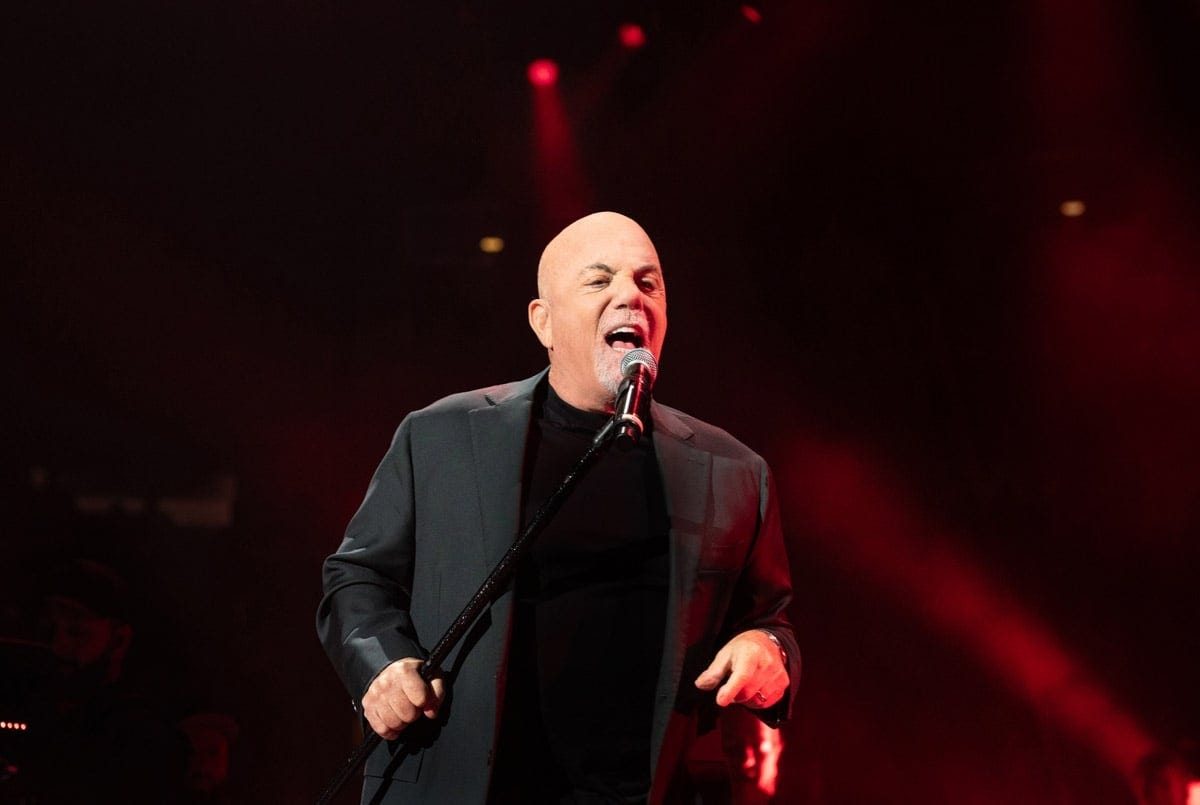
But what stands out most is Joel's New York-ness, that quality that makes him as much a part of the city's DNA as the subway or a corner deli. There’s a kind of urban realism in his songwriting that feels conversational. In Movin’ Out (Anthony’s Song), he depicts the pursuit of the American Dream. "Is that all you get for your money?" he asks, and if you’ve ever worked a soulless job to afford life, you know exactly what he means.
When I first moved to New York, I got a job that required a four-hour daily commute to a law office in Hackensack. Two trains each way. After years of fantasizing about moving to Manhattan, and yet there I was on a train to Jersey. Joel had once dismissively name-checked Hackensack in that very song, “You oughta know by now/ Who needs a house out in Hackensack”, and there I was on my way to Hackensack every week. And still, I was grateful. Because New York is a bet you place on yourself.
Joel knows that. He captured it best in 52nd Street, his 1978 album named after Manhattan’s once-thriving jazz club. Every track peels back another layer of New York’s psyche.
And through it all, the music business kept trying to break him. The betrayal by his manager, having to essentially start over later in his career. The critics didn't always love him. They often dismissed him as too commercial for real rock or compared him to other contemporaries. But he kept writing, kept performing, kept finding new ways to channel pain into something beautiful. His dual passion for songwriting and classical music threads through everything you see, how his classical training informs his pop, how he never abandoned either part of his musical identity, even when the industry tried to force him into neat categories.
Now, decades later, his music has passed the hardest test of all: time. Songs like My Life, Allentown and Just the Way You Are, feel more relevant today than they did when they were written. That's rare and only achievable with the best storytelling, when an artist taps into something so fundamentally human that it becomes timeless.
Joel's songs function as musical memoirs, each one a chapter. Whether he's writing about his own experiences or observing the world around him, there's a specificity that makes his work feel like reading someone's most personal journal entries, set to unforgettable melodies.
Watching this reminded me that Billy Joel is a New York treasure and one of the greatest songwriters of all time.
I'm in a New York State of Mind, and I have Billy Joel to thank for it.
The two-part documentary Billy Joel: And So It Goes is available on HBO Max.
(Directed and produced by Susan Lacy and Jessica Levin; executive producers, Tom Hanks, Gary Goetzman, Todd Milliner, Sean Hayes, Steve Cohen; producer, Emma Pildes; edited by Kris Liem, James Pilott, Steven Ross. For HBO: executive producers, Nancy Abraham, Lisa Heller, Sara Rodriguez.)