On Migration
2025-10-07 · 5 min read
My dearest incurable humanist, Last week, I wrote about grief, so I thought to continue exploring the three pillars of The Incurable Humanist (grief, migration, and art). This week, migration, and next week, art. I was exposed to the idea of migration early on, though not through history lessons…
My dearest incurable humanist,
Last week, I wrote about grief, so I thought to continue exploring the three pillars of The Incurable Humanist (grief, migration, and art). This week, migration, and next week, art.
I was exposed to the idea of migration early on, though not through history lessons about nomadic tribes. I learned it through my family. Without it ever being an explicit conversation, I grew up with an awareness of movement across countries.
Both of my grandmothers were migrants. My paternal grandmother, Teresa, was Peruvian; she met my grandfather, Bernardo, while he was traveling through South America after years abroad for political reasons. They married in Lima in 1955, lived briefly in Mexico City, and finally settled in Caracas, where my grandfather was from.
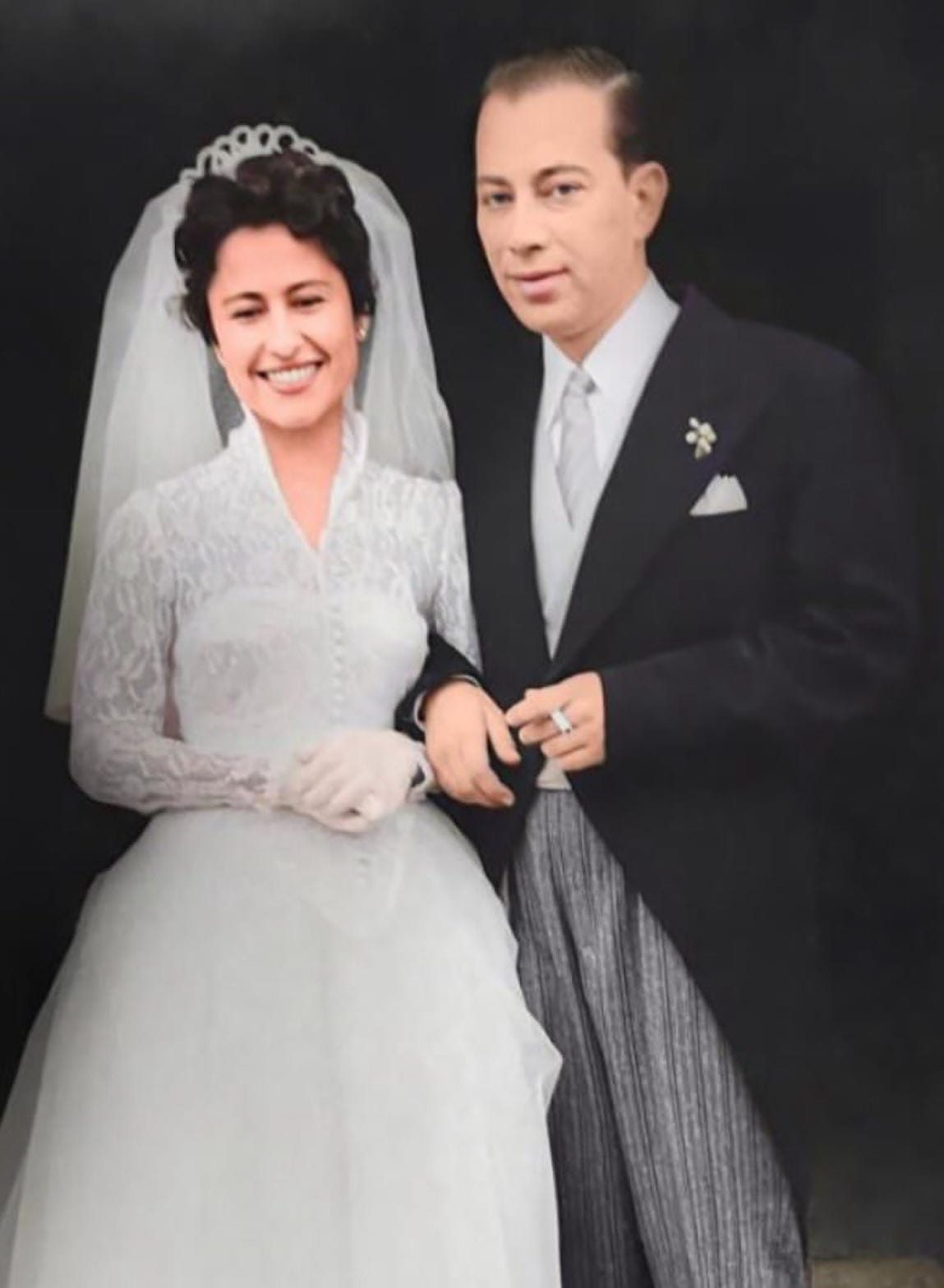
On my mother’s side, my grandmother Martha, Tita, as I call her, was born in El Salvador but spent her childhood in New York, where her father, my great-grandfather, served as El Salvador’s first ambassador to the United Nations. Later, the family relocated to Washington, D.C., where she studied and worked at the World Bank. While visiting family in Guatemala, she met my grandfather, Eduardo. He had become friends with her cousins during a trip to Europe. They fell in love, married in 1966, and moved to Caracas.
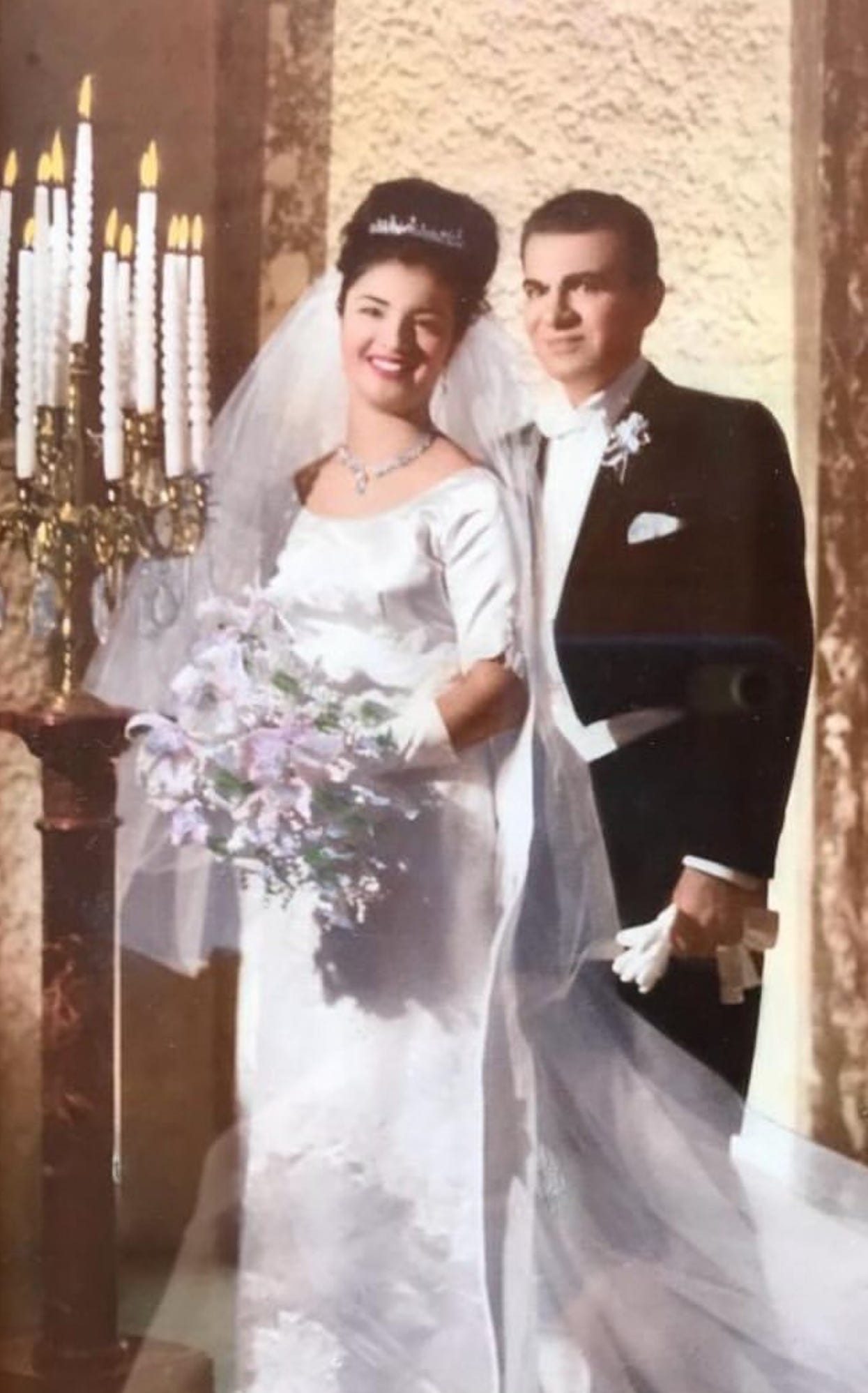
If I trace my lineage further back, I find even more movement. My grandfather Bernardo’s ancestors came from Spain; my grandfather Eduardo’s parents migrated from Lebanon to Venezuela. So, as you see, I grew up surrounded by stories of elsewhere, of different weathers, languages, and ways of being.
Food was our family’s first language of migration. My father introduced me to Peruvian flavors. Ceviche, papas a la huancaína. My grandfather, Eduardo, made kibbe and other Lebanese dishes, while Tita would bring out her Salvadoran recipes, pupusas, as well a scrumptious pecan pie, a memory from her New York days.
As a child, I thought this was all normal. Only later did I realize what a unique combination, how many border crossings, spoken and unspoken, had made me. For a long time, I took that mobility for granted. I didn’t understand what every migration story carries until I migrated myself.
In 2019, I left Caracas to pursue my Master’s in Art at Christie’s Education in New York. I was deeply grateful for the opportunity and for my parents’ support. Still, nothing could have prepared me for what migration truly feels like. The distance, the reinvention of identity, the ache of missing a place that is no longer home. Then came the pandemic, and with it, isolation and uncertainty.
After finishing my MA, I moved to Mexico City, where I lived for nearly two years. I had visited before since my younger brother lives there, but I had never imagined calling it home. Those years were many lives in one: hard and humbling, lonely and thrilling, devastating and beautiful all at once.
I worked full-time at an art gallery, six days a week. I loved it, yet every night I would go home and return to my goal: New York. From my apartment in Mexico City, I drafted O-1 Extraordinary Ability visa petitions for artists and entrepreneurs seeking to move to the U.S. It was ironic: I was helping others find their way to New York while I was still trying to secure my own. Eventually, I did. In October 2022, I returned to New York under an H-1B visa. A dream come true, but also the beginning of new challenges, new ambitions, and new beginnings.
Migration, for me, is both personal and professional. Since 2020, I’ve worked in business immigration, helping people relocate to the U.S. for work, study, or family. It’s not something I planned; life simply led me there. Through this work, I’ve encountered hundreds of migration stories. Some temporary, some permanent, some driven by love, others by necessity, some as a Plan B, some as their only option. Each story is its own universe.
A few months ago, I read The Truth About Immigration: Why Successful Societies Welcome Newcomers by Zeke Hernandez (@zekrets), a Wharton professor who has studied migration for over two decades. The book masterfully blends data and storytelling. Hernandez dismantles the myths that immigrants take jobs or harm economies, showing instead that they create industries, drive innovation, lower crime rates, and enrich cultural life. He writes about founders like those of Pollo Campero, Duolingo, and Zoom, whose lives changed the trajectories of millions.
Finally, I’d like to share with you some key data shared in Zeke Hernandez’s The Truth About Immigration that hopefully you will find as fascinating as I do.
Fun Facts on Migration Hernandez highlights in the book:
Dr. Alessio Fasano, an Italian-born scientist, founder of the Center for Celiac Research and Treatment at Massachusetts General Hospital, and a professor at Harvard Medical School, discovered zonulin, a key protein linked to celiac disease and autoimmune disorders. His research revealed that about 1% of Americans live with celiac disease.
44% of Fortune 500 companies were founded by immigrants or their children.
“The movement of people is essential to the circulation of ideas,” Hernandez writes. And I see it, in Tita’s pecan pie made in a Caracas kitchen, in the Salsa born from Dominican and Italian collaboration in New York, in every artist I help relocate who will create something that wouldn’t exist otherwise. I am who I am because of the encounter between Peru, El Salvador, Lebanon, Spain, and Venezuela. Migration is how cultures enrich each other, how we all become more.
Until next week!