Why I Turned Down a Dream Job and Found Happiness Through Aristotle
2025-12-30 · 4 min read
My dearest incurable humanist, Back in 2017, in deontology class, I was taught by a professor in his nineties, in a three-piece suit, with a small microphone and a portable speaker. One day, he gave us a speech I still think about. The most important thing, he said, was to always act in alignment…
My dearest incurable humanist,
Back in 2017, in deontology class, I was taught by a professor in his nineties, in a three-piece suit, with a small microphone and a portable speaker. One day, he gave us a speech I still think about. The most important thing, he said, was to always act in alignment with what is right. It didn’t matter if we ended up practicing law or became doctors, professors, or housewives; what mattered was that whenever our name appeared in a conversation, everyone in the room would agree that we were a person of integrity. At the time, I agreed, but the idea felt ethereal. I didn’t yet understand how many times I would return to that image, of him emphasizing this.
I’m an overthinker. So it’s no surprise that Philosophy of Law became my favorite subject in law school, and eventually I became a teaching assistant, lecturing from Plato, to Rawls, to Popper, to Dworkin, engaging in entertaining discussions.
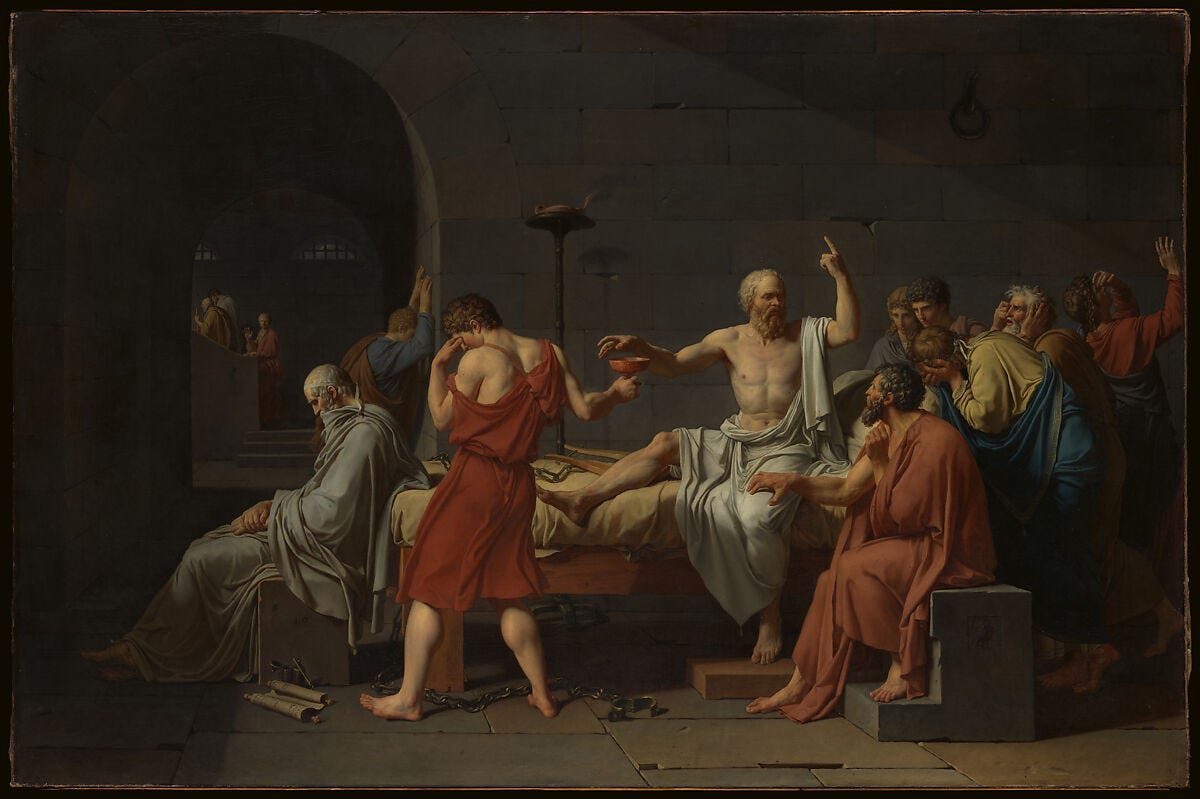
Last week, I found myself going back to the classics when a situation of moral dubiety presented itself. Socrates, in Plato’s Apology, stands before the Athenian jury and chooses justice. He could have tried to save himself by compromising his principles and softening his commitment to truth. But he didn’t. Most of us will never face a choice framed so dramatically, but everyday life is full of smaller versions of that trial. So, as I was saying, last Tuesday, I was offered a position with a ‘too good to be true’ salary, which, let’s be honest, we always need. On paper, it looked like the solution to so many anxieties. But as I researched more, I discovered that the values of one of the members of leadership stood in direct conflict with my own. For privacy reasons, I can’t share the details, but if I could, I’m sure you would agree, dear reader. This person is outspoken on social media and in news outlets about atrocious things, supports the most horrid world leaders, and contravenes every fiber of my values.
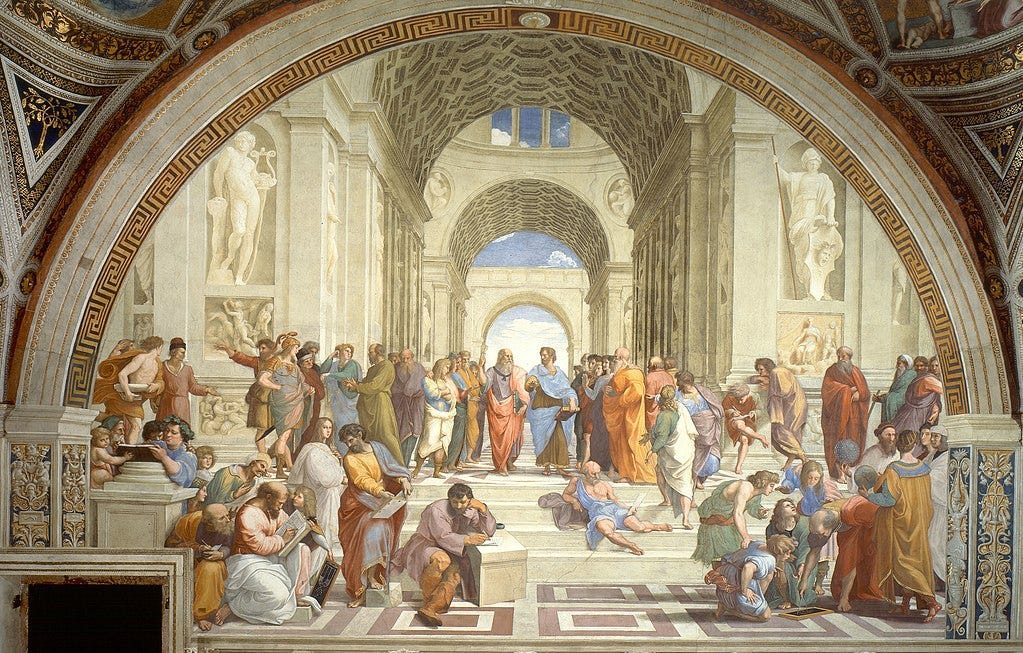
I won’t lie to you. I doubted for a second. What if it isn’t that bad? But then I remembered another professor’s class. On the first day of my senior year, he asked us, “What is the purpose of life?” We all said many things until he finally gave his answer: happiness. But what is happiness? So in my moral dilemma, I went back to Aristotle and his definition of happiness. In the Nicomachean Ethics; “happiness is a rational activity of the soul in accord with virtue.” For Aristotle, happiness has to do with intellect and how we use our reason. Happiness, for him, is not a feeling but a state of being. Furthermore, Virtue, according to Aristotle, is a disposition to do the right thing, a specific type of habit. He believes we all have the capacity to become virtuous. And so you might be asking, how do I do this? Well, this happens in two stages: first, you must be educated; second, you must develop practical wisdom through prudence. Prudence involves intellectual activities related to practical action. So if you’ve been trained as Aristotle intended, you will habitually do the right thing, and you will also be able to think about ethics correctly, which will help when you encounter new situations. Every virtue exists between two vices, and wisdom lies in finding balance. Aristotle called this the ‘mean’.
I’m deeply grateful to have studied law for the formation it gave me. At its best, legal education is Aristotelian training. The cultivation of practical wisdom through repeated engagement with real and hypothetical dilemmas. It teaches you to identify principles and to develop durable intellectual habits. I’m also grateful to the professors who formed me, and to the moment I understood that accepting this offer would contravene everything I stand for. Another reminder of why my father wanted me to study law; to build my judgement and character. Ergo, my education was his greatest inheritance to me; a way of thinking critically and ethically.
Amid a thousand New Year’s resolutions, I choose to keep striving to be a better version of myself, to act with integrity, and to live ethically in every choice. Don’t beat yourself up with the noise of the world; nurture yourself by acting virtuously, and the rest will follow. As my father used to say, there is nothing better than going to bed with a clear conscience.
Until next year (aka next week)