Trader Joe’s Panic: PTSD of Venezuela’s Grocery Lines
2026-01-27 · 4 min read
My dearest incurable humanist, With the snowstorm approaching this weekend, I headed to Trader Joe’s Friday afternoon. Yes, probably not the brightest or most original idea I’ve ever had, I’ll admit. But as I walked through the doors and saw the infinite line twisting and turning through the…
My dearest incurable humanist,
With the snowstorm approaching this weekend, I headed to Trader Joe’s Friday afternoon. Yes, probably not the brightest or most original idea I’ve ever had, I’ll admit. But as I walked through the doors and saw the infinite line twisting and turning through the aisles, heard the noise, saw the people grabbing tuna cans at half-empty shelves, something inside me snapped. I panicked, my chest tightened. I couldn’t possibly stay there, so I turned around and walked straight back out, heading to another local grocery store which, yes, it had a line, but was significantly less crowded.
Why did I panic? Because for years growing up in Venezuela, lines were a daily thing. By the mid-2010s, Venezuela’s economic collapse had produced chronic shortages of everything; food, medicine, gas. Price-controlled staples like milk, rice, cornmeal flour for arepas, oil, and meat became scarce. When supermarkets received these regulated goods, people would line up for hours, sometimes arriving at dawn, just to access a few basic items. Often, the stocks would run out before everyone in line was served. You couldn’t buy certain items every day, only on the days your ID allowed. For example, if your ID number ended in 4, you could buy milk on Mondays but not on Tuesdays and so on. And there was only one brand of milk, one brand of soap, etc. Sometimes months would go by and no toilet paper could be found.
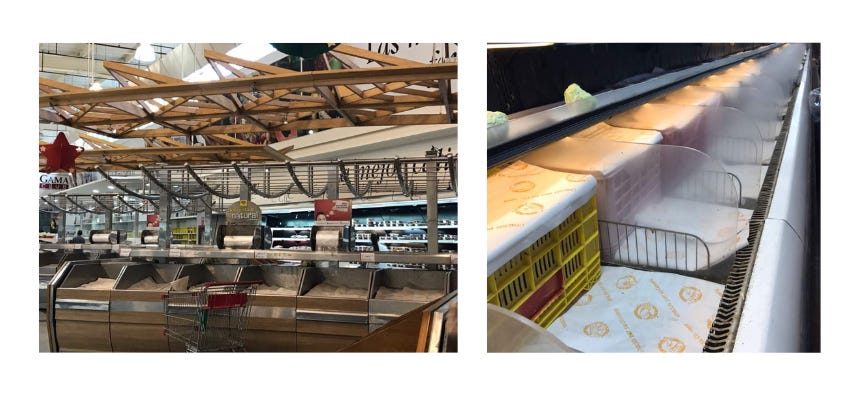
Under Chávez and then Maduro, expropriations were widespread, except the owners were never paid, so, in other words, it was robbery. These now state-run factories operated far below capacity or stopped altogether. Domestic production of basic foods collapsed, making us even more dependent on imports. To allegedly manage the scarcity, the government opened state-run grocery chains like Mercal, Bicentenario, and PDVAL. Maduro introduced the Carnet de la Patria (Homeland Card), to control who could buy what and when. The system tracked your purchases and blocked you if you tried to buy the same controlled goods again within a set number of days. Shoppers could only enter state stores on specific days based on their ID numbers, restricted to tiny quantities: two cans of sardines, diapers only with a birth certificate as proof.
I never got the Carnet de la Patria, avoiding giving the government more information. But I remember going several times to Bicentenario to accompany a coworker. I remember walking into those white, cold, fluorescent spaces with long aisles of empty shelves interrupted by others stocked full of the same single product. One day, every aisle had only flour. Nothing else. The next week, coffee. The quality was always terrible. The system was supposed to ensure Venezuelans got subsidized food, but instead, officials and soldiers diverted truckloads to black-market resale and smuggling, leaving shelves stocked with low-quality, expired, or fly-covered meat, while the PDVAL scandal revealed thousands of tons of imports rotting in ports due to graft and mismanagement.
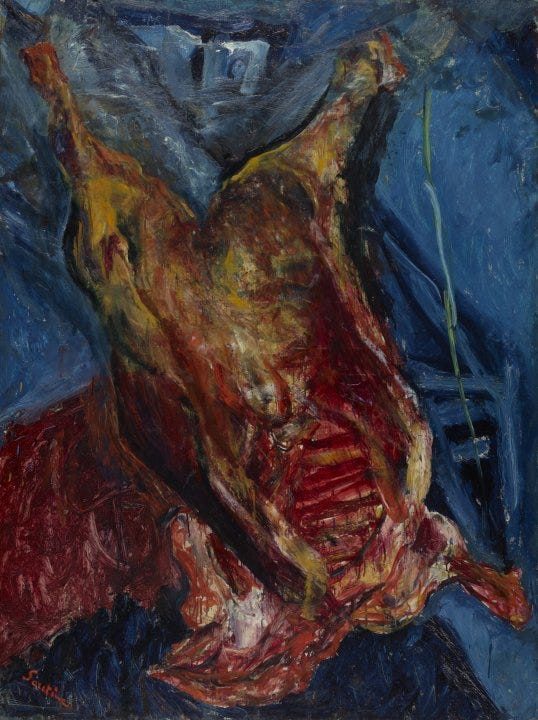
And still, people found ways around it. Enter the bachaqueros (named after bachaco, the leaf-cutter ant), because like ants they carried off anything they could resell. They’d queue outside supermarkets, often tipped off by informants inside about when scarce products would arrive, then sweep through in groups, sometimes on motorbikes, emptying shelves of price-controlled milk, corn flour, cooking oil, etc. Then they’d resell everything at many times the official price in street stalls, door-to-door, social media. Most bachaqueros were unemployed or barely getting by on wages that couldn’t buy a week’s groceries. The government called them saboteurs and speculators; while many of them were literally working with government officials to move the goods. But bachaqueo was only a result of a system so broken it guaranteed its own black market.
The government tried to close every loophole. The Ley de Ilícitos Cambiarios (the Law of Foreign Exchange Offenses) criminalized the parallel currency market, making it illegal for anyone but the state to buy or sell dollars. Even talking about foreign currency was a felony. It was the legal architecture that protected the government’s monopoly on dollars, a monopoly that handed preferential exchange rates to groups close to power while choking off everyone else’s ability to import food, medicine, or industrial supplies. Which fed directly into the shortages. Which created the lines.
For years every shopping trip meant spending half a day in line, hopping between six different markets trying to piece together what you needed at official prices, or just paying the bachaqueros ten times more. This is what I feIt when I walked into Trader Joe’s.
Stay warm!
Until next week.